
Understanding Your Driveway Replacement Timeline
How long does it take to replace a driveway is one of the most common questions homeowners ask when planning this major home improvement project. The answer isn’t simple – it depends on several factors including size, materials, and weather conditions.
Quick Answer: Complete Timeline
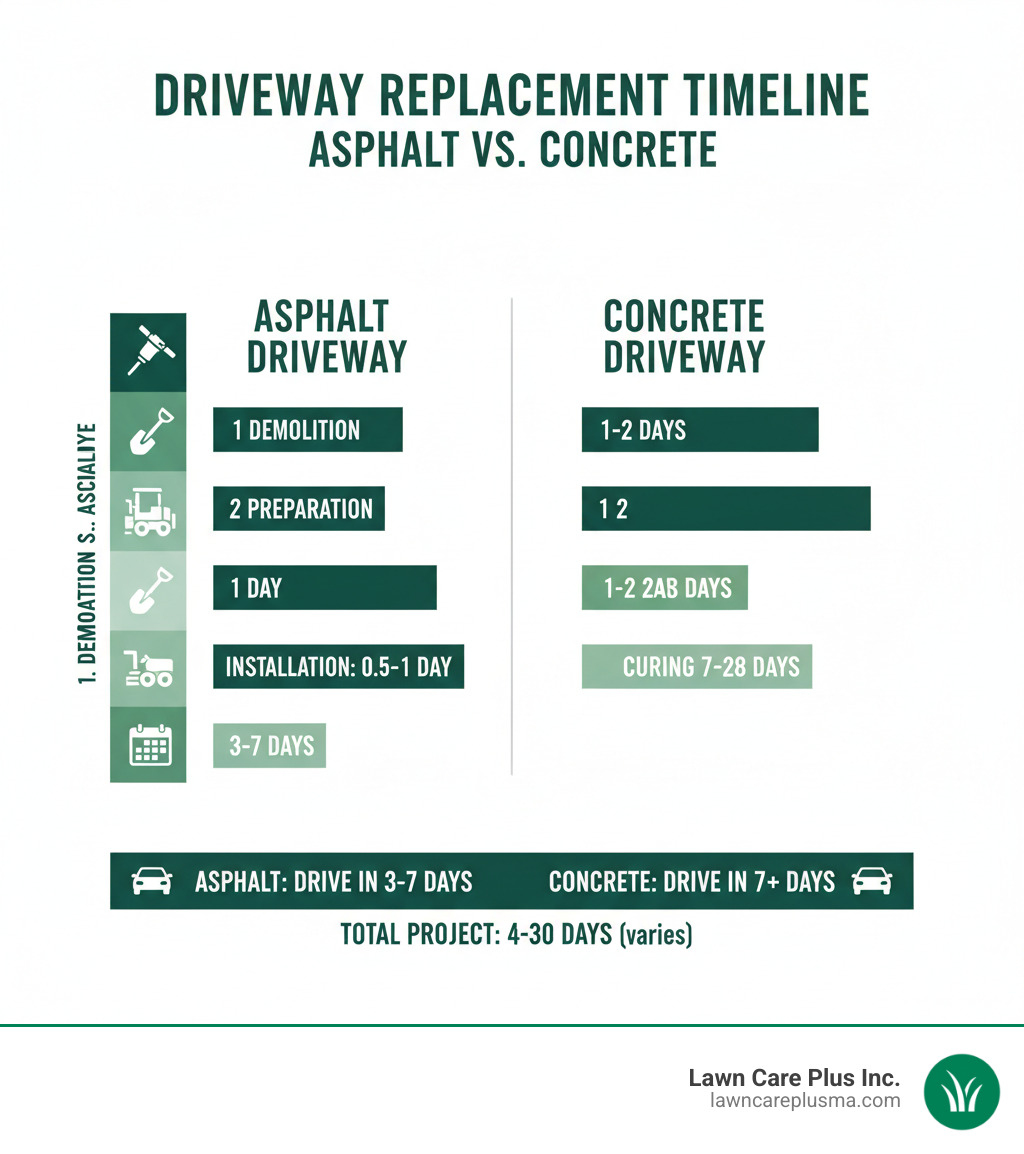
- Total project time: 4-10 days (start to finish)
- Active work: 2-4 days
- Demolition: 1-2 days
- Site preparation: 1 day
- Installation: 0.5-2 days
- Curing time: 3-28 days (depending on material)
Whether you’re dealing with a crumbling driveway or simply want to boost your home’s curb appeal, understanding the replacement timeline helps you plan properly. As one home care expert notes, “You’ll never give more thought to tree roots until you’re ready for a driveway replacement.”
The process involves four distinct stages: demolition and removal, site preparation, installation, and curing. Each stage has its own timeline, and the curing period – when you wait before driving on your new surface – often takes longer than the actual construction work.
Material makes a big difference in your timeline. Asphalt driveways typically allow vehicle traffic after 3-7 days, while concrete requires at least 7 days before you can park on it. Weather conditions, driveway size, and project complexity all play important roles in determining your specific timeline.
Similar topics to how long does it take to replace a driveway:
The 4 Key Stages of a Driveway Replacement
A full driveway replacement is more than just laying down new material. To ensure a long-lasting and durable surface, professionals follow a multi-stage process that’s been refined over decades of experience. Understanding these steps is the first part of answering how long does it take to replace a driveway.
When done correctly, a new driveway can significantly boost your home’s curb appeal and functionality. The process involves four distinct stages: demolition and removal, site preparation, installation, and curing and finishing.
Stage 1: Demolition and Removal
The first physical step is tearing out the old driveway – and it’s often more dramatic than homeowners expect. Using heavy machinery like jackhammers and skid steers, the crew systematically breaks up the existing asphalt or concrete into manageable chunks.
The sound of jackhammers might wake the neighbors, but this stage is essential for creating a clean slate. Once the old material is broken up, it’s loaded onto dump trucks for debris hauling. This phase also reveals any hidden problems that may have contributed to your old driveway’s deterioration, such as poor drainage or those sneaky tree roots that seem to find every weakness in concrete.
Stage 2: Site Preparation
This is arguably the most critical stage for your new driveway’s longevity – and the one where cutting corners will come back to haunt you. The area undergoes careful excavation to the proper depth, followed by precise grading to ensure water flows away from your home’s foundation rather than pooling on your driveway.
Standing water is the enemy of any driveway, leading to cracks, potholes, and premature failure. After achieving the correct slope for drainage, a sub-base of crushed gravel is installed and thoroughly compacted. This compaction process creates the stable foundation that will support your new driveway for years to come.
Think of this stage as building the invisible backbone of your driveway. Without proper site preparation, even the highest-quality materials won’t deliver the durability you’re paying for.
Stage 3: Installation
With the foundation properly prepared, it’s time for the main event – installing your new driveway surface. The process varies significantly depending on your material choice.
For a concrete driveway, the crew sets up forms to define the driveway’s shape and thickness. A rebar grid is then positioned using small supports called chairs to keep the reinforcement bars at the proper height. This steel reinforcement dramatically improves the concrete’s strength and crack resistance. Finally, the concrete is poured and expertly finished to achieve a smooth, level surface.
For an asphalt driveway, hot asphalt arrives by truck and is laid in layers. Each layer gets compacted with heavy rollers that ensure a dense, durable surface. The process requires precise timing since asphalt must be worked while still hot.
Stage 4: Curing and Finishing
Here’s where patience becomes your best friend. The job isn’t over once the material is down – your new driveway needs time for the curing process to work its magic. This hardening time is when the chemical reactions occur that give your driveway its final strength and durability.
Rushing this stage by driving on the surface too early can cause permanent damage like ruts, tire marks, or cracks. Optional finishing touches like sealing concrete or sealcoating asphalt are typically done after the initial cure, adding extra protection and enhancing the appearance of your investment.
The waiting might test your patience, but it’s the difference between a driveway that lasts decades and one that needs repairs within a few years.
More info about hardscaping services
How Long Does It Take to Replace a Driveway? A Stage-by-Stage Timeline
When homeowners ask “how long does it take to replace a driveway?”, the answer might surprise you. While the entire project can stretch over a week or more, the actual hands-on construction work moves along quite quickly. The key is understanding that most of your waiting time comes from one crucial factor: allowing your new surface to properly cure and harden.
Let’s walk through each stage so you know exactly what to expect for your project.
Demolition and Removal: 1-2 Days
Breaking up and hauling away your old driveway typically takes just one day for most standard residential projects. Our experienced crews arrive with the right equipment – jackhammers, skid steers, and dump trucks – to make quick work of even thick concrete or heavily reinforced surfaces.
However, don’t be surprised if this phase extends to two days in certain situations. If your existing driveway is exceptionally thick, has extensive steel reinforcement, or if our machinery can’t easily access the work area, we’ll need that extra time to do the job safely and thoroughly.
The good news? Once we start breaking ground, you’ll see immediate progress. There’s something satisfying about watching decades of cracked, worn pavement disappear, making way for your beautiful new surface.
Site Preparation and Grading: 1 Day
Here’s where the magic really happens, even though it might not look like much to the untrained eye. Proper site preparation is absolutely critical for your new driveway’s longevity, and we dedicate a full day to getting this foundation work perfect.
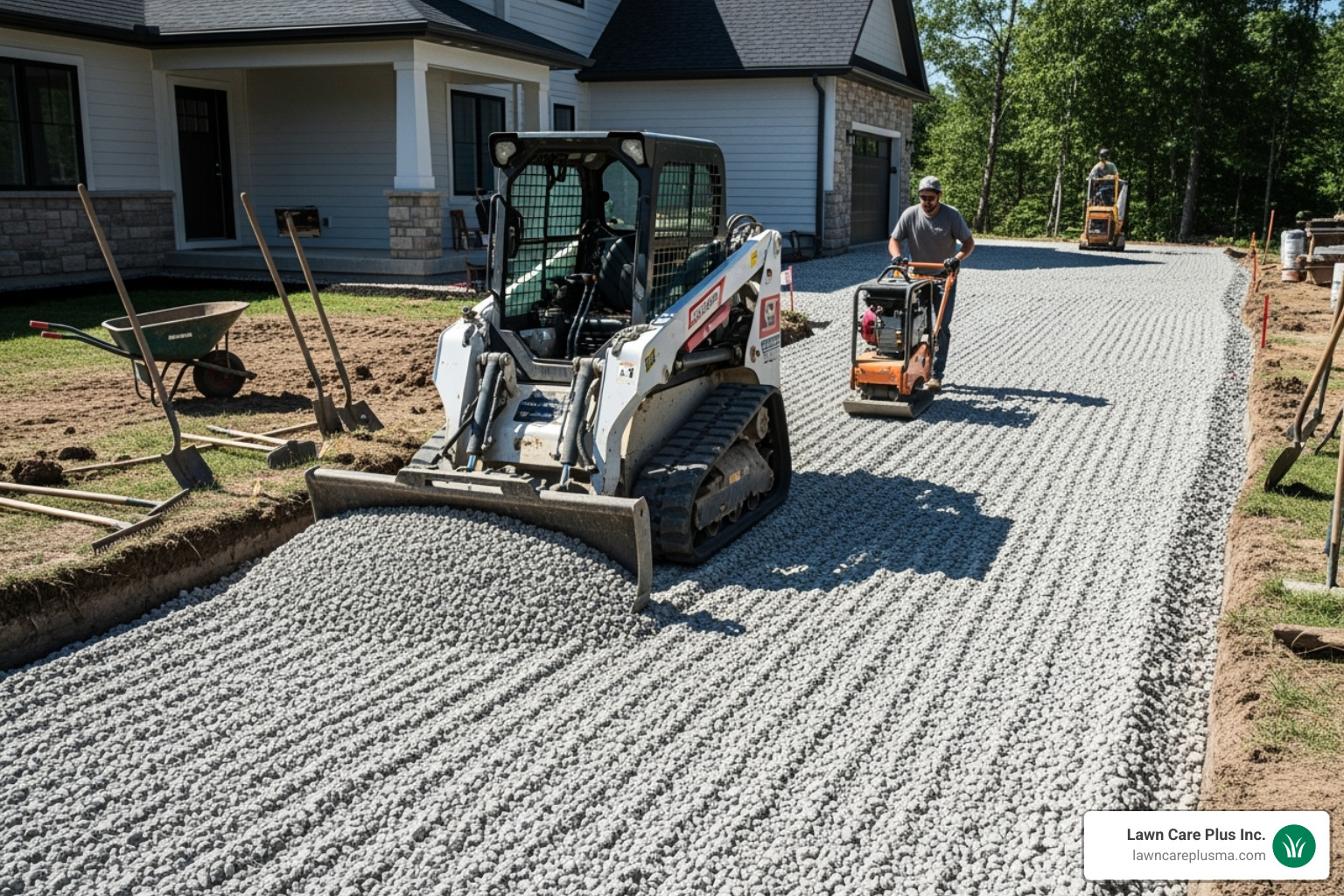
We carefully excavate to the proper depth, then grade the entire area to ensure water flows away from your home’s foundation. Standing water is the enemy of any driveway – it leads to those frustrating dips, potholes, and cracks that plague poorly prepared surfaces.
After achieving the correct slope, we install and compact a sub-base of crushed gravel. This might only take a few hours of active work once the grading is complete, but it’s the foundation that will support your new driveway for decades to come. Rush this step, and you’ll pay for it later with premature failure.
Pouring or Paving the New Driveway: 0.5-2 Days
Surprisingly, the actual installation is often the fastest part of the entire process. For concrete driveways, we can complete the pouring and finishing in as little as half a day on standard projects. The process involves setting up forms to define your driveway’s shape, laying down a rebar grid with chairs for proper positioning, then pouring and expertly finishing the concrete to achieve a smooth, level surface.
Asphalt installations might take one to two days, since we apply the hot asphalt mixture in multiple layers. Each layer gets compacted with heavy rollers, then smoothed to perfection. The layered approach takes more time but creates a denser, more durable surface.
Larger or more complex designs naturally require additional time, but even these projects rarely extend beyond two days for the installation phase.
Curing Time: The Crucial Waiting Period: 1-4 Weeks
Here’s where patience becomes your most important tool. The curing period determines when you can actually use your new driveway, and it varies significantly depending on your material choice.
For asphalt driveways, you’ll typically be able to walk on the surface within 24 hours. Driving on it becomes safe after 3-7 days, though you’ll want to avoid turning your steering wheel while stationary during the first few weeks. The oils in asphalt continue hardening for several weeks, reaching full strength over time.
Concrete driveways require more patience but offer incredible durability in return. You can walk on the surface after 24-48 hours, but you must wait at least 7 days before parking vehicles on it. The concrete continues gaining strength for up to 28 days, ultimately creating an incredibly robust surface.
These timeframes aren’t suggestions – they’re requirements for a long-lasting driveway. Rushing this stage can cause permanent damage like ruts, tire marks, or cracks that will haunt you for years to come.
Like us on Facebook!
