
Transform Your Backyard with a DIY Concrete Patio
How to install a concrete slab patio is a project that can dramatically improve your outdoor living space while saving you thousands of dollars. If you’re looking to create a durable, low-maintenance surface for entertaining, dining, or simply relaxing outdoors, a poured concrete patio is an excellent solution.
Quick Overview: Installing a Concrete Slab Patio
- Plan and measure your patio size and location.
- Call 811 to mark underground utilities before digging.
- Excavate the area 8 inches deep (4 inches for gravel, 4 inches for concrete).
- Build forms using 2×4 lumber, ensuring they’re square and level with a slight slope for drainage.
- Add and compact a 4-inch gravel base.
- Install reinforcement (wire mesh or rebar) for larger patios.
- Mix and pour concrete, then screed it level with the forms.
- Finish the surface with floating, edging, and a broom texture for traction.
- Cut control joints every 8-10 feet to manage cracking.
- Cure properly by keeping the concrete moist for at least 48 hours.
A concrete patio is one of the most durable outdoor surfaces you can install, capable of lasting decades with minimal maintenance. Unlike pavers, its seamless surface leaves no gaps for weeds to grow or ants to nest. Plus, you’ll save 40 to 50 percent by tackling this project yourself compared to hiring it out.
The beauty of concrete lies in its versatility. You can keep it simple with a classic broom finish, or get creative with decorative techniques like stamping or staining. It adapts to any vision, from a cozy 10×10-foot pad to a spacious entertainment area.
This guide walks you through every step, from planning and excavation to the final finishing touches. Success hinges on planning ahead carefully, preparing well, and working quickly once you start pouring. Let’s explore the details that will help you build the backyard oasis you’ve been dreaming about. Learn more about the benefits of adding a patio to your outdoor space.
Related content about how to install a concrete slab patio:
- average cost of concrete patio installation
- concrete patio price per square foot installed
- concrete patio contractors near me
Planning Your Perfect Patio: Before You Pour
Proper planning is the most critical phase of any successful patio project. It saves you from headaches, wasted materials, and potentially costly mistakes. A well-planned patio doesn’t just look better—it performs better and lasts longer. For helpful insights as you get started, check out A Beginners Guide to Installing a Patio.

Key Factors for Your Patio Project
When you’re ready to install a concrete slab patio, several factors shape your project:
- Size: The patio’s dimensions affect material needs, project duration, and final cost.
- Location and Site Conditions: Building next to a house requires careful drainage planning to direct water away from the foundation. Always check for underground utilities before digging and be mindful of property line setbacks.
- Budget: Establish a realistic budget. DIY saves money, but materials, tools, and equipment rentals still require investment.
- Time Commitment: This is not a single-afternoon project. Plan for a full weekend or several weekdays for excavation, forming, pouring, and curing.
- Site Levelness and Drainage: Even a flat-looking yard needs a slight slope (1/8 to 1/4 inch per foot) away from structures to prevent water pooling.
- Intended Use: A standard 4-inch slab is fine for furniture, but a hot tub or outdoor kitchen requires a thicker 6- to 8-inch slab with reinforcement.
For more inspiration, explore Patio Design Ideas for Small Backyards and find tips in Designing a Functional Outdoor Living Space.
Gathering Your Tools and Materials
Having everything you need on hand is crucial. Here’s a breakdown:
- Safety Gear: Sturdy work boots, safety goggles, a dust mask or respirator, and heavy-duty gloves.
- Layout & Excavation: Measuring tape, stakes and string, a line level, shovels, a wheelbarrow, and a hand tamper or plate compactor (rent for larger jobs).
- Forming: 2×4 or 2×6 lumber, deck screws or duplex nails, a drill/driver, a sledgehammer, levels, and a saw.
- Concrete Work: A screed board, bull float, hand float, edger, groover, stiff-bristle broom, and plastic sheeting or curing compound.
- Materials: Crushed gravel, concrete mix, wire mesh or rebar (for larger slabs), rebar chairs, and expansion joint material.
Determining Slab Thickness and Calculating Concrete Needs
A 4-inch slab is standard for most residential patios. For heavy loads like a hot tub or outdoor kitchen, use a 6- to 8-inch slab with proper reinforcement.
To calculate your concrete needs, use the formula: (Length in ft x Width in ft x Thickness in ft) / 27 = Cubic Yards. Remember to convert thickness to feet (e.g., 4 inches = 0.33 ft). Always add 10% extra to avoid running short. An online concrete calculator can simplify this.
For small patios (under 1 cubic yard), bagged concrete mix is manageable. For larger projects, ordering ready-mix concrete from a delivery truck is the smarter, more efficient choice, as it saves immense time and labor while ensuring consistent quality.
For more detailed information about costs, visit Concrete Patio Price Per Square Foot Installed.
Step-by-Step Guide: How to Install a Concrete Slab Patio
This is where the real work begins. Following these steps carefully is the key to a patio that lasts for decades.
Step 1: Site Preparation and Excavation
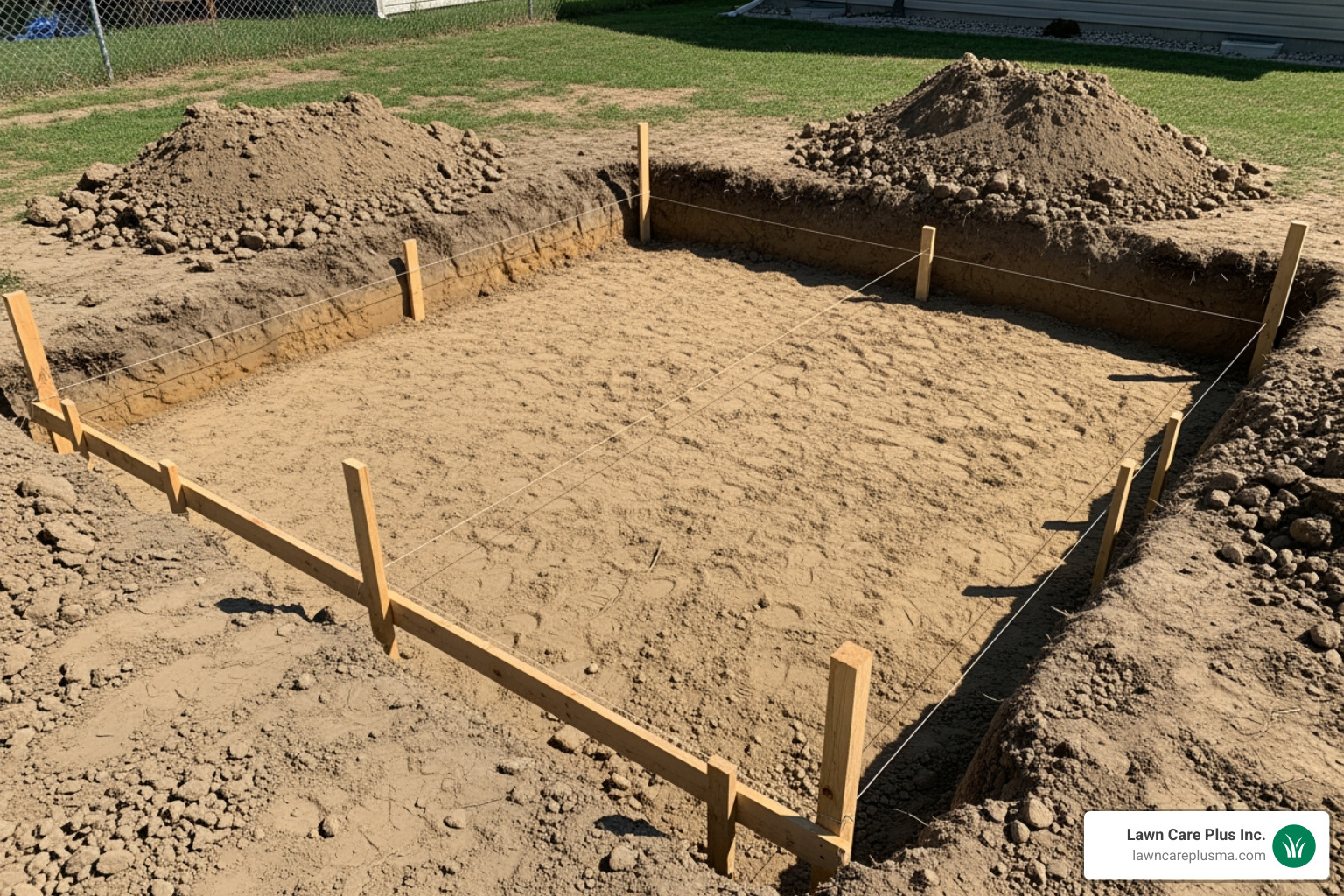
Proper site prep is the foundation of your project. First, mark your patio layout using stakes and string, allowing extra room around the perimeter to work.
Before you dig, contact 811 or visit call811.com a few days in advance. This free service marks underground utility lines, preventing dangerous and costly accidents.
Once cleared, excavate 8 inches deep for a standard 4-inch slab on a 4-inch gravel base. Remove all grass, roots, and topsoil.
Finally, compact the soil thoroughly with a hand tamper or a rented plate compactor. This crucial step prevents the ground from settling later, which would cause your patio to crack.
Step 2: Building the Foundation and Forms
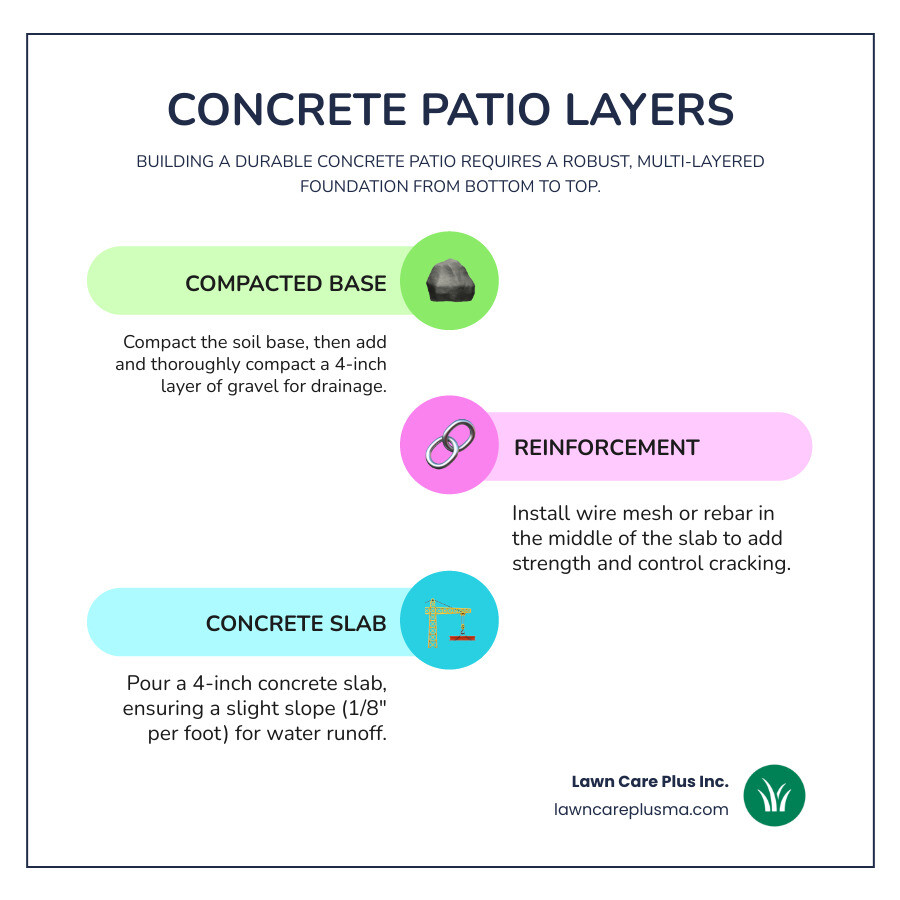
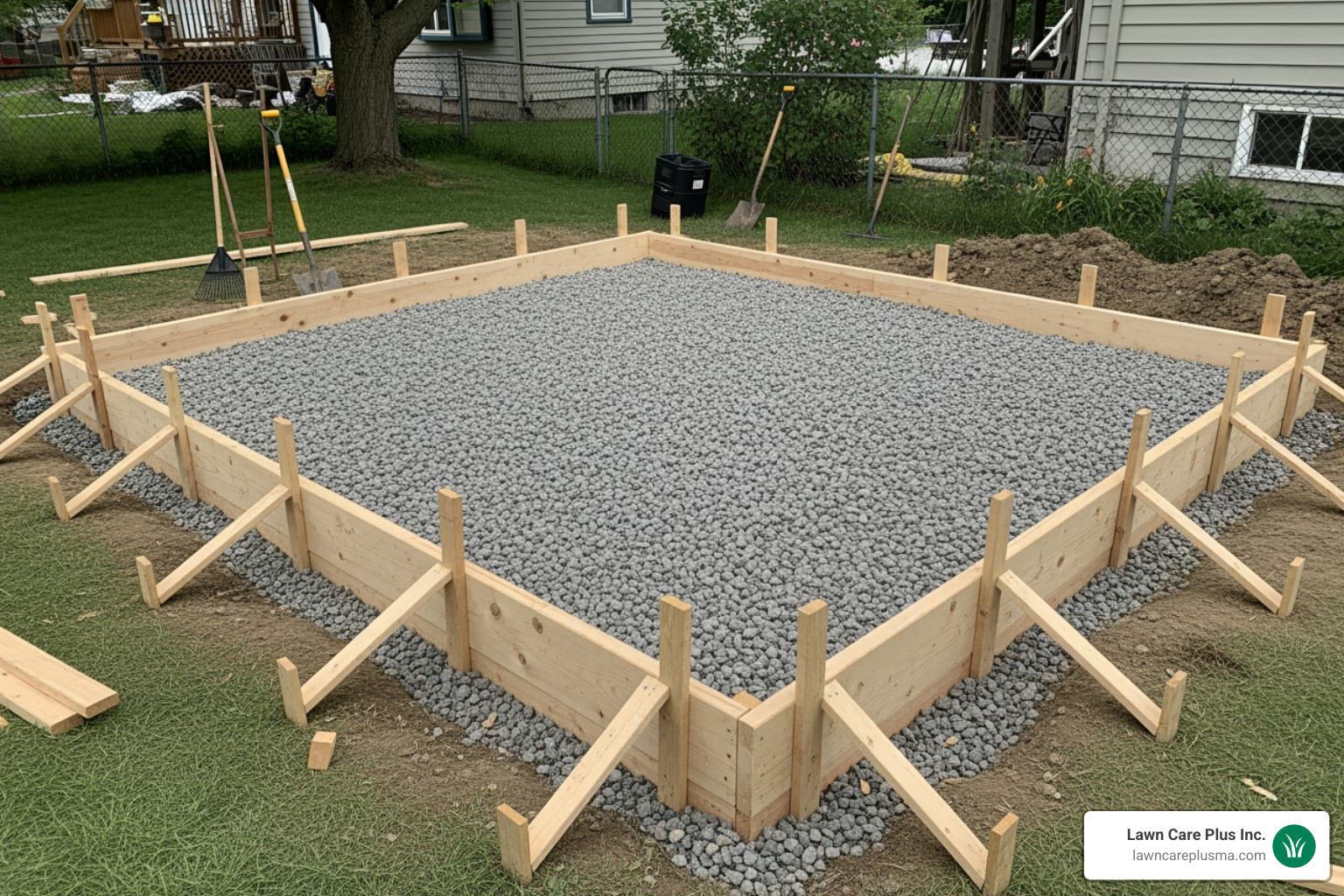
With the site excavated, it’s time to build the support structure. Start by spreading and compacting a 4-inch layer of gravel to provide a stable, well-draining base.
Next, build the wooden forms using 2×4 lumber. To ensure a professional look, get the corners perfectly square using the 3-4-5 triangle method: measure 3 feet from a corner along one side and 4 feet along the adjacent side. The diagonal distance between these points should be exactly 5 feet.
Set the forms to the correct height, creating a slope of 1/8 inch per foot away from any structures for proper drainage. Secure the forms with stakes driven every 2-3 feet along the outside. Before pouring, coat the inside of the forms with a release agent and place 1/2-inch expansion joint material where the patio meets your house foundation.
Step 3: Adding Reinforcement
While concrete is strong under compression, it’s weak when pulled. Reinforcement is smart insurance against cracking, especially for patios larger than 10×10 feet. You can use rebar (steel rods in a grid) or wire mesh.
The key is placement: reinforcement only works if it’s positioned in the middle of the slab. Use rebar chairs or supports to lift it off the gravel base to the correct height (about 2 inches from the bottom for a 4-inch slab). For related concrete projects, you might find information on concrete walkway installation helpful.
Step 4: Mixing, Pouring, and Screeding the Concrete
Once you start pouring, there’s no stopping. For small jobs, use bagged mix with a consistency like thick oatmeal. For larger patios, order ready-mix concrete from a truck for speed and consistency.
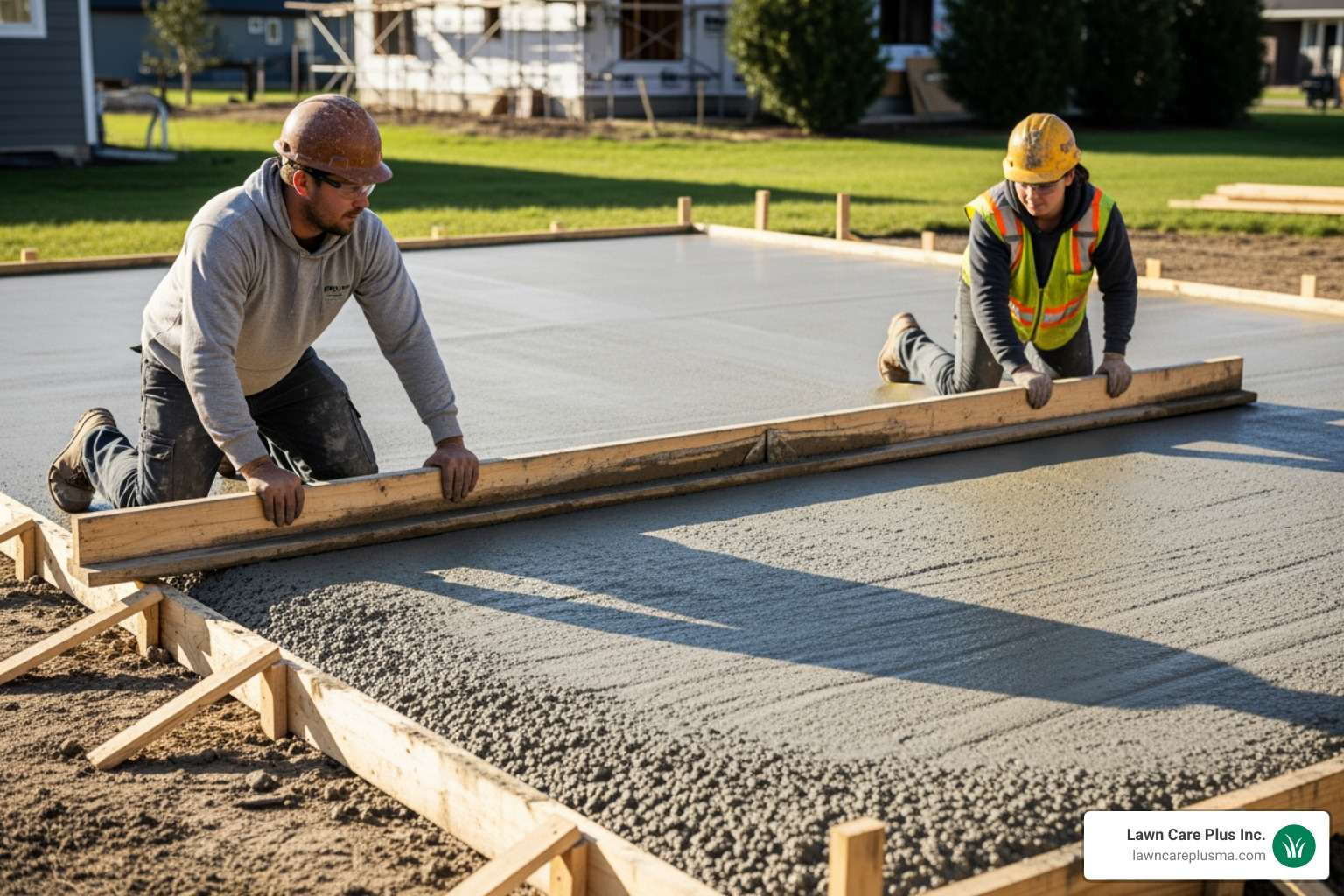
Pour the concrete starting in the farthest corner, spreading it with a shovel to fill the forms slightly above the top. Remove air pockets by working a shovel along the inside of the forms.
Next, screed the concrete level with the top of the forms. Use a straight 2×4 board that’s longer than the patio’s width. With a helper, pull the board across the surface in a sawing motion to remove excess concrete and create a flat, even surface.
Finishing and Curing Your New Concrete Patio
The pour is complete, but the finishing touches determine how your patio will look and perform. This stage requires patience as the concrete transforms from liquid to solid. To learn more about creating inviting outdoor surfaces, explore More about Patios Walkways.
Applying a Professional Finish
After screeding, you’ll see a layer of water (bleed water) on the surface. Wait for this to evaporate completely before finishing. The concrete should look dull, not shiny.
- Floating: Use a bull float or hand float to smooth the surface and embed large aggregate just below the top. This brings a layer of fine material, or “cream,” to the surface.
- Edging: Run an edger tool along the forms to create smooth, rounded corners that resist chipping.
- Broom Finish: For a non-slip surface, gently drag a stiff-bristle broom across the concrete in straight, even lines. This texture provides excellent traction, which is especially important in Massachusetts where rain and ice are common.
Creating Control Joints
Here’s a truth about concrete: it will crack. But control joints allow you to control where those cracks happen. For any patio larger than 10×10 feet, you should create a grid of control joints every 8 to 10 feet in both directions.
Cut these joints after floating but before the final broom finish. Use a groover tool guided by a long, straight board. The groove should be about one-quarter of the slab’s thickness deep.
Curing the Concrete and Removing Forms
Proper curing is absolutely critical for achieving a strong, durable patio. Curing is a chemical process that requires moisture, so you must prevent the concrete from drying out too quickly.
For the first three to seven days, keep the concrete moist. The easiest method is to cover the entire patio with plastic sheeting. Alternatively, you can apply a spray-on curing compound or periodically mist the concrete with water.
The concrete will be hard enough for foot traffic in 24 to 48 hours and can support lightweight furniture after 7 to 10 days. However, it won’t achieve its full strength for heavy items like a hot tub until it has cured for approximately 28 days.
You can typically remove the forms after three days. Patience during the curing period is what separates a patio that lasts a few years from one that’s still looking great decades from now.
Frequently Asked Questions About Concrete Patios
Taking on a project like how to install a concrete slab patio naturally raises questions. Here are answers to the most common concerns.
Should I seal my concrete patio?
Yes, we strongly recommend sealing your concrete patio, especially in Massachusetts. A sealer acts as a protective shield for your investment. Concrete is porous and can absorb water and stains.
- Benefits: A sealer provides stain protection from spills, water resistance to prevent freeze-thaw damage, and UV protection to stop color from fading. It also improves the patio’s appearance.
- Application: Wait 28 days for the concrete to fully cure. Clean the surface thoroughly, let it dry completely, and then apply the sealer with a roller or garden sprayer according to the manufacturer’s instructions. Plan to reapply every two to three years.
What are common mistakes to avoid when you install a concrete slab patio?
- Improper Site Preparation: Failing to excavate deep enough, compact the soil, or add a gravel base will lead to settling and cracks.
- Incorrect Slope for Drainage: A patio that’s perfectly level or slopes toward your house will cause serious water problems. Ensure a 1/8 inch per foot slope away from structures.
- Pouring in Extreme Weather: Avoid hot days (above 90°F) and cold days (below 40°F), as extreme temperatures compromise the concrete’s strength and curing process.
- Forgetting Control Joints: Without them, random, unsightly cracks are inevitable on larger slabs.
- Overworking the Surface: Excessive floating or troweling can weaken the top layer, causing it to flake or dust over time.
- Inconsistent Mixing: When mixing by hand, ensure every batch has the same consistency to avoid weak spots in the slab.
How much can I save by pouring a concrete patio myself?
You can save 40 to 50 percent on average by pouring your own concrete patio, as you eliminate professional labor costs.
These are average costs based on internet data and not actual costs for Lawn Care Plus, but professional installation often ranges from $8 to $30 or more per square foot. A basic 200-square-foot patio might cost anywhere from $1,600 to $6,000 or higher professionally installed. By tackling it yourself, your cost for materials and equipment might be between $800 and $3,000.
Factors like patio size, concrete type, reinforcement, and site accessibility will affect your final cost. The beauty of DIY is that you control these expenses. For a more detailed breakdown, check out Cost to Install Concrete Patio.
Conclusion: Enjoy Your New Outdoor Space or Call the Pros
By following these detailed steps on how to install a concrete slab patio, you now have the knowledge to create a durable, beautiful outdoor space that will improve your Massachusetts home for decades to come.
A DIY concrete patio offers remarkable benefits and a great sense of accomplishment. However, we understand that pouring concrete is one of the most physically demanding and time-sensitive DIY projects. It requires careful coordination and significant physical labor, and the margin for error is small.
If the project seems too large, or you simply want the peace of mind that comes with professional expertise, you don’t have to go it alone. The experienced team at Lawn Care Plus Inc. has been changing backyards throughout the Boston Metro-West area for years. We bring the right equipment and skilled crews to every project, from simple concrete pads to elaborate hardscape designs. We serve homeowners in Belmont, Boston, Brighton, Brookline, Canton, Chestnut Hill, Dedham, Hyde Park, Jamaica Plain, Mattapan, Medfield, Milton, Needham, Newton, Norwood, Randolph, Readville, Roslindale, Walpole, Watertown, and Wellesley.
Whether you decide to tackle this project yourself or bring in professional help, the most important thing is creating an outdoor space where you can make memories for years to come. Ready to get started? Contact us today for a free estimate on our Hardscaping Services and let’s build something beautiful together.
