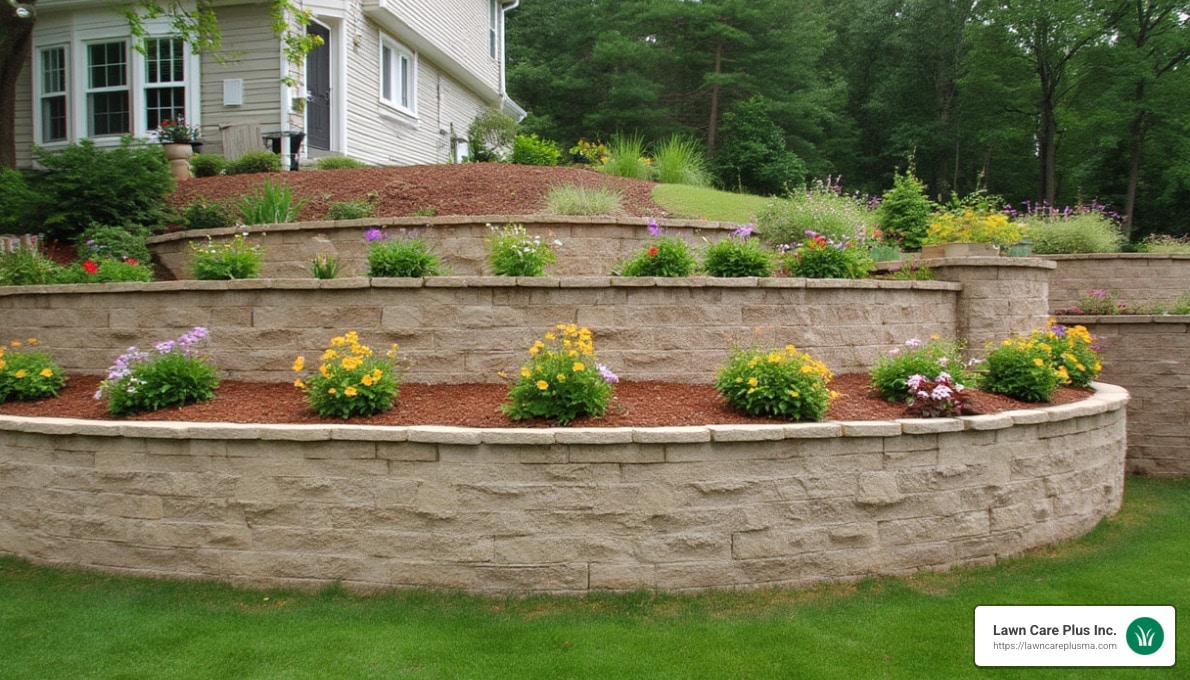
More Than Just a Wall
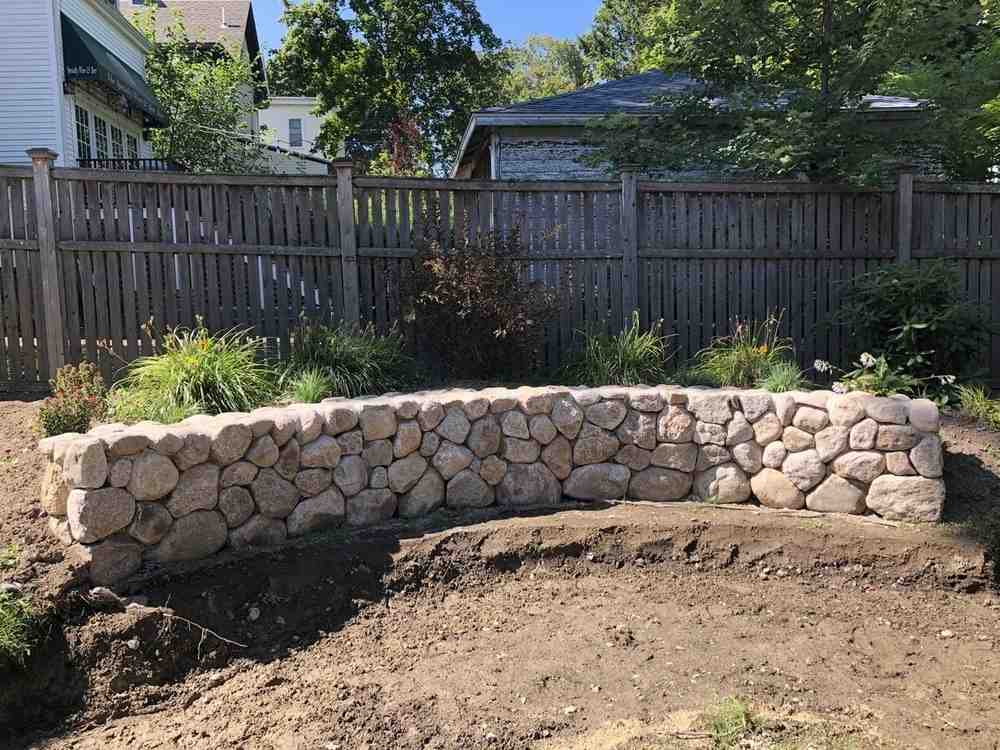
Retaining wall ideas can transform your sloped yard from a maintenance headache into a stunning outdoor showcase. Here are some of the most popular approaches:
Top Retaining Wall Ideas by Material:
- Wood – Natural look, budget-friendly, ideal for terraced gardens
- Concrete Blocks – Versatile, long-lasting, great for DIY curved walls
- Natural Stone – Timeless elegance, pairs beautifully with plantings
- Steel/Gabion – Modern aesthetic, industrial-chic appeal
- Brick – Classic charm, perfect for traditional homes
Top Retaining Wall Ideas by Function:
- Tiered Gardens – Create multiple planting levels on slopes
- Integrated Seating – Built-in benches using wall caps
- Water Features – Incorporate waterfalls or cascading streams
- Lighting Design – Add safety and ambiance with integrated fixtures
- Property Definition – Replace fences with planted walls
You might not think of retaining walls as the most exciting yard improvement, but they can do far more than just hold back soil. A well-designed retaining wall prevents erosion, creates usable flat space on sloped terrain, and can significantly boost your property value and curb appeal.
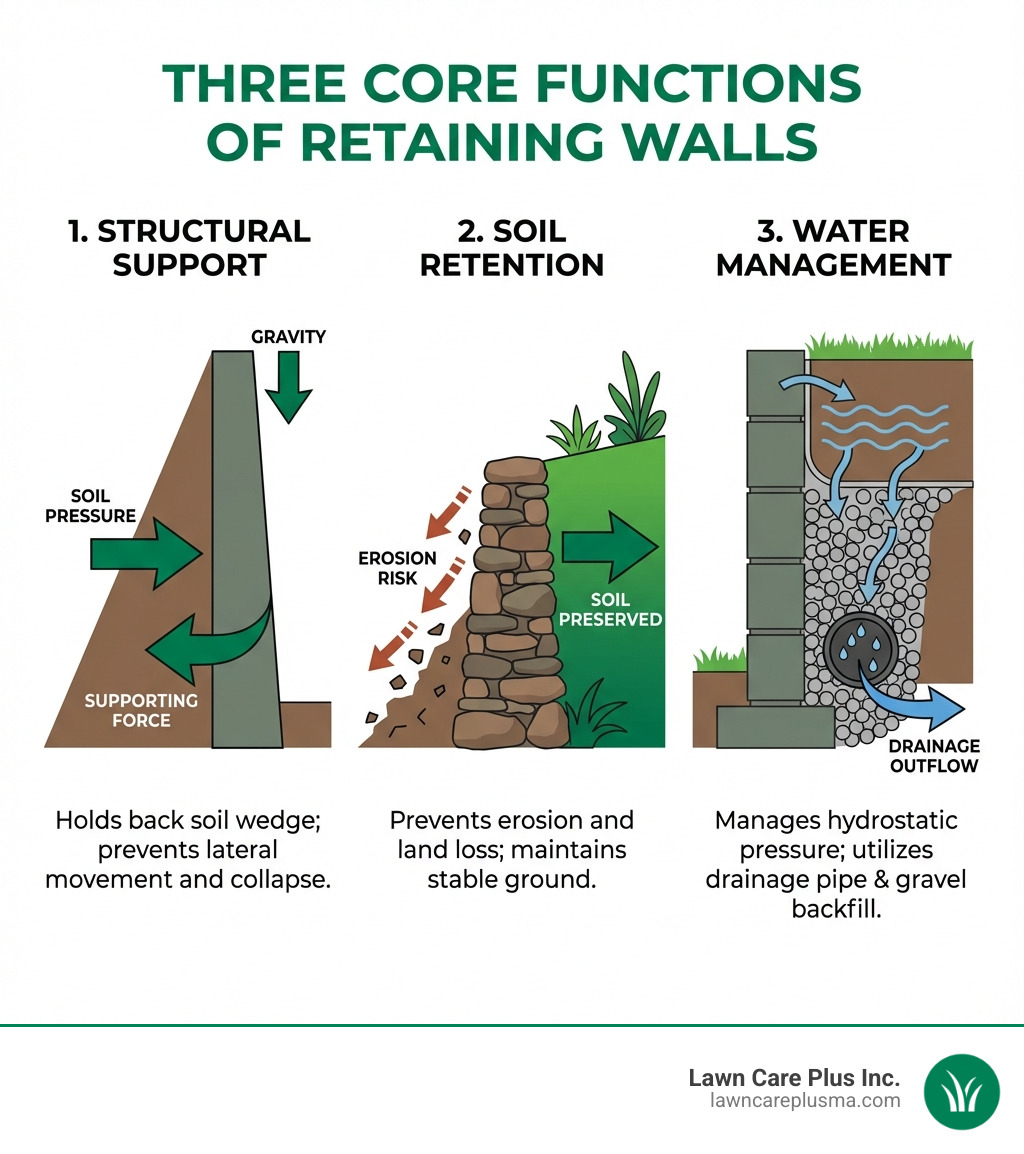
These structures serve three essential functions: they provide lateral support to prevent soil collapse, manage water drainage to protect your foundation, and transform challenging hillsides into functional outdoor living areas. Whether you’re dealing with a gentle slope or a steep hillside, the right retaining wall can turn a problem into an opportunity.
I’m Tim DiAngelis, owner of Lawn Care Plus Inc., and over the past decade, I’ve designed and installed countless hardscaping projects throughout the Boston Metro-West area, including many retaining wall ideas that have transformed challenging slopes into beautiful, functional outdoor spaces. Let me walk you through everything you need to know to make the right choice for your property.
Simple retaining wall ideas glossary:
Choosing Your Material: A Guide to Durability, Cost, and Style
The material you choose for your retaining wall is perhaps the most significant decision you’ll make. It directly impacts not only the cost and longevity of your wall but also its aesthetic appeal and how well it integrates with your overall landscape design. From natural wood to robust concrete, each material offers a unique set of pros and cons, making the selection a balance between budget, desired look, and practical considerations.
When considering the cost, material expenses can range widely, from as little as $5 per square foot to over $200 per square foot, depending on the type and quality. The overall cost will also be heavily influenced by labor, site preparation, and the complexity of the design.
Pricing disclaimer: Please note that cost estimates are based on national averages and can range from $5 to over $200 per square foot. For a precise quote for your project in the Boston Metro-West area, a professional consultation is recommended.
Let’s look at some popular materials for retaining wall ideas:
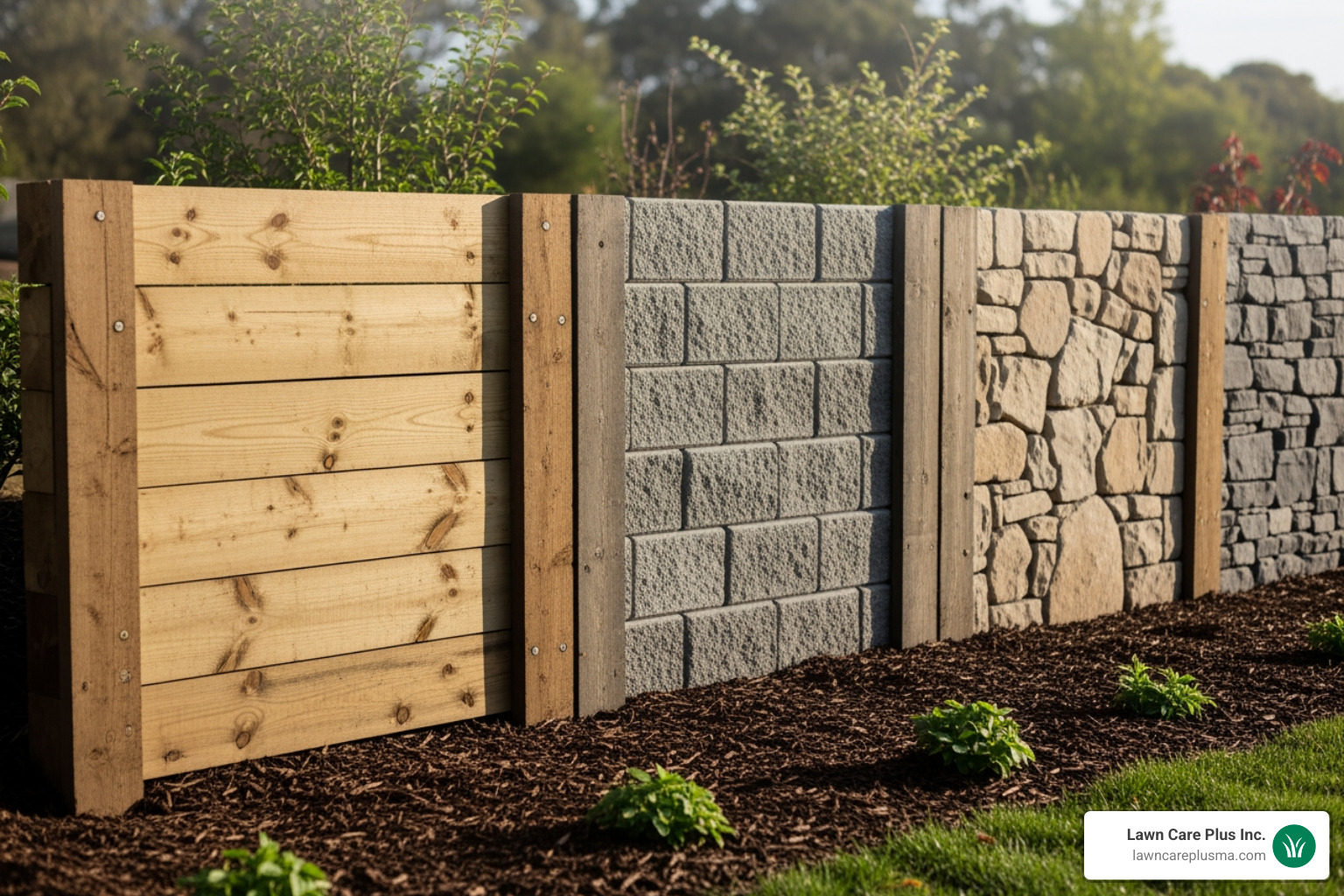
| Material | Average Cost (per sq ft) | Lifespan | DIY-Friendliness (for small walls) |
|---|---|---|---|
| Wood | $15-$30 | 5-10 years (treated) | High |
| Concrete Blocks | $5-$200 | 20-40+ years | Medium to High |
| Natural Stone | $20-$100 | 50-100+ years | Low to Medium |
| Steel (Corten) | $15-$150 | 50+ years | Medium |
| Gabion Baskets | $10-$40 | 50+ years | Medium |
Wood Retaining Walls
Wood retaining walls, often constructed from pressure-treated timber, offer a natural and rustic aesthetic that can blend beautifully with many landscapes, especially in our Massachusetts environment. They are generally among the most budget-friendly options upfront, costing 50-75% less than stone or engineered blocks.
- Pros: Natural aesthetic, relatively inexpensive materials, and easier for DIY installation for smaller walls.
- Cons: The primary drawback is their shorter lifespan, typically around 5 to 10 years for pressure-treated wood before needing replacement. Wood is susceptible to rot, pests, and the freeze-thaw cycles we experience in Massachusetts, and improper drainage can significantly shorten its life. A note on older materials: if you’re considering salvaged railroad ties, be aware that older ones were treated with creosote, which can leach into the soil. The EPA provides information on creosote safety and its potential impacts. Modern pressure-treated lumber uses safer alternatives.
Concrete Block Retaining Walls
Concrete blocks are an incredibly popular choice for retaining wall ideas due to their impressive durability and versatility. Properly installed concrete block walls can last 20 to 40 years or more with minimal maintenance, making them a long-term investment.
- Pros: Exceptional durability, high strength, and a wide range of styles, colors, and textures available. Interlocking concrete blocks, which can be found for just over $1 each for basic varieties, are particularly popular. These blocks often feature an overhanging lip and a self-locking flange, allowing for mortar-free installation, making them a viable option for DIYers tackling shorter walls. Modern concrete blocks are denser and stronger than traditional cinder blocks, providing superior structural integrity.
- Cons: Without careful design, concrete block walls can sometimes look uniform or utilitarian. They require a proper, compacted foundation to ensure stability, especially considering the freeze-thaw cycles in our region. For more in-depth information, you can explore more on concrete block walls. The National Concrete Masonry Association offers technical resources for those interested in the specifics.
Natural Stone Retaining Walls
Natural stone walls are a quintessential feature of many Massachusetts landscapes, offering timeless beauty and a robust, organic feel. Materials like fieldstone, cut stone, or large boulders create a unique character that artificial materials often struggle to replicate.
- Pros: Best aesthetic appeal, extremely durable with a lifespan easily exceeding 50 to 100 years, and can significantly increase property value. Natural stone blends seamlessly with the environment, highlighting other garden features. We often find that integrating natural stone retaining walls into a landscape design creates a truly distinguished and formal appearance.
- Cons: Generally the most expensive option due to both material cost and the specialized labor required for proper installation. Working with natural stone demands skill and experience, often making professional installation necessary. We’re experts in hardscaping services that incorporate natural stone.
Modern Steel & Gabion Walls
For those seeking more contemporary retaining wall ideas, modern steel and gabion walls offer distinct styles and functional advantages.
- Corten Steel: Sometimes called weathered steel, Corten steel is a type of metal designed to adapt to the elements, quickly developing a beautiful, stable, rust-like patina. It offers the strength of steel with a rugged, attractive look that can blend easily into natural surroundings or stand out with a modern, industrial-chic appeal. Corten steel is strong, durable, and corrosion-resistant, requiring minimal maintenance. Its thin profile allows for sleek designs, whether curved or sharply angled.
- Gabion Baskets: These are wire cages filled with rocks, broken concrete, or other inert materials. Gabion baskets are highly permeable, allowing water to drain through easily, which is a significant advantage in managing hydrostatic pressure. They offer an industrial-chic aesthetic and are incredibly durable, often lasting 50+ years. Interestingly, gabion baskets can get stronger over time as vegetation and silt fill the gaps. To save on costs, you can fill the interior with cheaper rubble and use more attractive stones only for the visible faces.
20+ Inspiring Retaining Wall Ideas for Every Yard
Beyond their foundational purpose, retaining wall ideas offer incredible opportunities to improve the aesthetics and functionality of your outdoor space. They can define areas, create visual interest, and even provide new living spaces. Here are some of our favorite ways to integrate walls into a cohesive landscape design.
For even more inspiration, check out our design ideas for your home.
Tiered & Terraced Garden Retaining Wall Ideas
If you have a sloped yard, tiered or terraced retaining walls are a game-changer. Instead of struggling with erosion and uneven planting, you can create multiple level planting areas or even functional patios and walkways on different levels. This not only maximizes usable space but also adds visual depth and interest to your landscape. For instance, stacking terraces of timber can keep everything in its place while curating can’t-miss curb appeal on a front yard slope. We specialize in retaining walls and landscaping that transform challenging grades into beautiful, multi-functional spaces.
Modern Retaining Wall Ideas with Integrated Seating
Why have a wall that just holds dirt when it can also hold people? Integrating seating into your retaining wall design is a brilliant way to create functional outdoor spaces. Imagine low walls around a patio or fire pit area with wide, flat caps that double as benches. This dual-purpose design saves space and creates a cohesive look. We can even design them with hidden storage compartments underneath!
Add Drama with Curves and Water Features
Retaining wall ideas don’t have to be straight lines. Curved or serpentine walls can soften the hard edges of a landscape, creating a more natural and fluid aesthetic. These winding walls can accentuate the natural terrain rather than fighting against it. To lift the drama even further, consider integrating water features. A stone wall with a cascading waterfall or a series of small ponds built into a terraced design can create a tranquil ambiance and a captivating focal point. Building a stone wall with a waterfall can truly make your outdoor space unique.
Illuminate Your Design with Lighting
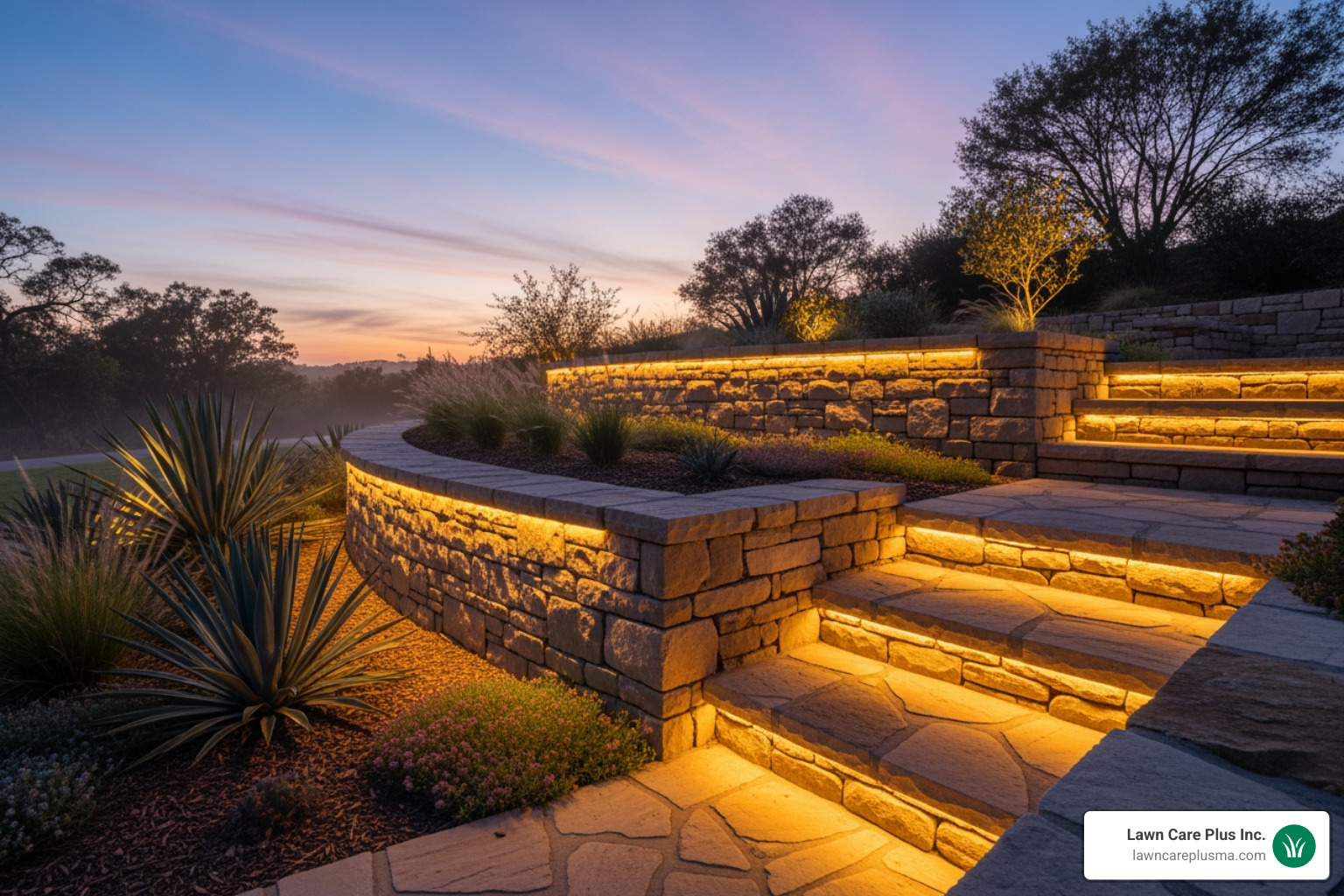
Incorporating lighting into your retaining wall design serves both practical and aesthetic purposes. Strategically placed lights can improve safety along steps and pathways, making your outdoor spaces more accessible after dark. Aesthetically, under-cap lighting can create a soft, inviting glow, while uplighting can highlight the texture of your wall material or showcase plantings. Integrated fixtures can turn your retaining wall into a stunning nocturnal feature, adding ambiance and extending the usability of your yard into the evening hours.
Building It Right: From Foundation to Finishing Touches
While the aesthetics of retaining wall ideas are exciting, the structural integrity is paramount. A beautiful wall that fails quickly becomes an eyesore and a hazard. This is where the difference between DIY and professional installation becomes critical. Small, simple walls under 3 feet tall, without any significant load behind them, can often be tackled by an experienced DIYer. However, for taller walls, walls on challenging terrain, or those supporting structures like driveways or foundations, professional expertise is essential. We’ve seen the benefits of hiring a professional for your retaining wall installation, ensuring safety, longevity, and peace of mind.
Planning Your Project: Permits, Slopes, and Design
Before any shovel hits the ground, thorough planning is crucial. Most municipalities in Massachusetts require permits for retaining walls over a certain height, typically 3 or 4 feet. Even shorter walls might need permits if there are “surcharges” like driveways or building foundations above them. Always check with your local building department in Boston, Dedham, Newton, or any of our service areas to understand specific regulations.
Design considerations are also vital, especially on slopes. We always recommend designing with the natural landscape in mind, sometimes following the slope with varying wall heights rather than imposing a perfectly level structure. For structural stability, many walls, especially those built with blocks, are constructed with a slight “batter,” meaning they lean slightly back into the hill. This leverages gravity to help the wall resist the soil pressure. Our team can help you steer these complexities; for a comprehensive guide, refer to our build retaining wall guide 2025.
The Importance of a Solid Foundation
The foundation is the unsung hero of any retaining wall. Without a proper base, even the most expertly built wall will eventually fail. The process typically involves excavating a trench, ensuring some of the wall’s height is buried underground to prevent the soil pressure from pushing the bottom out. This trench is then filled with a layer of compacted gravel, providing a stable, level surface for the first course of blocks or stones. This initial leveling is perhaps the most critical step, as it sets the stage for the entire wall’s stability and appearance. A weak foundation is the quickest path to a leaning or bulging wall. Learn more about retaining wall foundation best practices.
Essential Retaining Wall Drainage
Water is the number one enemy of retaining walls. Without proper drainage, water can build up behind the wall, creating immense hydrostatic pressure that can push the wall over, cause bulging, or lead to premature failure. This is why effective drainage is non-negotiable. Key components of a good drainage system include:
- Gravel Backfill: A layer of clean, coarse gravel immediately behind the wall allows water to flow freely down to the drainpipe.
- Perforated Pipe: A drainpipe, typically wrapped in geotextile fabric to prevent clogging, is placed at the base of the wall to collect water and direct it away to daylight or a proper drainage system.
- Weep Holes: In some designs, small openings called weep holes are incorporated into the wall face to allow water to escape.
- Geotextile Fabric: This fabric separates the gravel backfill from the surrounding soil, preventing soil particles from migrating into the gravel and clogging the drainage system.
It’s crucial to ensure surface water is directed away from the wall’s top and that any gutter downspouts are also routed elsewhere. Properly managed drainage is the most effective way to ensure the longevity of your retaining wall. For a deeper dive into this vital topic, explore retaining wall drainage.
Frequently Asked Questions
How high can I build a retaining wall myself?
For most homeowners, DIY retaining wall ideas are best suited for walls under 3 feet tall. These smaller walls typically don’t require extensive engineering or permits, and the structural demands are manageable for someone with basic construction skills. However, as soon as a wall exceeds 3-4 feet in height, or if it’s supporting a significant load (like a driveway, building, or even a steep slope), it enters the field of complex engineering.
In Massachusetts, local regulations often stipulate that walls over 4 feet require professional design and permits. Trying to DIY a taller, more complex wall can lead to safety hazards, structural failure, and costly repairs down the line. We always recommend consulting with a professional for any wall project over 3 feet to ensure safety and longevity.
What is the most budget-friendly retaining wall?
When considering retaining wall ideas on a budget, pressure-treated wood is often the cheapest material upfront, costing 50-75% less than stone or engineered blocks. However, remember its shorter lifespan. Interlocking concrete blocks are another cost-effective option, with basic units available for just over $1 each, offering better longevity than wood. Salvaged materials like broken concrete, on-site rocks, or reclaimed bricks can be the absolute cheapest if you can source them for free, but they require significant labor and time.
The most significant factor in overall cost is often labor. If you’re willing and able to do the work yourself for a small, simple wall, you can save substantially. However, for anything larger or more complex, the cost of professional labor ensures proper installation and long-term stability, ultimately saving money in the long run. To get a better understanding of all the factors involved, check out understanding retaining wall costs.
How do I stop my retaining wall from failing?
The key to preventing retaining wall failure boils down to three critical factors:
- Proper Drainage: This is, without a doubt, the most critical element. As we discussed, hydrostatic pressure from trapped water behind the wall is the primary cause of failure. Ensure your wall includes a robust drainage system with gravel backfill, a perforated drainpipe, and proper routing of water away from the wall.
- Solid Foundation: A well-prepared, compacted, and level base is essential. The foundation distributes the wall’s weight and the pressure from the soil behind it. Without a strong footing, the wall can settle unevenly or be pushed out from the bottom.
- Correct Construction & Material: Using the right materials for the job, building with a slight “batter” (backward lean) into the hill, and proper compaction of backfill in layers all contribute to the wall’s structural integrity. Adhering to manufacturer guidelines (for blocks) or engineering specifications (for larger walls) is crucial. Don’t cut corners on these steps; a well-built wall is a lasting wall.
Conclusion: Bring Your Vision to Life
Retaining wall ideas offer a fantastic blend of functionality and beauty, changing challenging slopes into valuable, usable outdoor spaces. From preventing erosion and managing water to creating stunning tiered gardens and integrated seating areas, a well-designed and properly constructed retaining wall is a significant asset to any property. It not only increases your property value but also dramatically improves your curb appeal, making your home a standout in the neighborhood.
For complex projects in the Massachusetts area, the experienced team at Lawn Care Plus Inc. can help design and build the perfect wall to lift your outdoor space. We bring over a decade of expertise in hardscaping and landscape solutions to every project, ensuring your retaining wall is not just beautiful but also structurally sound and built to last through our unique climate.
Ready to explore the possibilities for your yard? Explore our landscape retaining wall services to get started!