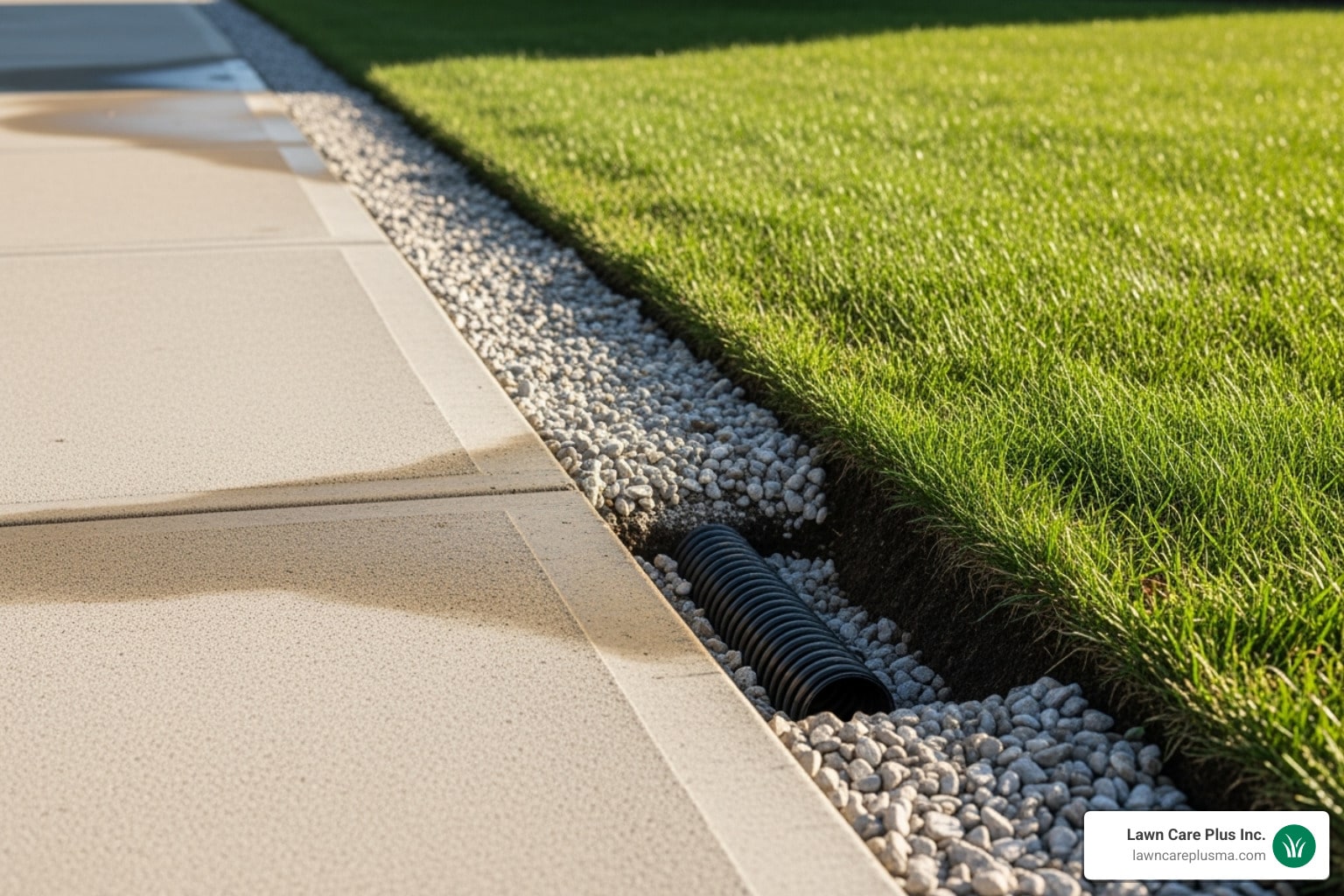
Why a Small French Drain Pipe Might Be Your Best Bet
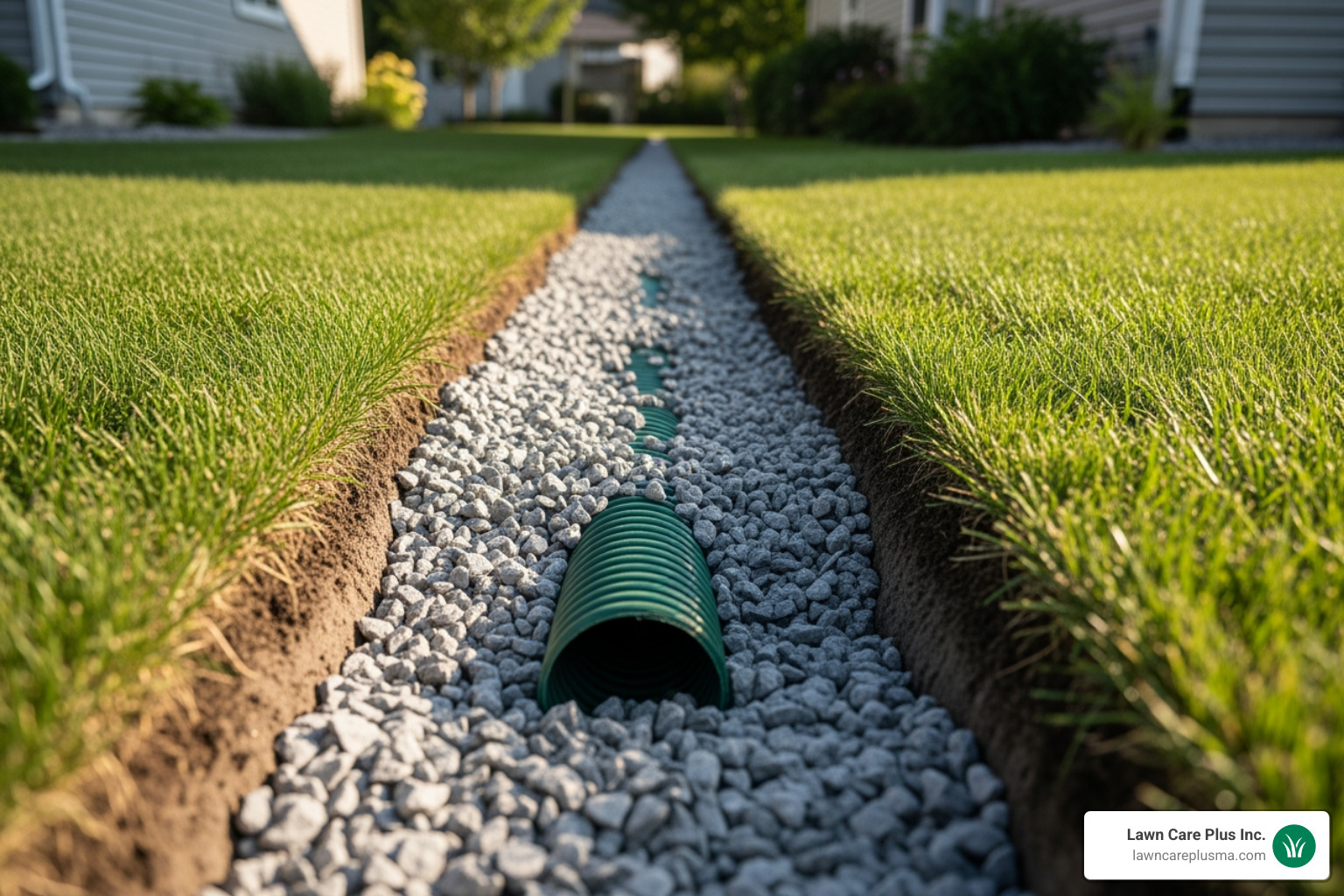
Small french drain pipe is typically 3 to 4 inches in diameter and is ideal for managing localized water problems in tight spaces around your property. Here’s what you need to know:
Best for:
- Soggy patches in lawns or garden beds
- Water pooling near patios and walkways
- Drainage from one or two downspouts
- Tight spaces between houses and fences
- Foundation moisture protection in confined areas
Common pipe types:
- 3-inch corrugated HDPE (flexible, DIY-friendly)
- 4-inch corrugated or PVC (standard residential)
- Pre-assembled gravel-free bundles (fastest install)
When heavy rain falls, most homeowners focus on protecting their homes, but standing water in your yard can quickly turn into long-term erosion and drainage problems. Maybe you’ve noticed a soggy spot that won’t dry out, or water pooling near your patio after every storm. A small French drain pipe offers a simple, cost-effective solution for these localized water issues without the expense and disruption of a full-scale drainage system.
The beauty of a small French drain is that it works with your property’s natural slope to move water safely away from problem areas. Whether you’re dealing with a narrow space between your house and walkway, managing runoff from a couple of downspouts, or protecting a garden bed from becoming waterlogged, the right small pipe can handle the job efficiently.
I’m Tim DiAngelis, owner of Lawn Care Plus in Roslindale, and over the past decade our team has installed countless small french drain pipe systems throughout Greater Boston to solve exactly these kinds of drainage headaches. From tight urban yards to commercial properties, we’ve seen how the right pipe choice and proper installation make all the difference.
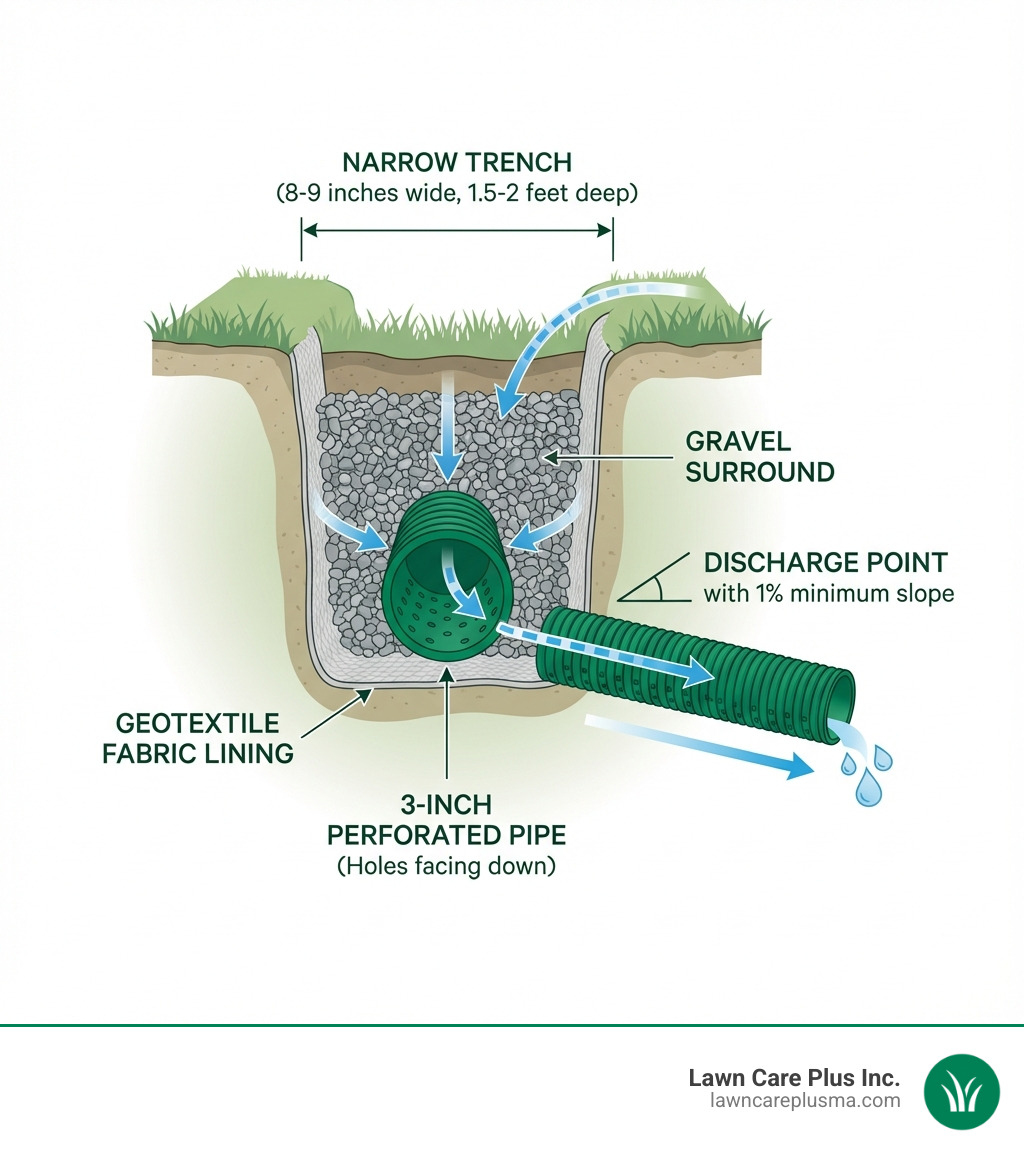
Small french drain pipe terms you need:
When to Choose a Small French Drain: Ideal Scenarios
Deciding on the right drainage solution can feel overwhelming, but for many common water woes, a small french drain pipe system is perfectly suited. These systems shine in situations where you’re dealing with localized dampness or minor pooling, particularly in the often-tight spaces found in urban and suburban landscapes across Massachusetts.
Tackling Localized Water Problems
We often recommend a small French drain when our clients in areas like Belmont, Newton, or Canton are experiencing specific, contained water issues. These include:
- Soggy Patches in the Lawn: If you have areas of your lawn that remain wet and spongy long after it rains, a small French drain can effectively capture and redirect that excess groundwater, helping your grass thrive.
- Water Pooling on Patios and Walkways: Patios and sidewalks can become slip hazards and suffer structural damage from persistent pooling. A strategically placed small French drain along the edge can quickly move this surface water away. For specific solutions, explore our sidewalk drainage solutions.
- Preventing Basement Moisture: Water accumulating near your foundation can seep into your basement, leading to dampness, mold, and costly repairs. A small french drain pipe installed along the exterior foundation can be a vital line of defense. This is especially true for homes in densely built areas like Brighton or Jamaica Plain, where space is often at a premium. For more on basement issues, see our guide on French drain inside basement.
- Diverting AC Condensate: Air conditioning units produce condensate that, if left to pool, can create damp spots. A small drainage pipe can easily divert this relatively low volume of water away from your home. We’ve covered this in our AC drainage solutions complete guide.
- Garden Bed Drainage: Overwatered garden beds can drown plants. A small French drain can protect your precious plantings by preventing waterlogging.
- Protecting Retaining Walls: Water buildup behind retaining walls can lead to structural failure. A small French drain at the base can relieve hydrostatic pressure.
- Managing Downspout Runoff: For one or two downspouts, a 3-inch or 4-inch pipe can efficiently carry roof runoff away from your foundation. For details on integrating with gutters, refer to our article on installing a French drain for gutters.
These scenarios highlight the primary benefits of using a smaller diameter French drain pipe: they are less intrusive, easier to install in confined areas, and cost-effective for localized problems. Their compact nature makes them ideal for the smaller yards and tighter property lines common in many Massachusetts communities.
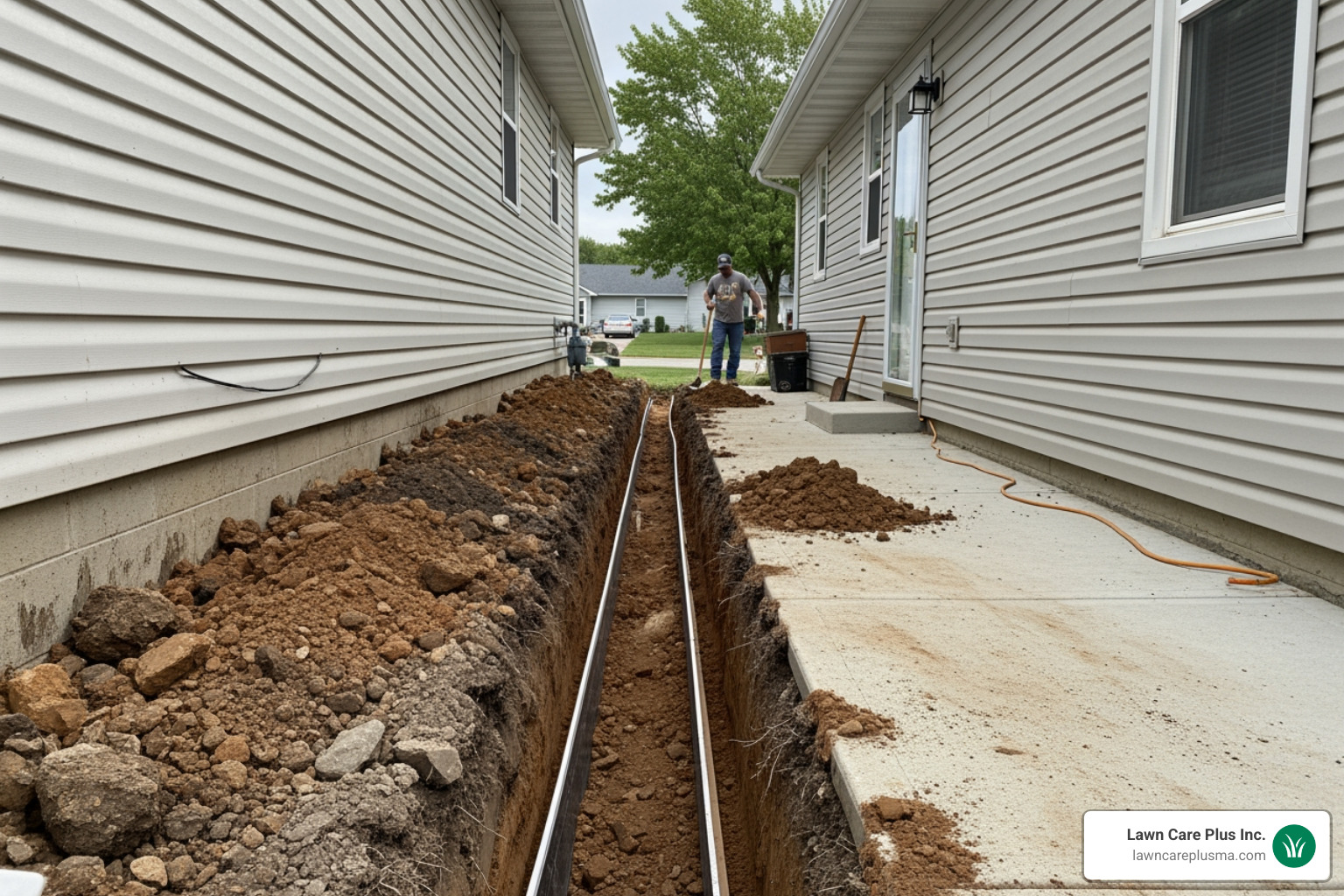
A narrow trench for a small french drain pipe being installed in a tight space between a house and a walkway.
When to Go Bigger
While small French drains are incredibly versatile, there are situations where a larger diameter pipe or a more extensive drainage system is necessary.
- Large Properties with Widespread Issues: If your entire yard is consistently waterlogged, or you’re dealing with significant runoff across a large area, a small drain might be overwhelmed.
- High Water Tables or Heavy Clay Soil: In areas with persistently high groundwater or dense clay soils (which drain poorly), a larger system with greater capacity and void space might be required. While some gravel-free systems can perform well in non-clay soils, clay often benefits from additional gravel to improve percolation.
- Significant Water Volume: If you’re managing runoff from multiple downspouts, a large roof, or a very steep slope, the flow rate could exceed a small pipe’s capacity. For example, while a 3-inch line can handle up to two downspouts, a third typically requires tying into a 4-inch main.
- Drainage Solutions for Sloping Land: Steep slopes can generate considerable runoff, requiring robust systems to prevent erosion and manage the flow. Our guide on drainage solutions for sloping land provides more insight.
It’s about matching the solution to the problem. If you’re unsure, we’re always happy to provide a professional assessment for your property in the Boston Metro-West area.
Selecting the Best Small French Drain Pipe and Materials
Choosing the right components is crucial for the success and longevity of your small french drain pipe system. The materials you select will impact everything from installation ease to long-term performance and maintenance.
Traditional Pipe Options
When it comes to pipes, the two most common types for French drains are corrugated HDPE and rigid PVC.
- Corrugated HDPE Pipe: This is a favorite for DIYers and many professionals due to its flexibility and ease of installation. It’s lightweight and can bend around corners without needing extra fittings, which is a huge plus in tight spaces. You’ll find it in diameters like 3-inch and 4-inch. A 3-inch corrugated pipe, for example, is often recommended for its ease of installation and ability to provide higher water velocity, which helps prevent clogging, especially for downspout applications.
- Rigid PVC Pipe: While less flexible, rigid PVC offers superior durability and a smoother interior, which can lead to better flow rates and less chance of sediment buildup over time. However, it requires more fittings for turns and can be more challenging to install in irregular trenches.
Here’s a quick comparison:
| Feature | Corrugated HDPE Pipe | Rigid PVC Pipe |
|---|---|---|
| Flexibility | Very flexible, bends easily | Rigid, requires fittings for turns |
| Cost | Generally lower | Generally higher |
| Installation | Easier for DIY, less labor-intensive | More challenging, requires precise cuts |
| Durability | Good, but can be susceptible to crushing | Excellent, very robust |
| Flow Rate | Good, but corrugations can impede slightly | Excellent, smooth interior for optimal flow |
For many of our small french drain pipe projects in Massachusetts, especially for residential domestic surface water drainage systems or domestic rainwater drainage systems, the 3-inch or 4-inch corrugated perforated pipe strikes a good balance between effectiveness and ease of installation.
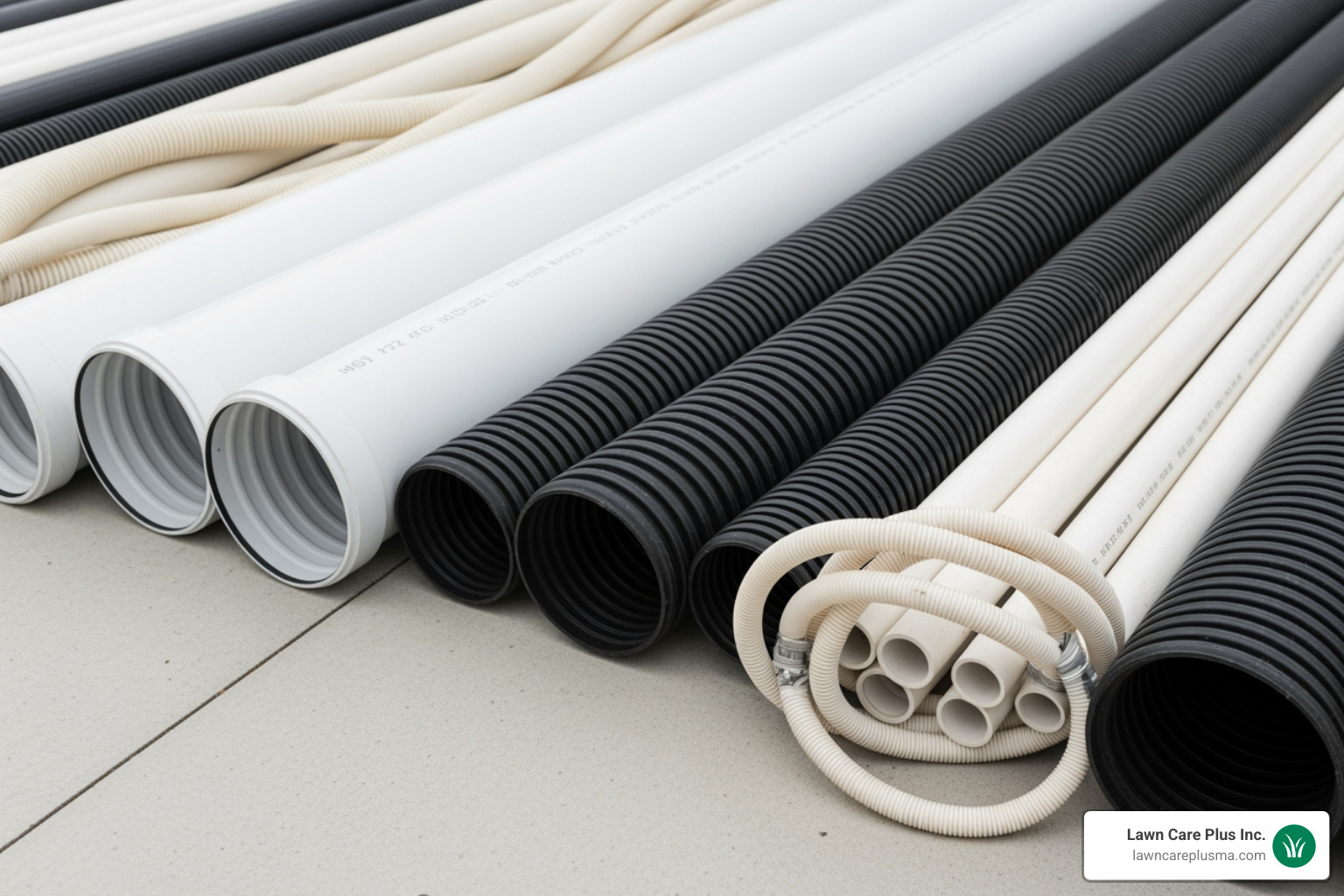
A selection of different types of drainage pipes, including corrugated and rigid PVC options.
Modern Gravel-Free Alternatives
Innovation in drainage has brought us excellent gravel-free systems that can significantly simplify installation. These solutions are often pre-assembled bundles, featuring a slotted drain pipe (typically HDPE) surrounded by a lightweight, engineered aggregate, all wrapped in a geotextile mesh.
- Pre-assembled Systems: These systems eliminate the need to haul and shovel large amounts of gravel, cutting installation time by up to 50% and saving considerable labor. Some systems, using patented Poly-Rock™ material (made from 100% recycled expanded polystyrene), boast a 30% higher flow rate than traditional gravel and pipe systems due to increased void space and engineered flow channels.
- Increased Void Space and Flow Rates: For example, a 4-inch diameter gravel-free bundle can offer a flow rate of 113 GPM (gallons per minute) and a storage volume of up to 16 gallons per bundle, even with a minimum 1% slope. This superior performance makes them a compelling choice for efficiently managing water.
- Technical Specifications: These modern systems are designed for quick and easy installation, often capable of being buried from 6 inches up to 12 feet deep (for aggregate-only bundles). They are also flexible, bending around corners, and can be cut to size or connected with internal couplings.
Essential Accessories for Longevity
No matter which pipe you choose, certain accessories are vital for ensuring your small french drain pipe system functions effectively for years to come.
- Geotextile Fabric for French Drains: This is non-negotiable. A water-permeable landscape fabric or filter fabric is critical for lining the trench and wrapping the drain system. Its purpose is to prevent soil and silt from entering and clogging the pipe, while still allowing water to pass through. We dig deeper into this in our article on geotextile for French drain.
- Pipe Sock: For perforated pipes, a fabric sock can provide an additional layer of protection against sediment infiltration.
- Catch Basins: These are crucial for capturing surface water before it enters the French drain, especially if you’re dealing with runoff from a patio or driveway. They help filter out larger debris.
- Pop-Up Emitters: These are typically used at the discharge end of your system, allowing collected water to exit discreetly and safely away from your property.
A Step-by-Step Guide to Installing Your Small French Drain
Installing a small french drain pipe can be a rewarding DIY project for managing minor water problems around your home. However, proper planning and execution are key. Always prioritize safety by wearing appropriate gear (gloves, eye protection) and being aware of any underground utilities before you dig.
Step 1: Planning and Trenching
This initial phase sets the foundation for your entire drainage system.
- Map the Route: Identify the wettest areas and plot a path for your drain that leads to a suitable discharge point. This could be a lower part of your yard, a dry well, or a connection to a storm drain (check local regulations first!).
- Identify the Discharge Point: Ensure the water will drain away from your home and any neighboring properties.
- Calculate Slope (1% Minimum): Water needs gravity to flow! For every 10 feet of drain, you need at least a 1-inch drop in elevation. This ensures positive drainage and prevents standing water within the pipe.
- Dig a Narrow Trench: For a small french drain pipe, a trench about 1.5 to 2 feet deep and 8 to 9 inches wide is typically sufficient. The narrower width makes it easier to install in confined spaces and reduces the amount of material needed.
Step 2: Preparing the Trench and Laying the Pipe
Once your trench is dug and properly sloped, it’s time to prepare it for the pipe.
- Line Trench with Geotextile Fabric: Lay your water-permeable landscape fabric along the bottom and up the sides of the trench, ensuring enough overlap to fold over the top later. This fabric is crucial for preventing soil from clogging your pipe.
- Add Gravel Base: Pour about 3 inches of coarse gravel onto the fabric at the bottom of the trench. This provides a stable base and allows water to percolate into the pipe.
- Place Pipe with Holes Facing Down: Lay your perforated small french drain pipe on top of the gravel base. It’s generally recommended to place the drainage holes facing downward. This allows water to enter the pipe from below, where hydrostatic pressure is highest, and helps prevent sediment from entering the pipe from above.
- Connect Pipe Sections: Use appropriate couplers or connectors to join pipe sections, ensuring a secure and continuous flow path.
Step 3: Connecting the Outlet and Backfilling
The final steps ensure your system is operational and hidden from view.
- Connect to Pop-Up Emitter or Dry Well: At the discharge end, connect your French drain pipe to a pop-up emitter to release water onto the surface at a safe distance, or to a dry well for underground infiltration. For managing surface water before it reaches the French drain, consider integrating with a channel drainage system or a Waterguard drainage channel.
- Test the Flow: Before backfilling completely, it’s wise to run some water through the system to ensure it drains effectively and there are no blockages or low spots.
- Cover Pipe with Gravel: Pour another 3 inches of gravel over the pipe, completely encasing it. This allows water to easily reach the pipe from all directions. If using a gravel-free system, follow manufacturer instructions for covering the bundle.
- Fold Fabric Over Gravel: Bring the sides of the geotextile fabric over the top layer of gravel, creating a protective “burrito” that encapsulates the pipe and gravel, keeping soil out.
- Backfill with Soil: Finally, backfill the trench with the excavated soil, mounding it slightly to account for settling. You can then reseed or cover with sod.
Understanding Limitations, Maintenance, and Costs
While a small french drain pipe is an excellent solution for many drainage problems, it’s important to understand its limitations, maintenance requirements, and the financial investment involved.
Limitations and Flow Capacity of a Small French Drain Pipe
Smaller pipes, by their nature, handle lower volumes of water.
- Lower Water Volume: A 3-inch or 4-inch pipe is designed for localized issues, not for redirecting massive amounts of water from severe flooding or very large areas. Attempting to use a small pipe for a large-scale problem can lead to it being overwhelmed and ineffective.
- Not for Severe Flooding: If your property experiences significant, widespread flooding, a more comprehensive drainage strategy, possibly involving multiple larger systems, might be necessary.
- 3-inch Pipe for Up to Two Downspouts: As a rule of thumb, a 3-inch line can effectively manage runoff from one or two downspouts. However, if you need to connect a third downspout, we recommend upgrading to a 4-inch main line to ensure adequate capacity and prevent backups.
- Higher Velocity Helps Prevent Clogs: The smaller diameter of a 3-inch corrugated pipe can sometimes provide a higher velocity for water flowing through it. This increased water pressure can actually be beneficial in preventing clogging, as it helps to flush out minor debris. However, this doesn’t negate the need for proper filtration.
Maintenance and Upkeep for a Small French Drain Pipe
Like any home system, a French drain requires some attention to ensure its longevity and effectiveness. The good news is that maintenance for a small french drain pipe system is generally minimal.
- Regularly Check the Outlet: Ensure the discharge point (e.g., pop-up emitter) is clear of debris like leaves, grass clippings, or mud. A blocked outlet will cause water to back up in your system.
- Clean Out Catch Basins: If your system includes catch basins, periodically remove any accumulated sediment or debris.
- Inspect for Blockages After Heavy Rain: After a significant storm, take a walk along the drain’s path to check for any signs of surface pooling or issues at the outlet.
- Importance of Cleanouts: While often overlooked for small drains, strategically placed cleanout points can make future maintenance much easier if a clog does occur. They allow for easy access to flush out the pipe.
- Root Intrusion: Tree roots can be a common problem for drainage pipes. If you have trees nearby, consider solutions to prevent roots from growing into your drain. Our article on French drain through tree roots offers guidance.
Cost Considerations
The cost of installing a small french drain pipe system can vary based on several factors, including the type of pipe, materials used, length of the drain, and whether you opt for DIY or professional installation.
- Pipe Cost per Foot: Corrugated HDPE is generally more affordable than rigid PVC. Gravel-free pre-assembled systems might have a higher upfront material cost per foot but can significantly reduce labor expenses.
- Gravel and Fabric Costs: If you’re using a traditional system, the cost of gravel and geotextile fabric will add to your material budget.
- Labor Savings with Smaller Trenches: For DIY projects, the smaller trench size and lighter materials associated with a small French drain mean less digging and less heavy lifting, saving you time and effort. If you choose a gravel-free system, you can expect labor savings of up to 50% compared to traditional methods.
- Average DIY Cost Range: Based on internet data, the average DIY cost for materials for a small french drain pipe can range from approximately $10 to $30+ per linear foot. For more complex DIY projects or higher-end materials, this could potentially reach $90+ per linear foot. Please remember these are average costs based on internet data and not actual costs for Lawn Care Plus.
- Professional Installation Costs: Professional installation will include labor, equipment, and expertise. While the upfront cost is higher, it ensures proper design, installation, and often comes with warranties, providing peace of mind.
Frequently Asked Questions about Small French Drains
We often hear similar questions from homeowners in the Boston Metro-West area considering a small french drain pipe. Let’s address some of the most common ones.
Do I always need gravel for a French drain?
Not necessarily! While traditional French drains are defined by their gravel-filled ditches, modern alternatives have emerged.
- Gravel Purpose: In conventional systems, gravel serves several key functions: it creates void space for water to percolate through, supports the perforated pipe, and acts as a filter layer to prevent soil from clogging the pipe.
- Gravel-Free System Alternatives: As we discussed, prefabricated gravel-free systems use lightweight, engineered aggregates (like Poly-Rock™) or other materials to replace traditional gravel. These systems offer comparable or even superior performance.
- Lightweight Aggregate Benefits: These modern aggregates provide increased void space for water flow, often leading to better drainage. They also significantly reduce the labor and logistical challenges associated with hauling and shoveling heavy rock. So, while gravel is a classic component, it’s not always a requirement thanks to innovative solutions.
Which way do the holes on the perforated pipe face?
For perforated drainage pipes in a French drain, the general best practice is to install the pipe with the drainage holes facing downward.
- Water Collection Principle: A French drain collects groundwater. When the soil around the pipe becomes saturated, hydrostatic pressure pushes water into the perforations from below.
- Preventing Sediment Entry from Above: Placing the holes downward helps prevent silt and fine soil particles from settling directly into the pipe from above, which could lead to clogging over time. The surrounding gravel and filter fabric also play a critical role in this filtration.
Can a small French drain get clogged?
Yes, unfortunately, even well-installed French drains can eventually get clogged if not properly maintained or if certain conditions are present.
- Clogging Risks: The primary function of the filter fabric and gravel is to prevent clogging, but over time, fine silt, dirt, or organic debris can still find its way into the system.
- Silt and Debris: Without proper filtration (or if the filter fabric is damaged), fine soil particles can migrate into the pipe and accumulate. Leaves, roots, and other organic matter can also contribute to blockages.
- Importance of Filter Fabric: This highlights why geotextile fabric is such a critical component. It creates a barrier that allows water through but keeps most solid particles out.
- Common Causes of Clogs:
- Damaged or improperly installed filter fabric.
- Lack of filter fabric (leading to direct soil entry).
- Tree root intrusion (especially if pipes run near thirsty trees).
- Fine silt or clay particles bypassing the filter in very silty soils.
- Accumulation of organic debris at the outlet or within catch basins.
- Maintenance Tips: Regular checks of the outlet and periodic cleaning of catch basins are your best defense against clogs. If a clog does occur, a professional can often flush the system.
Conclusion: Keep Your Property Dry with the Right Drainage Solution
A small french drain pipe system is a powerful, yet often underestimated, tool in managing localized water problems around your home. From drying out soggy lawn patches to protecting your foundation in tight spaces, choosing the right pipe and ensuring proper installation can save you significant headaches and costs down the line.
The key is to match the solution to the problem. For small-scale issues, the efficiency, ease of installation, and cost-effectiveness of a 3-inch or 4-inch French drain make it an ideal choice. Whether you opt for traditional corrugated pipe or a modern gravel-free alternative, remember the importance of proper slope, quality filter fabric, and a clear discharge point.
For larger projects, complex drainage challenges, or if you simply prefer the peace of mind that comes with professional expertise, our team at Lawn Care Plus is here to help. We understand the unique drainage needs of properties throughout the Boston Metro-West area, from Wellesley to Randolph, and offer comprehensive hardscaping and drainage services custom to your specific situation. Don’t let excess water soak your property – let us help you find the perfect drainage solution.