
Why Every Boston Homeowner Needs to Understand Basement Wall Drainage
A basement wall drainage system is one of the most important lines of defense your home has against water damage, mold, and structural failure. Here’s a quick overview of what it is and how it works:
What is a basement wall drainage system?
- A network of channels, drains, and pipes installed along basement walls (interior or exterior) to capture and redirect water away from your foundation
- Works by intercepting groundwater before it can pool on your basement floor or seep into walls
- Typically connects to a sump pump that discharges collected water safely away from the home
The two main types:
| Type | Where Installed | Best For |
|---|---|---|
| Interior drainage | Inside, along the wall-floor joint | Existing homes, year-round installation |
| Exterior drainage | Outside, around the foundation footing | New construction, stopping water at the source |
Both systems can be combined with sump pumps, vapor barriers, and dehumidifiers for full moisture control.
Water problems in basements are extremely common — especially here in the Greater Boston area. Our clay-heavy soils hold moisture, our winters bring freeze-thaw cycles, and our springs bring heavy rain. That combination puts serious pressure on foundations.
The good news? The right drainage system can turn a damp, unusable basement into clean, dry, usable space.
I’m Tim DiAngelis, owner of Lawn Care Plus, Inc., and over the past decade serving Metro-West Boston homeowners, I’ve seen how poor exterior drainage and grading decisions lead directly to basement wall drainage system failures. This guide will walk you through everything you need to know to make the right call for your home.
Discover more about basement wall drainage system:
Understanding the Causes of Basement Water Intrusion
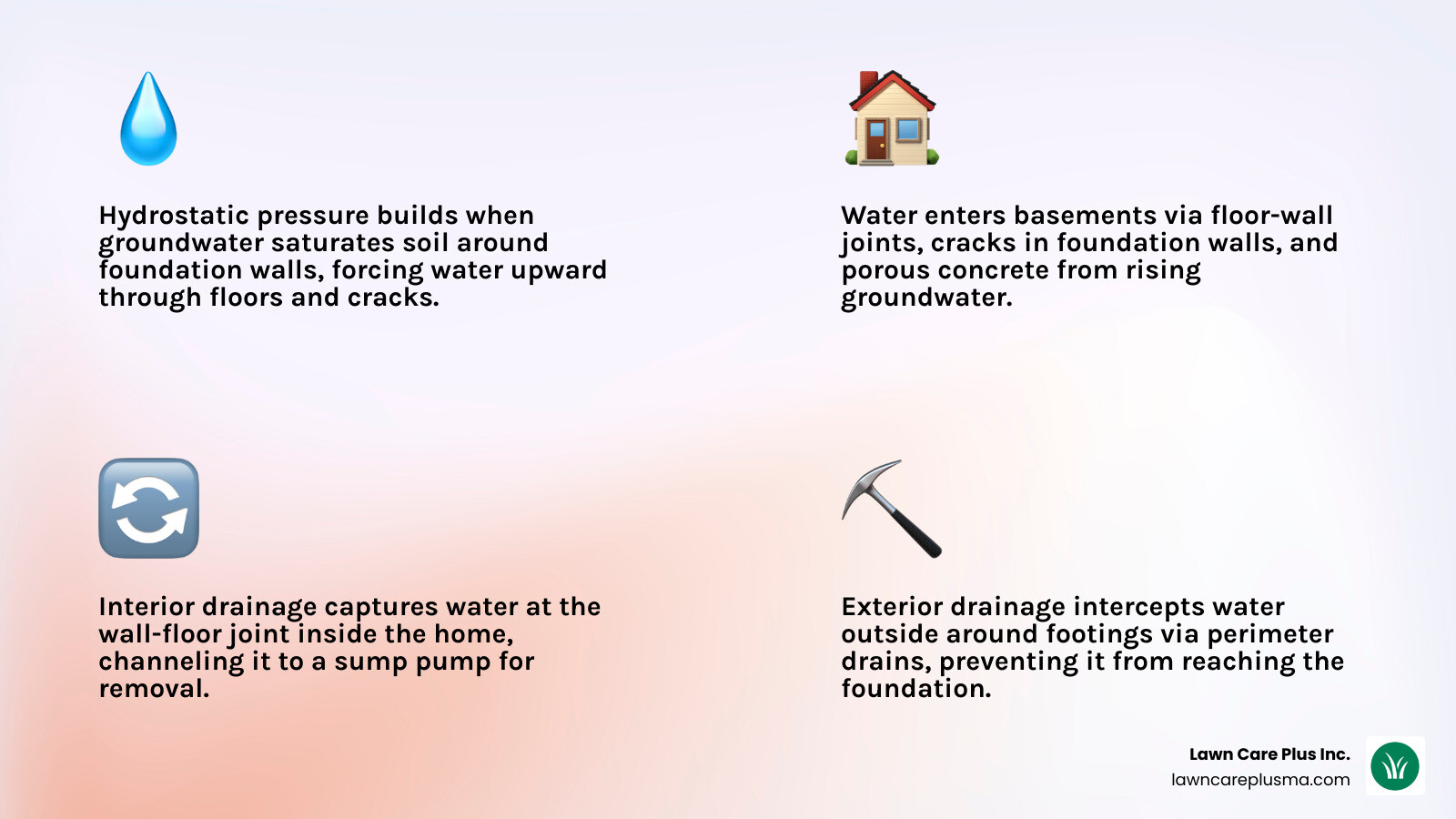
If you’ve ever walked into your basement in Newton or Milton after a heavy spring thaw and felt that telltale “squish” in the carpet, you know the frustration. To fix the problem, we first have to understand the “why.” In our neck of the woods, the primary culprit is hydrostatic pressure. Think of the soil around your home like a giant sponge. When it rains heavily, that sponge fills up. Because water is heavy, it creates immense pressure against your foundation walls.
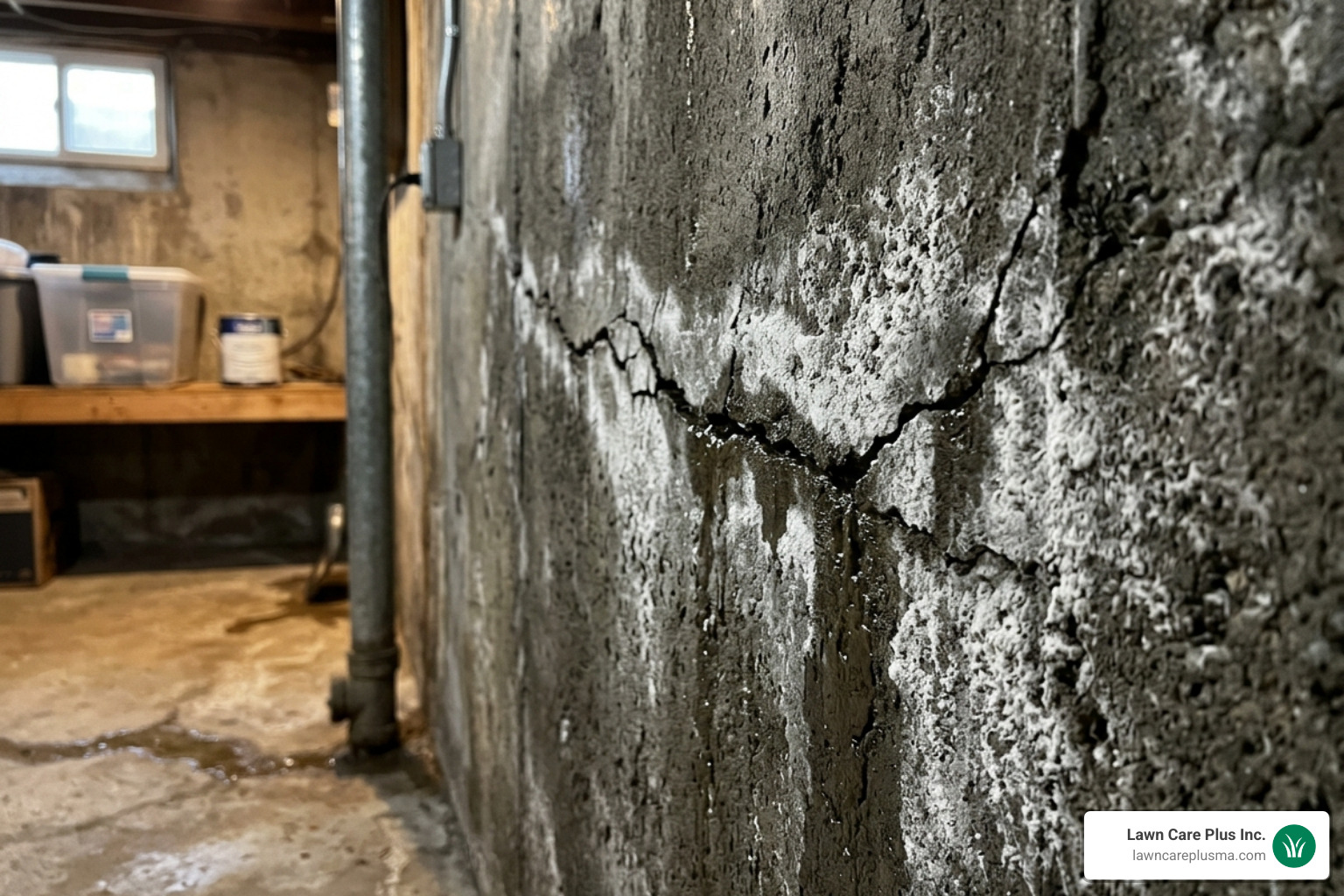
This pressure forces water through the tiniest “micro-cracks,” form ties, and even through the porous concrete itself. The most common entry point is the “cove joint”–the tiny gap where your basement wall meets the floor.
Soil and Climate Factors in Massachusetts
In areas like Needham and Dedham, we often deal with “dense clay” soils. Unlike sandy soil, which lets water drain away quickly, clay holds onto water and expands. This expansion pushes against the retaining wall foundation or basement walls, often leading to bowing or structural cracks.
Other factors include:
- Surface Water Runoff: If your gutters are clogged or the ground slopes toward your house, you’re essentially hand-delivering water to your foundation.
- Groundwater Levels: In low-lying areas near the Charles River or local wetlands, the water table can rise significantly, putting constant pressure on the floor.
- Condensation: Sometimes the “leak” isn’t a leak at all, but warm, humid air hitting cool foundation walls, creating a breeding ground for mold.
Comparing Interior and Exterior Basement Wall Drainage Systems
When we talk to homeowners in Brookline or Belmont about a basement wall drainage system, they usually want to know which is better: digging up the yard or breaking up the floor? Both have their place, but they serve different needs.
| Feature | Interior Drainage System | Exterior Drainage System |
|---|---|---|
| Installation Depth | Sub-floor (above or beside footing) | Foundation footing level (outside) |
| Disruption | Interior only; requires moving furniture | Major; requires excavating the yard/landscaping |
| Cost | Generally more affordable for retrofits | Very expensive for existing homes |
| Maintenance | Easy access via inspection ports | Difficult; requires re-excavation if it clogs |
For existing homes, an interior basement wall drainage system is often the most practical choice. It involves installing a basement french drain pipe or a specialized footer channel just under the perimeter of the floor. For new construction, we highly recommend exterior protection, such as waterproofing membranes and weeping tiles, to stop water before it ever touches the concrete.
How an Interior Basement Wall Drainage System Works
Modern interior systems have come a long way from the old-fashioned “open trench” methods. Today, we use sophisticated inside basement drainage systems that are designed to be “clog-proof.”
The system typically sits on top of the footing, rather than in the “mud zone” beneath it. This keeps the pipes clear of silt and soil that often ruin traditional drains. A specialized wall flange (a small plastic spacer) sits against the wall to catch any water leaking from cracks or window wells, funneling it directly into the channel. This provides immediate “hydrostatic relief,” as the water has a path of least resistance to follow rather than pushing through your floor.
Exterior Drainage and Foundation Protection
Exterior systems are the “gold standard” for new builds. This process involves excavating all the way down to the footing, cleaning the walls, and applying a thick waterproofing membrane. We then install a French drain (a perforated pipe) surrounded by clean gravel and wrapped in geotextile for french drain protection.
This fabric is crucial–it acts as a filter, allowing water in while keeping out the fine silt and roots that cause systems to fail. In some cases, we even integrate these with an exterior french drain sidewalk complete guide approach to ensure surface water from walkways is redirected far from the foundation.
Installation Process and System Integration
Installing a basement wall drainage system is a precise job that we usually complete in just one to two days. Here is what the typical professional process looks like:
- Preparation: We clear the perimeter and protect your home from dust.
- Trenching: We carefully remove a 6-to-12-inch strip of concrete around the edge of the floor.
- Weep Holes: If you have concrete block walls (common in older homes in Watertown or Waltham), we drill small holes in the bottom cavities. This lets trapped water drain out of the blocks and into the new system.
- Pipe Placement: We install a specialized french drain inside basement channel or pipe on a bed of clean stone.
- Sump Pump Connection: The entire system is pitched toward a high-performance sump pump basin.
- Restoration: We pour fresh concrete over the system, leaving only a small, neat gap at the wall for water collection.
To get the most out of your system, we often recommend integrating it with a vapor barrier (a thick plastic sheet on the walls) and a high-capacity dehumidifier to manage the “invisible” moisture in the air.
Maintenance and Longevity for Dry Basements
A basement wall drainage system isn’t a “set it and forget it” solution. Like your car, it needs a little love to keep running smoothly. In the Boston area, our biggest threats are falling leaves and freezing temperatures.
Maintaining Your Basement Wall Drainage System
To ensure your basement stays dry for decades, follow these simple steps:
- Annual Pump Testing: Pour a five-gallon bucket of water into the sump pit to make sure the pump kicks on and clears the water quickly.
- Battery Backup: Our Massachusetts storms often knock out power. Ensure your battery backup system is charged and ready.
- Debris Removal: Check the “inspection ports” in your drainage channel for any sediment buildup.
- Humidity Monitoring: Keep an eye on your hygrometer; your basement should ideally stay below 50% humidity to prevent mold.
- Root Prevention: Be mindful of planting large trees near your foundation, as roots in french drain lines can cause major blockages over time.
Don’t forget the exterior! Installing a french drain for gutters and keeping your downspouts extended at least 10 feet away from the house are the easiest ways to reduce the workload on your interior system.
Cost Analysis and Investment Considerations
One of the most frequent questions we get is, “How much is this going to cost?” While we provide custom quotes for every project, we can look at some industry averages to give you a ballpark idea. Note: These are average costs based on internet data and not actual costs for Lawn Care Plus.
For a standard residential basement wall drainage system, while the average project often costs around $7,000, homeowners typically see a price range between $2,500 and $25,000 or more for extensive foundation work.
Why such a wide range? Several factors influence the final investment:
- System Length: A small french drain for one leaky wall will cost significantly less than a full perimeter system.
- Foundation Type: Poured concrete is generally easier to work with than old stone foundations or monolithic slabs.
- Labor and Excavation: Interior systems are labor-intensive due to concrete removal, while exterior systems are expensive due to heavy machinery and landscaping restoration.
- Warranty Value: High-quality systems often come with transferable lifetime warranties, which adds significant value to your home if you decide to sell.
Investing in a proper drainage system is almost always cheaper than the alternative: structural repairs, mold remediation, and the loss of personal belongings.
Frequently Asked Questions
Are interior drainage systems effective or a scam?
Some critics argue that interior systems are a “band-aid” because they let water enter the foundation before catching it. However, for most existing homes, they are the most effective and cost-efficient solution. Proponents point out that they provide immediate hydrostatic relief, are less likely to clog than exterior drains, and can be serviced year-round. When installed correctly with a wall flange and sump pump, they are a proven, permanent solution.
When is an interior system better than exterior excavation?
An interior basement wall drainage system is usually the better choice if:
- Your home is already built and has mature landscaping, decks, or driveways that you don’t want to destroy.
- You need the work done in the winter (when the ground is frozen).
- The water is entering primarily through the floor-wall joint or floor cracks.
- Budget is a primary concern.
Can I install a basement drainage system myself?
While you can rent a jackhammer and buy the materials, we don’t recommend it as a DIY project. Getting the pitch (the slope) exactly right is critical; if it’s off by even a fraction of an inch, water will pool in the pipe and cause odors or clogs. Plus, dealing with structural concrete and electrical sump pump connections requires professional expertise to ensure your home remains safe and up to code.
Conclusion
A dry basement is the foundation of a healthy home. Whether you’re in Roslindale, Canton, or Norwood, understanding how a basement wall drainage system protects your property is the first step toward peace of mind. By managing hydrostatic pressure and giving groundwater a clear path away from your home, you protect your structural integrity and your family’s health.
At Lawn Care Plus Inc., we specialize in the “outside-in” approach. We know that the best way to keep a basement dry is to manage the landscape drainage, grading, and hardscaping that surrounds it. From professional masonry to expert yard drainage solutions, we serve the entire Boston Metro-West area with a commitment to quality and longevity.
Don’t wait for the next big storm to find out your basement isn’t ready. Contact us for a professional land drainage system evaluation today, and let’s make sure your home stays dry, safe, and comfortable all year round.
