Why the Best Downspout Drainage System Matters More Than You Think
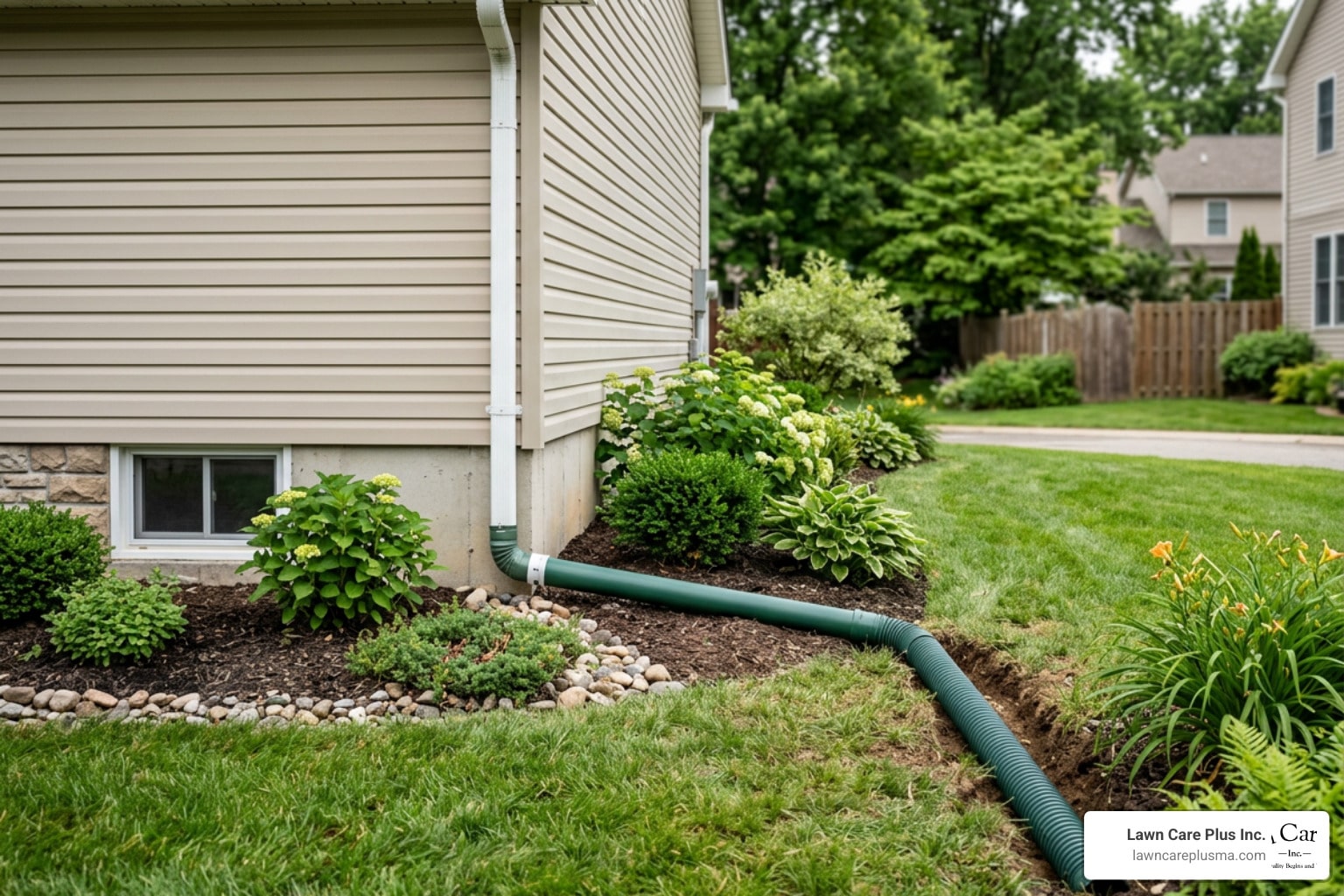
Choosing the best downspout drainage system for your property is one of the most important decisions you can make to protect your home’s foundation, landscaping, and long-term value. When rain falls — and in Greater Boston, it falls a lot — your gutters collect thousands of gallons of water that has to go somewhere. Where it goes determines whether your basement stays dry or your foundation starts to crack.
Quick Answer: Best Downspout Drainage Systems Ranked
| System Type | Best For | Complexity |
|---|---|---|
| Underground solid corrugated pipe | Long-term foundation protection | Moderate |
| Underground PVC pipe | Durability, root resistance | Moderate–High |
| Pop-up emitters | Discharging water away from home | Low |
| Catch basins with debris grates | Filtering debris before it clogs pipes | Low–Moderate |
| French drains | Redirecting subsurface water | High |
| Dry wells | Absorbing overflow on large properties | High |
| Rain barrels | Water conservation + minor runoff management | Low |
| Splash blocks | Minor erosion control at downspout base | Very Low |
| Rain chains + river rock beds | Aesthetic surface drainage | Low |
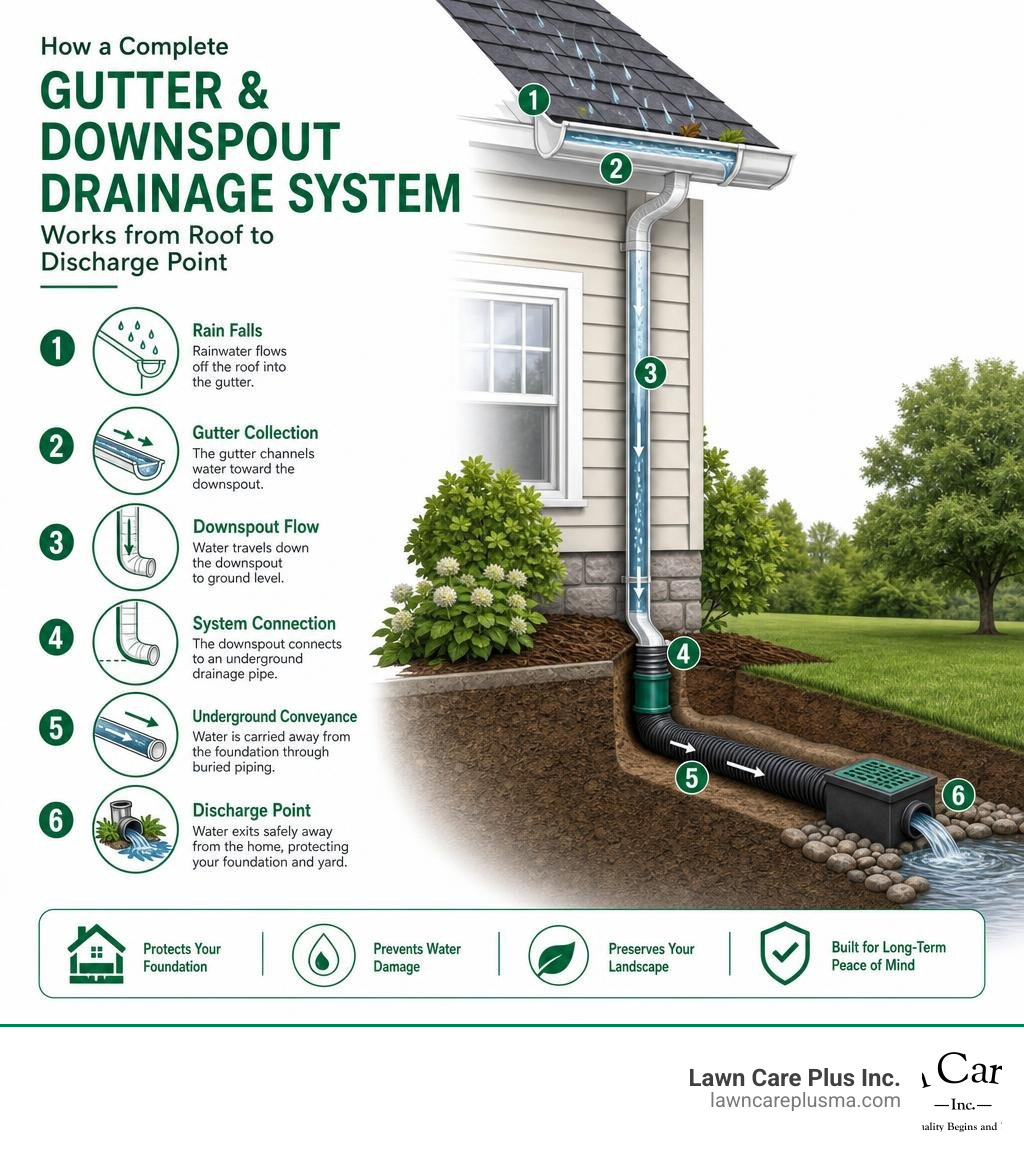
The stakes are real. A single 1,500 square foot home in Massachusetts can shed nearly 40,000 gallons of rainwater per year. Without a proper system in place, that water pools against your foundation — leading to soil erosion, moisture intrusion, and structural damage over time.
Most homeowners don’t think about downspout drainage until something goes wrong: a wet basement, a cracked foundation wall, or a backyard that turns into a swamp after every storm. By then, the fix is far more expensive than prevention.
I’m Tim DiAngelis, owner of Lawn Care Plus, Inc., a full-service landscaping company serving Greater Boston and Metro-West, and over the years our team has installed and repaired countless drainage systems — giving us a clear picture of what works and what doesn’t when it comes to the best downspout drainage system for New England properties. In this guide, I’ll walk you through every option so you can make the right call for your home.
Essential best downspout drainage system terms:
Choosing the Best Downspout Drainage System for Your Property

When designing a drainage layout that will stand up to New England weather, the materials you put in the ground make all the difference. In towns like Newton, Brookline, and Belmont, our heavy clay soils and brutal winters require a system that is both resilient and highly efficient.
Choosing the right pipe is the foundation of any successful project. Let’s break down the options so you can choose the best downspout drainage system for your yard.
Why Underground Pipes Offer the Best Downspout Drainage System
If you want a long-term solution that completely removes water from your home’s foundation, burying your downspouts is the gold standard. However, the type of pipe you bury is critical.
You must always use solid pipe for downspout drainage, never perforated pipe. Perforated pipes are designed with small holes to let water seep out into the surrounding soil. While this is great for a French drain, using it for a downspout is a recipe for disaster.
Downspouts carry highly concentrated, fast-moving streams of water directly from your roof. If you run that water through a perforated pipe near your foundation, you are essentially dumping thousands of gallons of water directly into the soil right next to your basement walls. This defeats the entire purpose of the system and can trigger rapid soil erosion, basement flooding, and structural settling. Solid pipes keep the water completely contained until it reaches a safe discharge area far from your home. For more on how to pair these with yard drains, check out our guide on Installing a French Drain for Gutters.
Solid Corrugated vs. PVC Pipes
Once you commit to solid pipe, the next big decision is choosing between solid corrugated polyethylene pipe and rigid PVC pipe. Both have distinct advantages, but their performance varies significantly during Massachusetts freeze-thaw cycles.
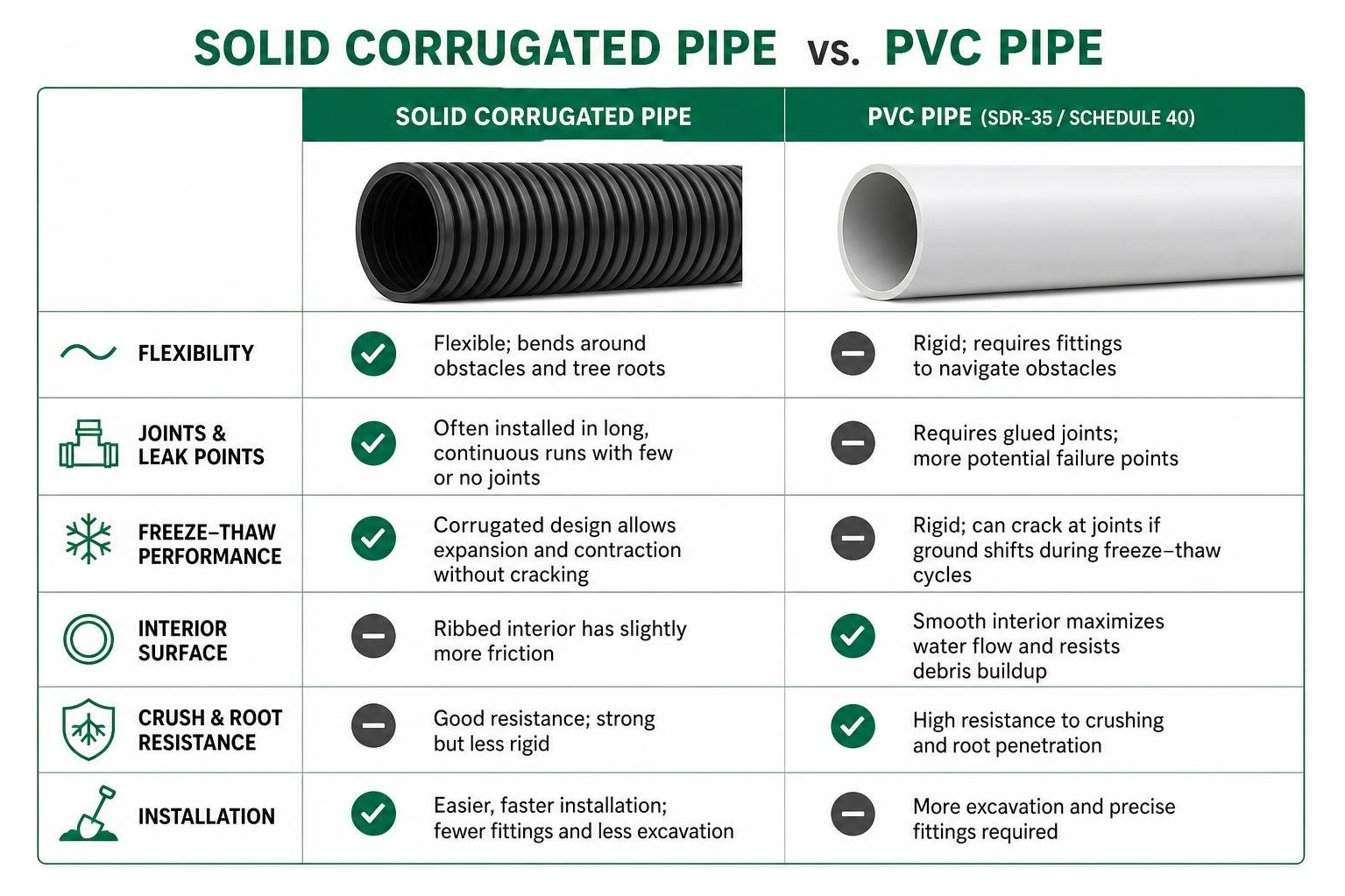
- Solid Corrugated Pipe: This is highly favored by many professional drainage installers for residential yards. Its primary advantage is flexibility. Because it can bend around landscaping, mature tree roots, and utilities without requiring dozens of glued joints, it can often be run in a single continuous piece. This lack of joints means fewer failure points where roots can break in. Furthermore, corrugated pipe is incredibly forgiving during winter. When water freezes and expands inside the pipe, the corrugated design allows the pipe to expand and contract without cracking or splitting.
- PVC Pipe (SDR-35 or Schedule 40): PVC is incredibly smooth on the inside, which maximizes water velocity and makes it virtually impossible for debris to get caught. It is also highly resistant to crushing and tree root penetration. However, PVC is completely rigid. If the ground shifts due to deep winter frost — a common issue in places like Wellesley and Needham — rigid PVC can crack at the joints. It also requires more excavation and precise fittings to navigate around obstacles.
For more technical specifications on residential pipe performance, you can read the resources provided by Gutters & Downspouts | Advanced Drainage Solutions.
The 3-Inch vs. 4-Inch Corrugated Pipe Debate
While 4-inch pipe has historically been the standard for residential drainage, modern field testing has revealed that 3-inch corrugated pipe is often the superior choice for downspouts.
It all comes down to physics: water velocity. A 3-inch pipe constricts the water flow slightly, which increases the velocity and pressure of the runoff. This high-velocity flow acts as a self-cleaning mechanism, flushing out pine needles, shingle grit, and leaves before they have a chance to settle and clog the line.
Additionally, using a 3-inch pipe allows homeowners and contractors to keep trenches shallow. This is a game-changer when trying to maintain the recommended 1% slope (a 1-inch drop for every 8 feet of run) over long distances without digging deep, back-breaking trenches.
For high-performance setups, specialized pre-packaged kits or high-quality commercial-grade pipes offer a perfect middle-ground size that maximizes velocity while remaining incredibly easy to install.
Top Underground Downspout Drainage Solutions

An underground pipe is only as good as its entry and exit points. Without proper accessories to filter debris at the top and release water safely at the bottom, your underground system will eventually fail. To see how these components fit into a broader property plan, explore our Drainage Solutions Complete Guide.
Pop-Up Emitters and Turf Restrictors
A pop-up emitter is the standard way to “daylight” buried downspouts. When the pipe fills with water, the pressure pushes the lid open, releasing the water onto your lawn. When the rain stops, a built-in spring closes the lid to keep grass clippings, leaves, and rodents out of your pipes.
However, standard emitters have a major weakness: grass overgrowth. Over time, your lawn’s root system will grow over the lid, pinning it shut and causing the entire system to back up into your gutters.
To prevent this, the best downspout drainage system designs utilize a turf restrictor plate. This wide plastic collar sits flush with the grass around the emitter, keeping the lawn from encroaching on the discharge lid. Additionally, in freezing climates like Milton and Canton, these emitters must be paired with winter ice guards near the house. This ensures that if the discharge end freezes solid, water can still safely overflow near the downspout instead of backing up to your roofline.
Catch Basins and Debris Grates
Roofs collect more than just water; they shed shingle grit, leaves, twigs, and pine needles. If this debris enters your underground pipes, it will eventually settle in the low spots and form a solid clog.
Installing a catch basin directly beneath your downspout acts as a filter. Heavy debris and shingle grit sink to the bottom of the basin, while clean water flows out of the elevated outlet pipe.
To maximize water capture and prevent splashing, we highly recommend upgrading to specialized angled grates. For instance, the 9 in. Square Downspout Defender™ Kit with Black Plastic Catch Basin Drain Grate, Low-Profile Adapter, Outlet Adapter is specifically engineered to handle heavy downpours.
According to the Downspout Defender technical specs, this system provides an impressive flow rate of 166.84 GPM (Gallons Per Minute) with only a half-inch of head water. Its unique angled design sheds leaves naturally while capturing almost 100% of high-velocity roof runoff, preventing the water from splashing onto your home’s siding.
Above-Ground and Alternative Gutter Drainage Options
While underground systems offer the cleanest look and highest performance, they aren’t always feasible or necessary for every part of your yard. Sometimes, a localized above-ground or natural option is the perfect fit. If you are dealing with hardscaped areas like patios or driveways, you may also want to read about how to Keep Your Yard Dry: The Essential Guide to Channel and Area Drains.
Rain Barrels and Rainwater Collection
For eco-conscious homeowners in Dedham, Brookline, or Jamaica Plain, rain barrels are an outstanding alternative. Rainwater collection is completely legal and highly encouraged throughout Massachusetts.
Because a standard 1,500 square foot home can shed up to 40,000 gallons of water annually under our average rainfall, a simple 50-gallon rain barrel can fill up incredibly fast.
The benefits are double-sided:
- Water Conservation: You save money on municipal water bills by collecting free water for your gardens.
- Plant Health: Rainwater is naturally soft and contains dissolved atmospheric nitrogen, which plants absorb far more easily than chemically treated tap water.
When installing a rain barrel, always use a sealed container to prevent mosquito breeding, and ensure it has an overflow port connected to a secondary discharge line for when the barrel reaches capacity.
Splash Blocks, Rain Chains, and River Rocks
If you have a minor runoff area with a natural slope away from your home, simpler above-ground solutions can work beautifully:
- Splash Blocks: These are concrete, plastic, or stone channels placed directly under your downspout. They prevent the falling water from digging a massive hole in your soil or washing out your mulch.
- Rain Chains: Originating in Japan, rain chains replace traditional metal downspouts with a series of decorative cups or links. They guide water visually and audibly down to the ground.
- River Rock Beds: Because rain chains disperse water more than standard downspouts, they should always land on a bed of river rocks. Creating a decorative dry creek bed lined with non-woven geotextile fabric and beautiful river stones allows you to manage runoff naturally while adding a stunning design element to your landscape.
Designing and Installing a Comprehensive Gutter Drainage Strategy
A single downspout extension is rarely enough to solve complex yard water issues. Truly effective water mitigation requires a holistic approach that blends seamlessly with your landscape design. For high-end properties, we often integrate these systems with other hardscape elements, as discussed in The Best Hardscape Drainage Solutions for Any Property.
Designing the Best Downspout Drainage System for Massachusetts Climates
In Massachusetts, we experience extreme weather transitions. We can go from a deep freeze in January to torrential spring downpours in April. This means your drainage strategy must be designed with freeze-thaw cycles in mind.
When designing your system:
- Maintain a 1% Slope: Ensure your underground pipes drop at least 1 inch for every 8 feet of run. This keeps water moving fast enough so it doesn’t pool and freeze inside the pipe.
- Avoid Property Line Conflicts: Never discharge your downspouts directly toward a neighbor’s property line. In densely populated areas like Watertown, Brighton, or Brookline, dumping your roof water onto a neighbor’s lawn can lead to severe structural disputes and local code violations.
- Plan for Local Architecture: Historic homes, such as those found in Belmont or Boston, require specialized care to ensure that modern underground PVC or corrugated systems do not disturb historical foundations or mature tree roots.
Proper grading and professional installation are essential to ensure that water flows away from the foundation without causing erosion or structural issues. For those looking to install a robust system, professional contractors often use heavy-duty components or advanced German-engineered systems like the Downpipe system – ExtremeLine.
Integrating French Drains, Dry Wells, and Catch Basins
For properties with severe water pooling or flat yards, a downspout line can be connected to a larger subsurface system:
- French Drains: These use perforated pipe wrapped in gravel and fabric to collect and move groundwater. While they shouldn’t take direct downspout water, they can run parallel to downspout lines to keep the entire yard dry.
- Dry Wells: If you don’t have a natural downward slope to daylight your pipes, you can route your solid downspout lines into an underground dry well. This is a large, buried plastic well surrounded by washed stone that holds storm runoff and allows it to slowly infiltrate the surrounding soil.
To see how these elements work together, read our article on Gutters and French Drains Near Me.
Installation Costs and Maintenance Considerations
Note: The following cost estimates are average ranges based on national internet data and do not represent actual quotes for Lawn Care Plus Inc. projects.
| Project Scope | Average Low-End Cost | Average High-End Cost |
|---|---|---|
| Single Downspout Underground Extension | $400 | $1,500 |
| Multi-Downspout System with Catch Basins | $1,800 | $6,500 |
| Comprehensive System (Drains, Dry Wells, Grading) | $3,500 | $12,500+ |
The wide range in cost is due to variables like soil compaction, tree roots, hardscape crossings (like running a pipe under a brick walkway), and the overall length of the pipe run.
To keep your system running flawlessly year-round, perform these maintenance steps:
- Clean catch basins twice a year: Scoop out accumulated shingle grit and leaves from the bottom of the basins before winter.
- Inspect pop-up emitters: Ensure grass hasn’t overgrown the lid and that the internal spring still operates smoothly.
- Flush the lines: Run a garden hose down the gutter cleanouts once a year to ensure water flows freely to the discharge point.
Frequently Asked Questions about Downspout Drainage
Can standing water from my gutters damage my foundation?
Yes, absolutely. When gutters overflow or downspouts discharge directly at the base of your home, water saturates the soil surrounding your foundation. This leads to soil erosion, which can cause your foundation to settle unevenly and crack. Over time, hydrostatic pressure from wet soil can push basement walls inward, causing severe structural damage and mold growth.
Why should I avoid perforated pipe for downspout drainage?
Perforated pipe is designed to let water escape through tiny holes along its length. If you use it for downspout drainage, you will leak highly concentrated roof runoff directly into the soil next to your house. This defeats the entire goal of moving water away from your foundation. Always use solid, non-perforated pipe for downspout lines.
How do I prevent my underground downspout system from freezing in winter?
To keep your system from freezing, ensure your pipes are installed with a consistent 1% downward slope so water cannot pool inside them. Additionally, install freeze-relief ice guards near the house. If the discharge end of the pipe ever freezes under a snowbank, the ice guard allows water to escape safely at the surface rather than backing up into your gutters.
Conclusion
At Lawn Care Plus Inc., we believe that a beautiful landscape must be built on a foundation of smart, functional engineering. Managing roof water is the single most important step in protecting your property from erosion, wet basements, and foundation shifting.
Whether you need a simple underground downspout extension or a fully integrated landscape drainage system complete with dry wells and grading correction, our experienced team is here to help. We proudly serve homeowners and businesses throughout the Boston Metro-West area, including Belmont, Newton, Brookline, Wellesley, and Dedham.
Ready to secure your home’s foundation and keep your lawn dry? Contact us today to schedule a professional drainage evaluation, and explore our specialized Lawn Care Plus Land Drainage Systems to learn more about how we can transform your yard.