
Your Guide to Affordable Driveway Replacement
Finding the cheapest way to replace driveway surfaces doesn’t mean settling for a shabby entrance to your home. A crumbling, pothole-filled driveway hurts curb appeal and can damage vehicles, but a replacement doesn’t have to break the bank. There’s a key difference between the lowest upfront cost and the most cost-effective solution over time. Gravel is cheap today but requires upkeep, while a slightly higher investment in other materials could save money and effort long-term.
Here are the most budget-friendly options we’ll explore:
- Gravel: Lowest upfront cost, DIY-friendly.
- Recycled Asphalt (Millings): Eco-friendly, compacts over time.
- Crushed Concrete: Very cost-effective, stable base.
- Wood Chips/Dirt: Extremely cheap or free, but with major drawbacks.
This guide will walk you through the most affordable driveway replacement options, from bare-bones solutions to choices that offer better long-term value. We’ll cover DIY vs. professional installation and highlight hidden costs to help you create a realistic budget.
Cheapest way to replace driveway vocab to learn:
Exploring the Cheapest Driveway Materials
When looking for the cheapest way to replace driveway surfaces, focus on materials with low upfront costs. Please note that the prices shared here are national averages from online data; your actual costs will vary based on location, project size, and contractor. We always recommend getting local quotes for accurate numbers.
Gravel: The Absolute Cheapest Way to Replace Your Driveway
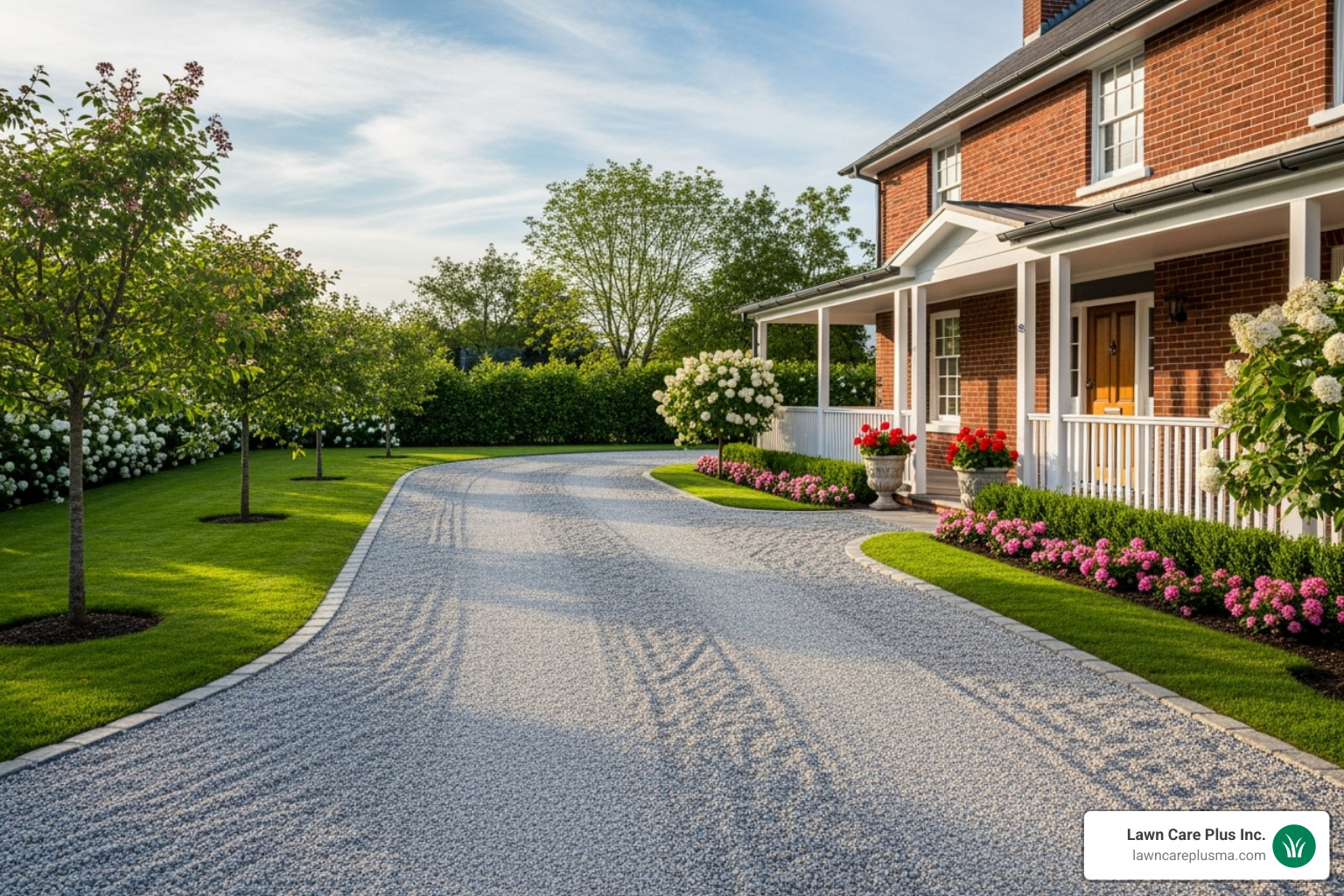
Gravel driveways are the most budget-friendly option, offering a rustic charm suitable for many home styles. You can expect to pay from $1.25 to $5.00 per square foot for installation. The material itself typically runs $24 to $250 per ton, depending on the type, quantity, and delivery fees.
Pros: The primary advantage is the low upfront cost. Installation is quick, it offers excellent drainage, and it’s a DIY-friendly project for handy homeowners.
Cons: Gravel requires regular maintenance, including raking, adding new material, and weeding. It can be dusty in dry weather and muddy when wet. Snow removal is challenging, as gravel gets scooped up with the snow, and ruts can develop under heavy traffic.
Despite its informal look, a gravel driveway can appear neat and intentional with proper edging and stone choice.
Recycled Asphalt (Millings)
Recycled asphalt (millings) is ground-up old pavement, offering an upgrade from gravel without the cost of new asphalt. It’s an eco-friendly choice that’s significantly cheaper than new asphalt, which can run from $3 to $25 per square foot. Millings may cost around $1.50 to $10.00 per square foot.
Over time, traffic and sun exposure cause the asphalt particles to bind together, creating a semi-solid surface that’s more stable and erosion-resistant than loose gravel. The main trade-off is its utilitarian appearance; it lacks the smooth, black finish of new asphalt and can be dusty or oily when first installed. Availability and pricing can also fluctuate.
For more details about asphalt options, check out our Asphalt Driveway Replacement page.
Crushed or Recycled Concrete
Another excellent budget-friendly and eco-friendly option is crushed concrete, sourced from demolition projects. Compared to new concrete ($6 to $20 per square foot), the crushed version is very cost-effective, running approximately $1.00 to $8.00 per square foot for materials.
When compacted, it creates an exceptionally stable base, so much so that it’s often used as a foundation for other paving materials. However, it has a rough, industrial look and may contain sharp edges, which could be a concern for children or pets. Despite its appearance, its durability and low cost make it a compelling choice.
If you’re curious about concrete options, our Concrete Driveway Removal and Replacement page has more information.
Other Ultra-Low-Cost Options
For minimal budgets, a few options are nearly free but have significant limitations:
- Wood chips can be cheap or free from arborists. They offer a natural look but decompose, get muddy, and aren’t suitable for regular traffic.
- Dirt has the lowest upfront cost but is prone to erosion, ruts, dust, and mud, offering almost no structural integrity.
These options are best for rural settings, long driveways with minimal traffic, or as temporary solutions. Most homeowners will find better long-term value with gravel or recycled materials.
Weighing Value: Slightly Pricier but More Durable Options
Sometimes the cheapest way to replace driveway surfaces upfront isn’t the most cost-effective choice long-term. While gravel and recycled materials have low initial costs, a moderate step up in price can dramatically improve durability, appearance, and overall value, potentially saving you money and maintenance headaches down the road.
Plain Concrete Driveways
Concrete is known for its exceptional longevity, often lasting 30 years or more with proper installation. This makes it a top contender for long-term value.
- Investment: The cost per square foot is higher than for loose materials, but the investment pays off over time. These are average costs based on internet data, not actual costs for Lawn Care Plus; local quotes are essential.
- Pros: It’s extremely durable, requires low maintenance (occasional cleaning and sealing), and has a clean aesthetic that suits any home style.
- Cons: Concrete has a higher upfront cost. Poor installation can lead to cracking, and repairs are difficult to blend. In New England, it can be susceptible to salt damage during winter.
For detailed cost breakdowns, see our guide: How Much Does a Concrete Driveway Cost?. You can also find helpful information on CostHelper’s concrete driveway cost page.
Asphalt (Blacktop) Driveways
Asphalt provides a good balance of affordability and performance, making it a popular choice in climates with freeze-thaw cycles like Massachusetts.
- Investment: Costs typically fall between recycled materials and concrete. The range varies based on thickness and site prep. Again, these are average costs based on internet data and not actual costs for Lawn Care Plus.
- Pros: It’s more affordable than concrete, flexible in cold weather (resisting cracks), and provides a smooth surface. Repairs are generally easier than with concrete.
- Cons: It requires regular sealing every 3-5 years to prevent damage, adding to the lifetime cost. The typical lifespan is 15-20 years. It can also get very hot in the summer.
Learn how to maximize its lifespan on our Asphalt Driveway Repair page.
Comparing Budget Driveway Options
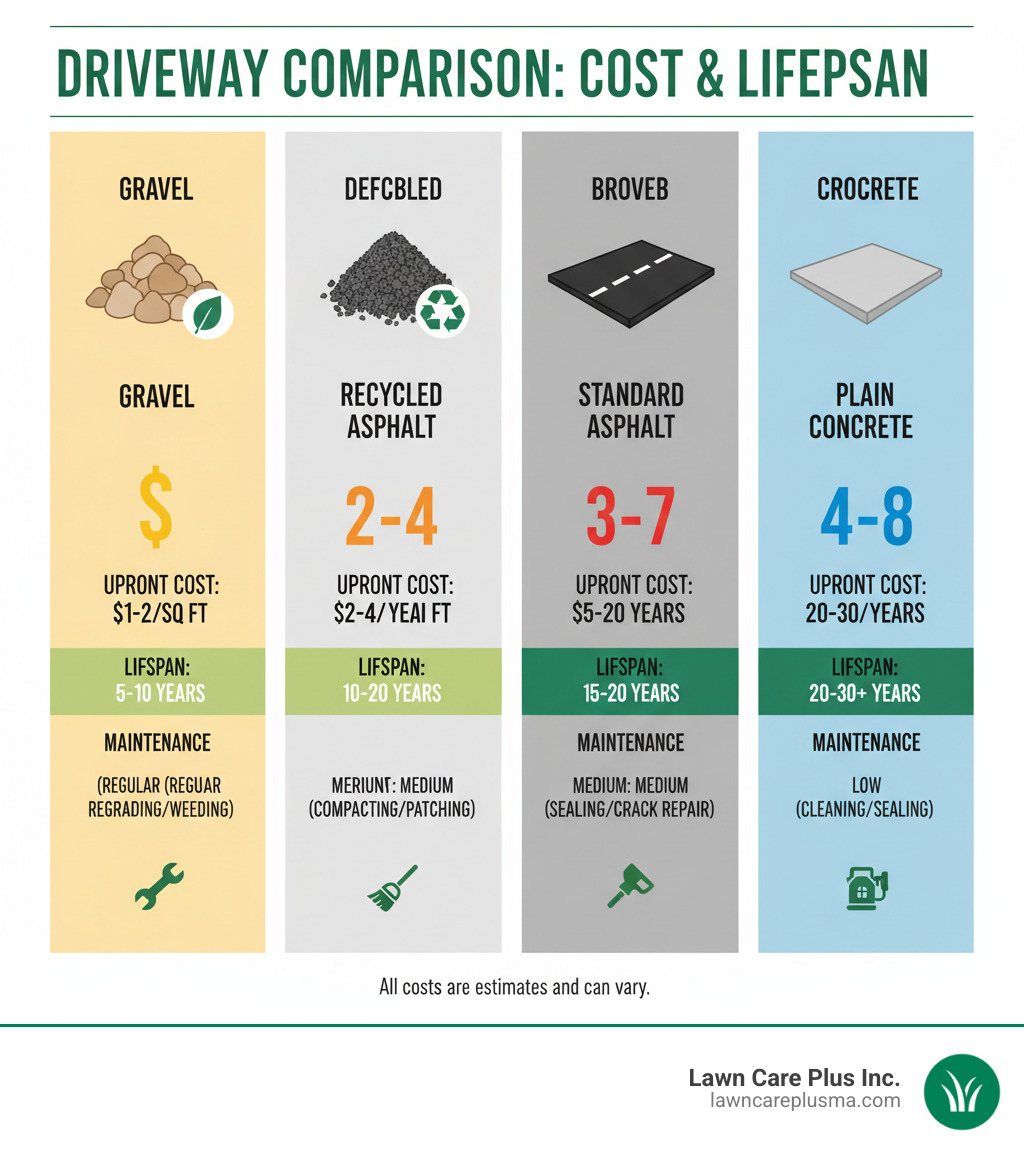
This table summarizes how these options stack up in the long run:
| Material | Upfront Investment | Expected Lifespan | Maintenance Reality |
|---|---|---|---|
| Gravel | Lowest | Indefinite | High (raking, topping up, weed control, regrading) |
| Recycled Asphalt | Low-Moderate | 10-20 years | Moderate (occasional patching, minimal regrading) |
| Asphalt (Blacktop) | Moderate | 15-20 years | Moderate to High (resealing every 3-5 years, crack filling) |
| Concrete (Plain) | Highest | 30+ years | Low (occasional cleaning, sealing every 4-5 years) |
DIY vs. Hiring a Pro: Finding the Cheapest Way to Replace Your Driveway
After choosing a material, you must decide whether to install it yourself or hire a professional. This choice significantly impacts your budget and the final quality of the project.
DIY Installation: The Hands-On Approach
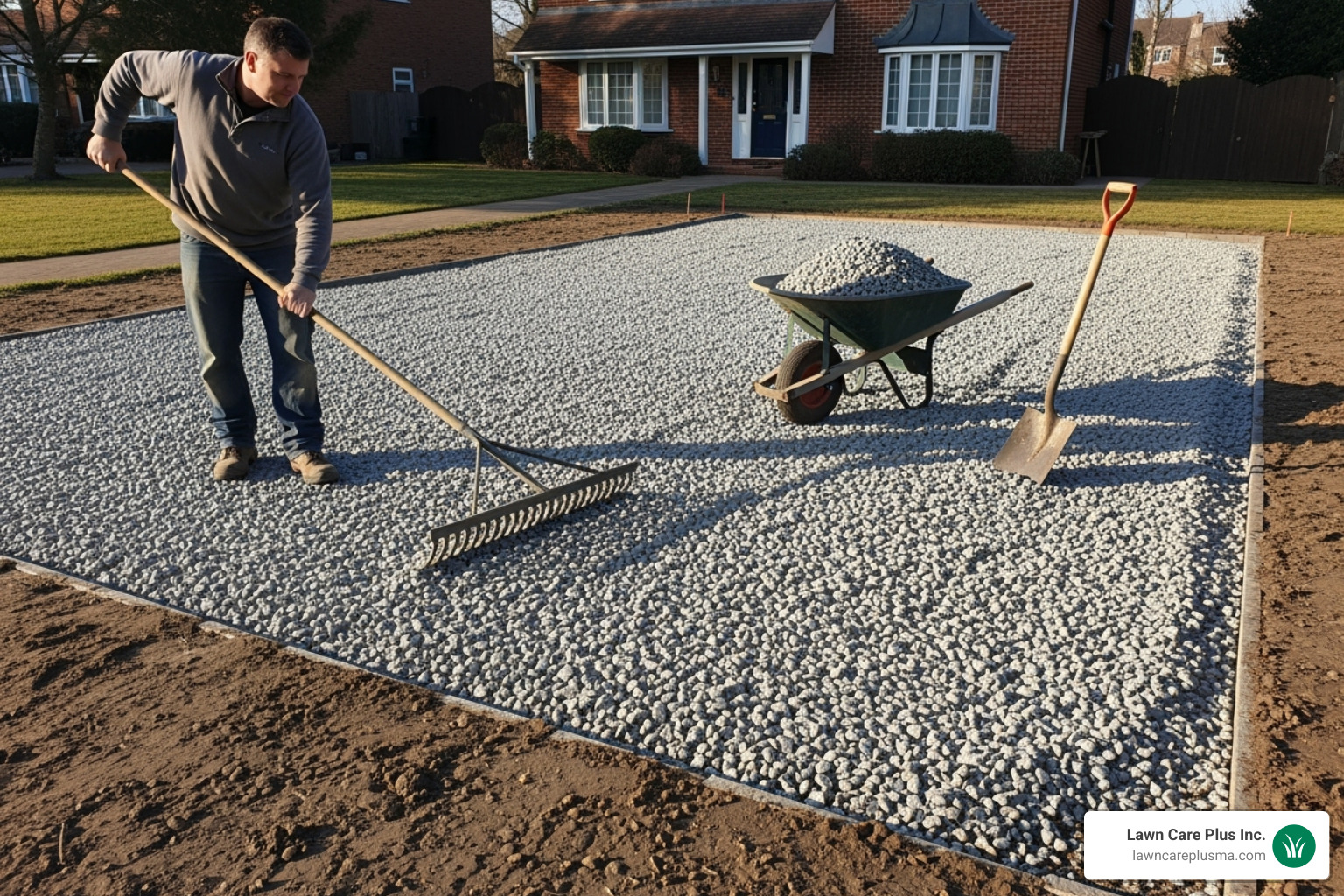
A DIY approach can be the absolute cheapest way to replace driveway surfaces, but success depends on the material and your skill. Gravel and crushed concrete are the most DIY-friendly options because they are forgiving and don’t require specialized timing or equipment.
The process involves excavation, grading for drainage, laying landscape fabric to block weeds, and then spreading and compacting the material. While it sounds straightforward, each step is labor-intensive.
While you save on labor, be aware of hidden costs:
- Tool rental: Excavators, plate compactors, and wheelbarrows add up.
- Material delivery: Necessary unless you own a dump truck.
- Your time: A project that takes a pro two days could take you several weekends.
Mistakes like poor grading or inadequate compaction can lead to drainage issues and ruts, costing more to fix later.
When to Hire a Professional
Some materials are not suitable for DIY projects. Asphalt and concrete paving should be left to professionals.
Hot-mix asphalt must be installed and compacted quickly by a trained crew with heavy machinery. Concrete requires precise mixing, pouring, and finishing to avoid costly mistakes. Professionals also bring expertise in grading and drainage, ensuring a long-lasting result, and carry insurance for safety.
To save money when hiring a pro:
- Get multiple quotes to compare prices and services.
- Schedule during the off-season for potentially better rates.
- Do your own demolition after discussing it with your contractor.
For help finding experienced professionals, visit our Driveway Replacement Contractors resource page. The bottom line: DIY is great for loose materials, but paved surfaces are best left to the pros.
Factoring in Hidden Costs and Site Prep
When determining the cheapest way to replace driveway surfaces, the material cost is only part of the total price. Hidden costs related to site preparation can significantly increase your budget, so understanding them upfront is crucial for avoiding surprises.
Site Preparation Essentials
Proper site preparation is the literal foundation of a durable driveway. Cutting corners here can lead to a cracked, sunken mess within a few years.
- Removal of the old driveway: Breaking up and hauling away old concrete or asphalt involves significant labor and disposal fees.
- Excavation and grading: The ground must be graded so water flows away from your driveway and home foundation. This is a critical step to prevent water damage.
- Creating a stable sub-base: A compacted layer of gravel (typically 4-10 inches deep) is installed beneath the surface material. This sub-base distributes vehicle weight and aids drainage.
Without a solid, properly prepared foundation, even the best materials will fail, leading to cracking, rutting, and expensive repairs. If you already have issues, our Driveway Crack Repair page has helpful information.
Other Factors That Affect Your Bill
Several other elements can impact your final bill:
- Driveway size and shape: Long, wide, or curved driveways require more materials and complex labor, increasing the cost.
- Permits: Many towns require permits for driveway replacement. Check with your local municipality to avoid fines and ensure compliance.
- Drainage solutions: Depending on your property, you may need culverts, French drains, or catch basins to manage stormwater, adding to the upfront cost but protecting your investment.
- Existing site conditions: Rocky terrain, poor soil, or underground utilities can complicate the project and increase excavation costs.
- Project timing: Scheduling during a contractor’s off-season may result in better rates.
According to cost data from Angi, preparation and site factors can be a substantial portion of the total project cost. A realistic budget must account for these variables, not just the surface material.
Frequently Asked Questions about Cheap Driveway Replacement
Here are answers to common questions from homeowners looking to replace their driveways on a budget.
How long will a cheap driveway last?
The lifespan of a budget-friendly driveway depends on the material and maintenance.
- Gravel: Can last indefinitely but requires constant maintenance like raking, refilling, and weeding to prevent it from becoming a rutted mess.
- Recycled Asphalt: Once compacted, it can last 10-20 years. The particles bind together over time, creating a durable surface.
- Asphalt: Typically lasts 15-20 years, but only if you perform regular maintenance, including sealcoating every 3-5 years.
- Concrete: A well-installed concrete driveway is the most durable, easily lasting 30+ years with minimal upkeep.
Can I just put new material over my old driveway?
This is a common question, but the answer is usually no. While an asphalt overlay can sometimes work on an existing asphalt driveway that is structurally sound, it’s not a universal solution.
We strongly advise against paving over cracked or failing concrete. The underlying issues that caused the original failure (like a poor base or drainage problems) will quickly damage the new surface. A stable, properly prepared base is crucial for the longevity of any driveway material. Taking a shortcut here often leads to more expensive repairs down the road.
Will a cheap driveway hurt my home’s resale value?
A cracked, crumbling driveway is a major turn-off for potential buyers, as it signals deferred maintenance. However, a “cheap” driveway isn’t necessarily a negative.
- A well-maintained gravel or recycled asphalt driveway is often better than a damaged paved one. It shows care and functionality.
- Neighborhood context is key. A gravel drive fits well in a rural setting but may look out of place in a suburban subdivision where paved surfaces are the norm.
The goal is to have a driveway that is functional, looks intentional, and doesn’t require immediate replacement. Even a budget-friendly replacement improves curb appeal compared to a failing surface. To learn more, read our analysis: Does Replacing Driveway a Good Investment?.
Making the Smartest Choice for Your Budget and Home
Choosing the cheapest way to replace driveway surfaces involves balancing upfront cost with long-term value and maintenance. Gravel offers the lowest initial price but requires consistent upkeep. Recycled materials like asphalt millings or crushed concrete provide a durable middle ground. Pricier options like new asphalt and concrete demand a larger initial investment but pay off with a longer lifespan and less maintenance.
Your final decision should also consider factors unique to your home. In Massachusetts, our freeze-thaw cycles and use of road salt can be tough on certain materials. The style of your neighborhood and your willingness to perform maintenance also play a significant role. A rustic gravel drive might be perfect for one home, while a sleek concrete surface is better for another.
For homeowners in the Boston Metro-West area, navigating these choices can be complex. Local soil conditions, weather patterns, and neighborhood aesthetics all matter. The expert team at Lawn Care Plus Inc. understands these local challenges. We can assess your property, discuss your budget, and help you find the solution that offers the best balance of cost, function, and durability for your specific needs.
Whether you’re considering a simple gravel installation or a long-term investment in a paved surface, we’re here to help you make a choice that improves your home and provides peace of mind. Your driveway should be a welcome path home, not a source of stress.
Ready to find the perfect solution for your property? Explore professional hardscaping services with us today.
