
Why Understanding Driveway Paving Costs Matters for Homeowners
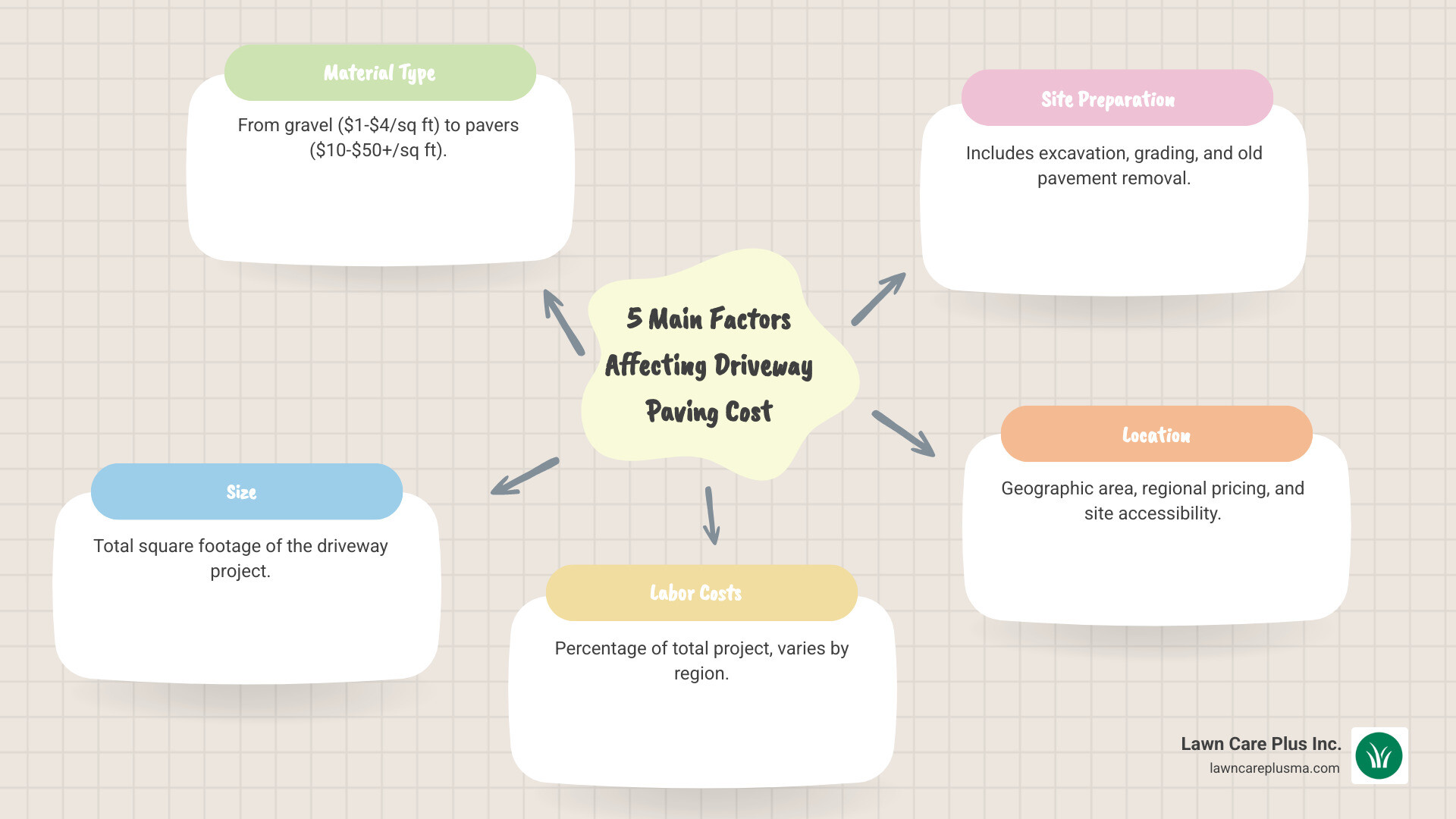
Driveway paving cost can range from $2,500 to over $15,000, depending on the size, material, and complexity of the project. Here’s a quick overview of what you can expect:
Quick Cost Overview:
- Gravel: $1-$4 per sq ft (cheapest option)
- Asphalt: $3-$15 per sq ft (most popular)
- Concrete: $5-$18 per sq ft (longest lasting)
- Pavers: $10-$50+ per sq ft (premium choice)
- Average 2-car driveway: $3,000-$12,000
A well-paved driveway is one of the first things people notice about your home. It not only boosts curb appeal but can also add $5,000 to $7,000 to your home’s value while providing years of reliable service. However, driveway paving costs vary wildly based on factors you might not expect. The difference between a basic gravel drive and a premium paver installation can be tens of thousands of dollars.
Please note that all prices mentioned are national averages based on internet research and do not reflect the specific pricing of Lawn Care Plus Inc. Costs can vary significantly based on project specifics and location.
Understanding these cost factors is essential for making a smart decision about this major home investment. Whether you’re replacing a cracked concrete drive or installing your first paved surface, knowing what drives pricing helps you budget properly and avoid costly surprises.
Basic driveway paving cost terms:
- driveway replacement options
- do i need a permit to replace an existing driveway
- driveway replacement contractors
Key Factors That Influence Your Driveway Paving Cost
The final driveway paving cost depends on several key factors, which explains why quotes can vary so dramatically. The most significant cost drivers are driveway size, material choice, labor rates, site accessibility, and your geographic location. Understanding these elements will help you make informed decisions and budget effectively.
For additional insights into general pricing trends, check out this helpful resource: How Much Does It Cost to Pave a Driveway?
How Driveway Size and Shape Affect the Total Cost
Square footage is the starting point for your driveway paving cost. A typical two-car driveway is between 400 and 600 square feet, but it’s wise to measure your space to get an accurate estimate.
The shape of your driveway also dramatically impacts costs. A simple, straight driveway is the most cost-effective design. In contrast, driveways with curves, an L-shape, or an S-shape require more precise cutting, additional labor for detailed work, and often result in more material waste. These intricate designs can increase your total cost by 10% to 30% compared to a basic rectangular layout.
Additionally, the incline and slope of your property can present challenges. A steep grade may require specialized equipment, extra grading work, and drainage solutions, all of which add to the bottom line.
Site Preparation, Grading, and Excavation
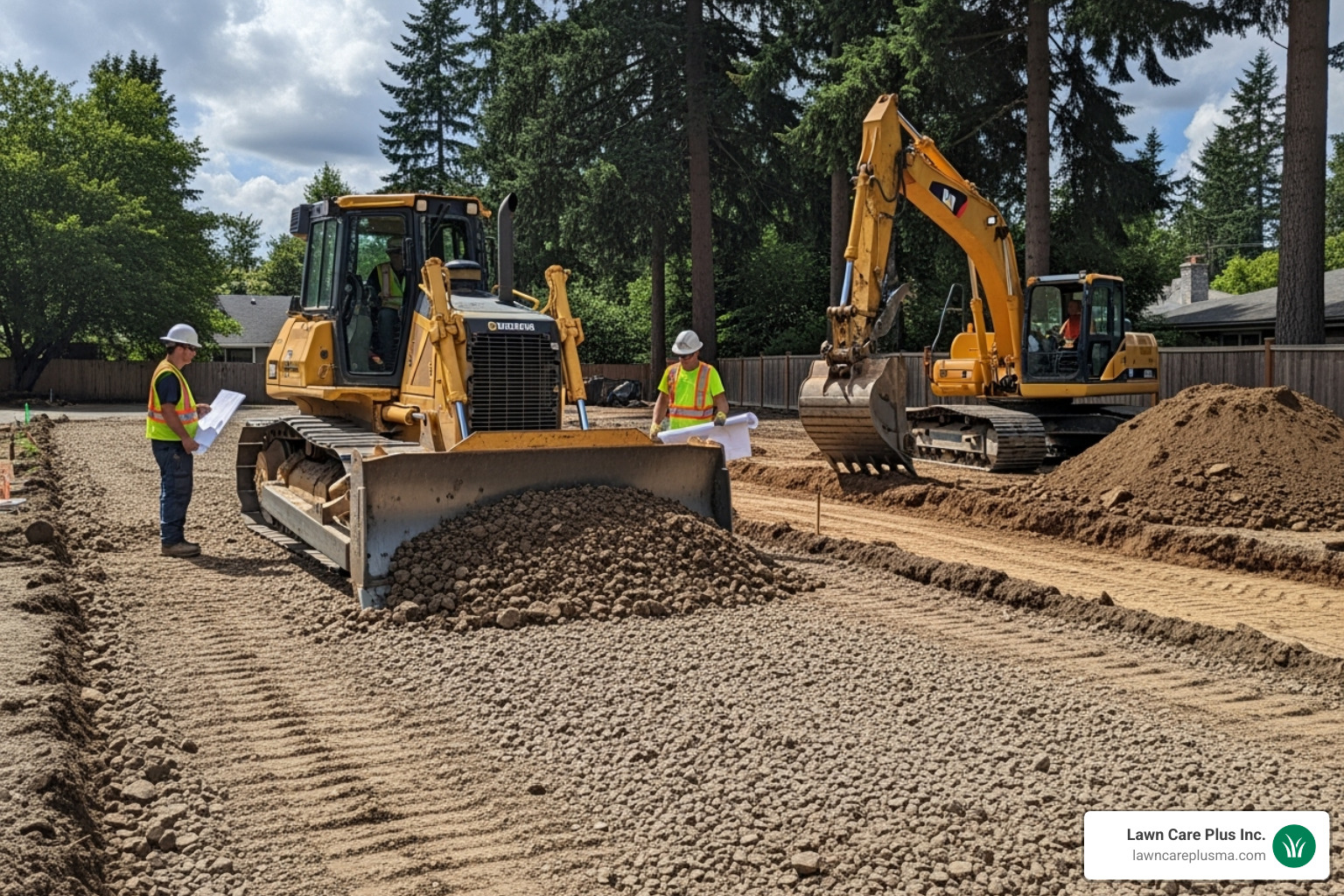
Proper site preparation is critical for a long-lasting driveway. If you have an existing driveway, its condition determines the first major expense. Old pavement removal—breaking up and hauling away old asphalt or concrete—adds to your driveway paving cost.
For comprehensive removal services, we handle everything from start to finish with our Concrete Driveway Removal and Replacement services.
Next is the foundation work. Your soil type is an important consideration, as different soils react differently to water and pressure. Grading for drainage is performed to ensure water flows away from your home and doesn’t pool on the new surface.
The sub-base installation is the most critical step for stability. This gravel base layer, typically 4 to 8 inches of compacted stone, prevents the driveway from cracking and settling over time. While the gravel base cost adds to your upfront investment, it is essential for the longevity of your driveway.
Labor and Regional Pricing Variations
Labor often represents 50% or more of your total driveway paving cost. You are paying for the skilled professionals who ensure the job is done correctly.
Labor rates vary based on several factors, including union vs. non-union labor and the complexity of the chosen material. Pouring concrete requires different skills and time than laying intricate pavers, and the pricing reflects that expertise.
Your location also makes a significant difference. In Massachusetts, particularly in the Boston Metro-West area, pricing is typically 10% to 20% higher than national averages due to a higher cost of living, stricter building codes, and strong demand for skilled labor. These regional pricing variations are an important budget consideration.
Site accessibility can also affect labor costs. If trucks and equipment can’t easily reach the driveway location, the extra effort required to haul materials will be reflected in the final price.
Driveway Material Costs & Options: A Detailed Breakdown
Your choice of material is a primary driver of your driveway paving cost, affecting both the upfront investment and long-term maintenance. While a basic gravel driveway might cost a few hundred dollars, a premium paver installation can exceed $25,000 for the same area. The cheapest initial option may not be the most economical over the driveway’s lifespan.
Here’s how the main driveway materials stack up:
| Material | Average Cost per Sq. Ft.* | Lifespan | Maintenance | Pros | Cons |
|---|---|---|---|---|---|
| Gravel | $1 – $4 | Up to 100 years (with upkeep) | High (regular raking, refilling) | Lowest initial cost, excellent drainage, natural look | Dust, rutting, can scatter, requires frequent upkeep |
| Asphalt | $3 – $15 | 15 – 30 years | Moderate (sealing every 3-5 years) | Cost-effective, flexible in cold climates, quick to install | Requires regular sealing, can soften in heat, less aesthetic variety |
| Concrete | $5 – $18+ | 30 – 40+ years | Low (occasional cleaning, optional sealing) | Very durable, long lifespan, versatile finishes, high ROI | Higher initial cost, can crack, longer cure time |
| Pavers | $10 – $50+ | 25 – 50+ years | Low to Moderate (cleaning, joint sand, occasional sealing) | High-end aesthetic, endless design options, easy individual repair | Highest initial cost, labor-intensive installation |
These prices represent national averages based on internet research and don’t reflect Lawn Care Plus Inc.’s specific pricing, which varies based on project details and location.
The ideal material depends on your budget, maintenance tolerance, and desired aesthetic. Let’s break down each option.
Gravel Driveway Cost
If minimizing your initial driveway paving cost is the top priority, gravel is the most budget-friendly choice at just $1 to $4 per square foot. It’s easy to install and offers excellent natural drainage. However, the low upfront cost is offset by high maintenance demands, including regular raking, filling ruts, and managing dust. With proper care and a solid foundation, a gravel driveway can last up to 100 years.
For homeowners considering various outdoor surface options, our hardscaping services can help you explore what works best for your property.
Asphalt (Blacktop) Driveway Cost
Asphalt offers a balance between affordability and a polished look, with a driveway paving cost between $3 and $15 per square foot. It’s flexible enough to handle Massachusetts’ freeze-thaw cycles and can typically be driven on within 1-3 days of installation. The main drawback is the need for sealcoating every 3-5 years to protect the surface, which adds to long-term costs. With proper care, an asphalt driveway can last 15 to 30 years.
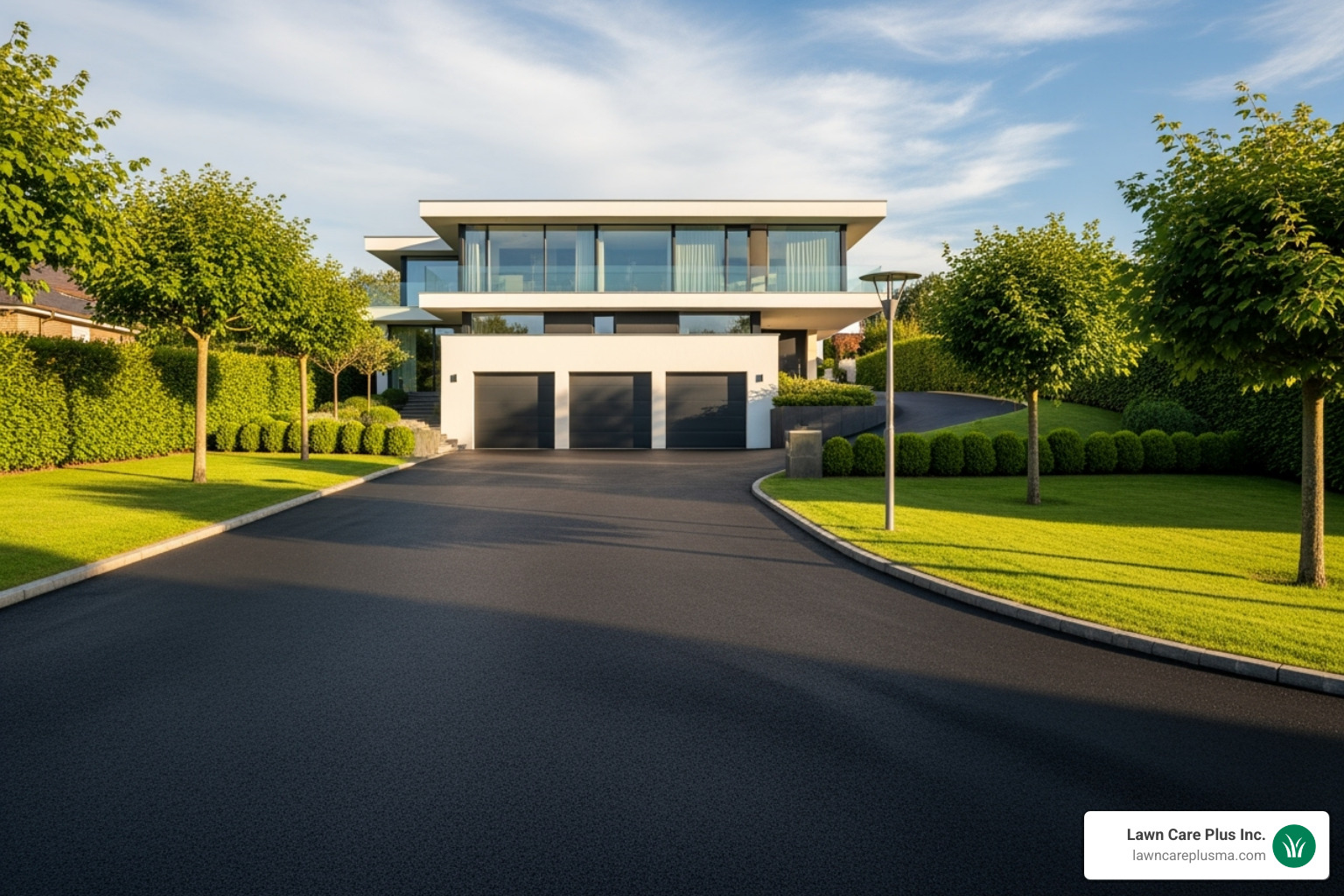
When replacement time comes, our Asphalt Driveway Replacement services ensure a smooth transition to your new surface.
Concrete Driveway Cost
While the upfront driveway paving cost for concrete is higher at $5 to $18+ per square foot, it’s an investment in longevity and durability. A concrete driveway can handle heavy loads and weather extremes, lasting 30 to 40+ years with minimal maintenance—just occasional cleaning and optional sealing. It also offers great versatility with stamped, stained, or colored finishes that can mimic more expensive materials. The main downsides are a longer cure time (7-10 days) and the potential for cracking if not installed with proper expansion joints.
For detailed concrete options and pricing, check out our guide on How Much Does a Concrete Driveway Cost?.
Paver Driveway Cost
Pavers are a luxury option, with costs ranging from $10 to $50+ per square foot. This high-end driveway paving cost delivers unparalleled beauty and design flexibility. Pavers allow for endless customization, creating stunning curb appeal that can significantly boost home value. A key practical advantage is the ability to replace individual pavers if damage occurs. The installation is labor-intensive, but a well-installed paver driveway can last 25 to 50+ years, offering an excellent return on investment.
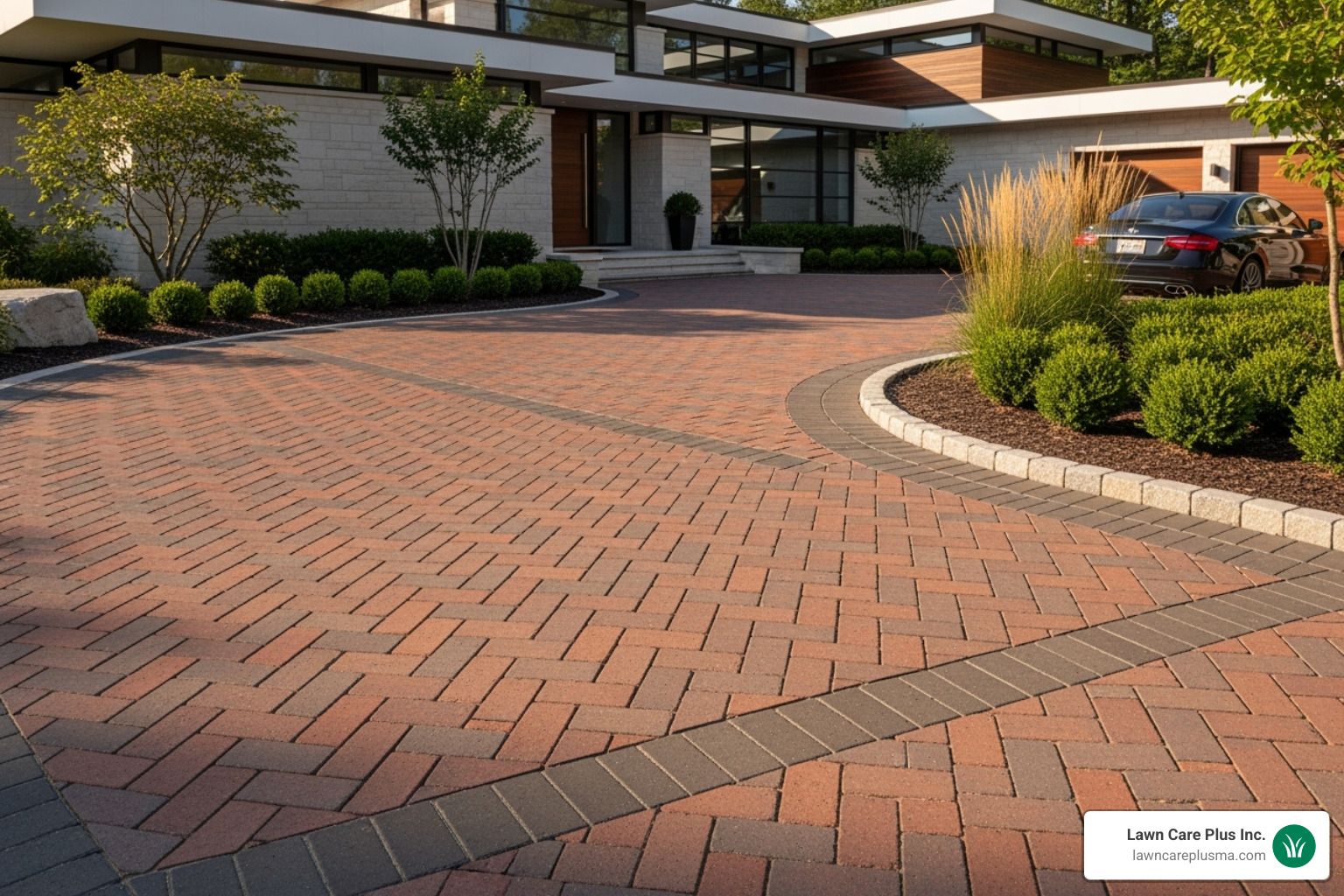
Our masonry services team has extensive experience creating beautiful paver installations that stand the test of time.
Beyond the Surface: Additional Expenses and Options
Beyond the surface material, several additional expenses and optional upgrades can significantly impact your final driveway paving cost. These include project necessities like permits and potential add-ons like heated systems. Budgeting for these items from the start is key to avoiding unexpected expenses.
New Installation vs. Resurfacing: A Driveway Paving Cost Comparison
You may not need a completely new driveway. Resurfacing can be a budget-friendly option if the underlying structure is sound but the surface shows minor wear. For asphalt, applying a fresh overlay can extend the driveway’s life by 8 to 15 years at a lower cost than full replacement.
However, resurfacing is not suitable for all driveways. If you have cracks wider than a quarter-inch, major potholes, or drainage issues, a full replacement is the better long-term solution. This involves removing the old driveway, preparing a new foundation, and installing new material. While it’s a larger investment, it’s the best way to address significant structural problems.
We’re here to help you weigh all your Driveway Replacement Options and tackle any Driveway Crack Repair needs along the way.
Permits, Drainage, and Custom Features
Most Massachusetts communities require permits for new driveway installations to ensure they meet local codes. Permit fees can range from a modest sum to several hundred dollars.
Proper drainage is essential for protecting your driveway and home foundation. If your property requires it, drainage solutions like French drains or culverts may be necessary. While a culvert installation can be a significant part of your budget, it’s a worthwhile investment to prevent costly water damage.
Custom features can lift your driveway’s form and function:
- Heated driveways are a popular upgrade in Massachusetts. A radiant heating system installed beneath the surface automatically melts snow and ice, eliminating the need for shoveling. While it adds considerably to the driveway paving cost, many find the convenience invaluable.
- Decorative finishes like stamped or colored concrete can mimic high-end materials like stone or brick at a lower cost. Colored asphalt is another option for coordinating with your home’s exterior.
How to Save Money and Choose the Right Contractor
Getting the best value on your driveway paving cost involves making smart decisions that balance upfront expenses with long-term quality. There are several strategies to save money without compromising on a durable, long-lasting driveway.
Tips for a Budget-Friendly Paving Project
- Choose Cost-Effective Materials: Your material choice is the biggest lever for savings. Gravel has the lowest upfront cost, while asphalt offers a good balance of affordability and durability.
- Opt for a Simple Layout: A straight, rectangular driveway costs significantly less than one with curves or complex shapes, which require more labor and materials.
- Schedule in the Off-Season: Contractors may offer better rates during their slower seasons, typically late fall through early spring in Massachusetts. Weather can be a factor, but flexibility can lead to savings.
- Get Multiple Detailed Quotes: Obtain at least three itemized estimates from reputable contractors. This helps you compare costs for materials, labor, and site prep, and provides negotiating leverage.
- Consider DIY Prep Work: If you’re handy, you might save on labor by handling some of the initial site preparation. However, be realistic about your skills, as improper prep can lead to costly future repairs.
What to Look for in a Driveway Paving Contractor
The lowest driveway paving cost isn’t the best deal if the contractor cuts corners. Here’s what to look for in a professional:
- Licensing and Insurance: Verify that the contractor has proper licensing and insurance. This protects you from liability and ensures they meet professional standards.
- Local Experience: A contractor with experience in the Boston Metro-West area will understand local soil conditions, climate challenges, and permit requirements.
- Reviews and References: Read online reviews and ask for references from recent customers to gauge their reputation for quality, communication, and timeliness.
- Detailed Written Estimates: A professional provides an itemized estimate detailing all costs: materials, labor, site prep, disposal fees, permits, and a project timeline. Vague quotes are a red flag.
- Workmanship Warranty: A contractor who offers a solid warranty is confident in their work. Ask what is covered and for how long.
- Comprehensive Services: Working with a full-service team that handles excavation, drainage, and paving can streamline the project and improve accountability.
For homeowners in our service area, our team at Driveway Replacement Contractors brings decades of local expertise to every project. You can also Watch videos on YouTube to see what professional installation entails.
Frequently Asked Questions about Driveway Paving
Here are answers to the most common questions homeowners have about driveway paving cost and the factors involved in their project.
What is the cheapest option for paving a driveway?
Gravel is the most affordable option, with a driveway paving cost typically running between $1 to $4 per square foot. The material is inexpensive and requires less intensive labor to install. However, the low upfront cost is balanced by higher long-term maintenance. Gravel requires regular raking, periodic refilling to address ruts, and can be dusty in dry weather. On the plus side, it offers excellent drainage and, with consistent upkeep, can last for many decades.
What are the long-term cost differences between asphalt and concrete?
Understanding the total investment over time is key when choosing between asphalt and concrete.
- Asphalt has a lower initial cost ($3 to $15 per sq ft) and a lifespan of 15 to 30 years. However, it requires sealcoating every 3-5 years to maintain its condition, which costs about $2 to $7 per square foot per session. These maintenance costs add up over the life of the driveway.
- Concrete costs more upfront ($5 to $18 per sq ft) but is a lower-maintenance solution. A concrete driveway can last 30 to 40+ years with only occasional cleaning and optional sealing every few years, which can cost $1 to $3 or more per square foot.
In Massachusetts, asphalt’s flexibility makes it resilient to freeze-thaw cycles. Concrete can be prone to cracking if not installed with proper expansion joints, but modern techniques minimize this risk. Over the long term, concrete often has a lower total cost of ownership.
Does a new driveway add to home value?
Yes, a new driveway is an excellent investment that improves curb appeal and increases home value. As one of the first features visitors and potential buyers see, a clean, well-maintained driveway creates a strong positive impression. A cracked or stained surface can suggest poor property maintenance.
On average, a new paved driveway can add $5,000 to $7,000 to your home’s value, offering a solid return on investment. Concrete driveways often provide the highest ROI due to their durability and aesthetic versatility, but a quality asphalt installation also significantly boosts a home’s appeal.
For a deeper dive into whether this investment makes sense for your situation, check out our detailed analysis: Does Replacing Driveway a Good Investment?
Your Next Step to a Perfect Driveway
Understanding your driveway paving cost means knowing the key price drivers: material choice, project size and complexity, site preparation, and regional labor rates. These factors work together to determine your final investment.
A driveway is a long-term investment in your home’s value and daily convenience. A professionally installed surface is built to handle Massachusetts weather, from summer heat to harsh freeze-thaw cycles, ensuring it lasts for decades instead of cracking within a few years.
Professional installation ensures proper foundation work. The sub-base preparation, drainage planning, and material application techniques that experienced contractors provide are essential for durability. Considering a properly installed driveway can add thousands to your home’s value while lasting 20 to 40 years, the investment in quality workmanship pays for itself.
For homeowners throughout the Boston Metro-West area, our team at Lawn Care Plus Inc. brings decades of experience to every driveway project. We handle everything from initial design consultation through final cleanup, ensuring your project meets both your vision and our high standards for durability and craftsmanship.
Ready to move forward with your driveway project? Explore our hardscaping services to find how we can transform your property with a beautiful, long-lasting driveway that perfectly complements your home.
