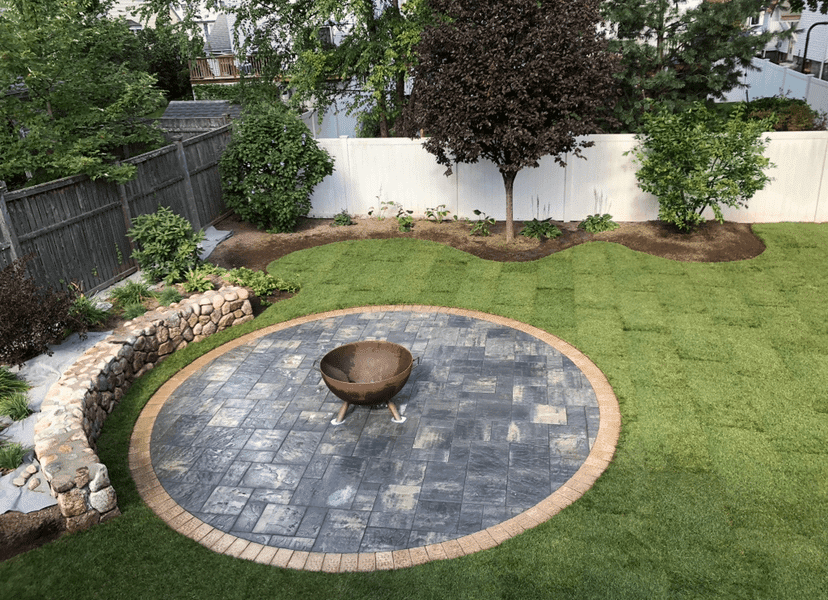
The Homeowner’s Guide to Evaluating Blue Stone Pavers
Blue stone pavers are one of the most popular natural stone paving materials available for patios, walkways, pool decks, and driveways — and for good reason.
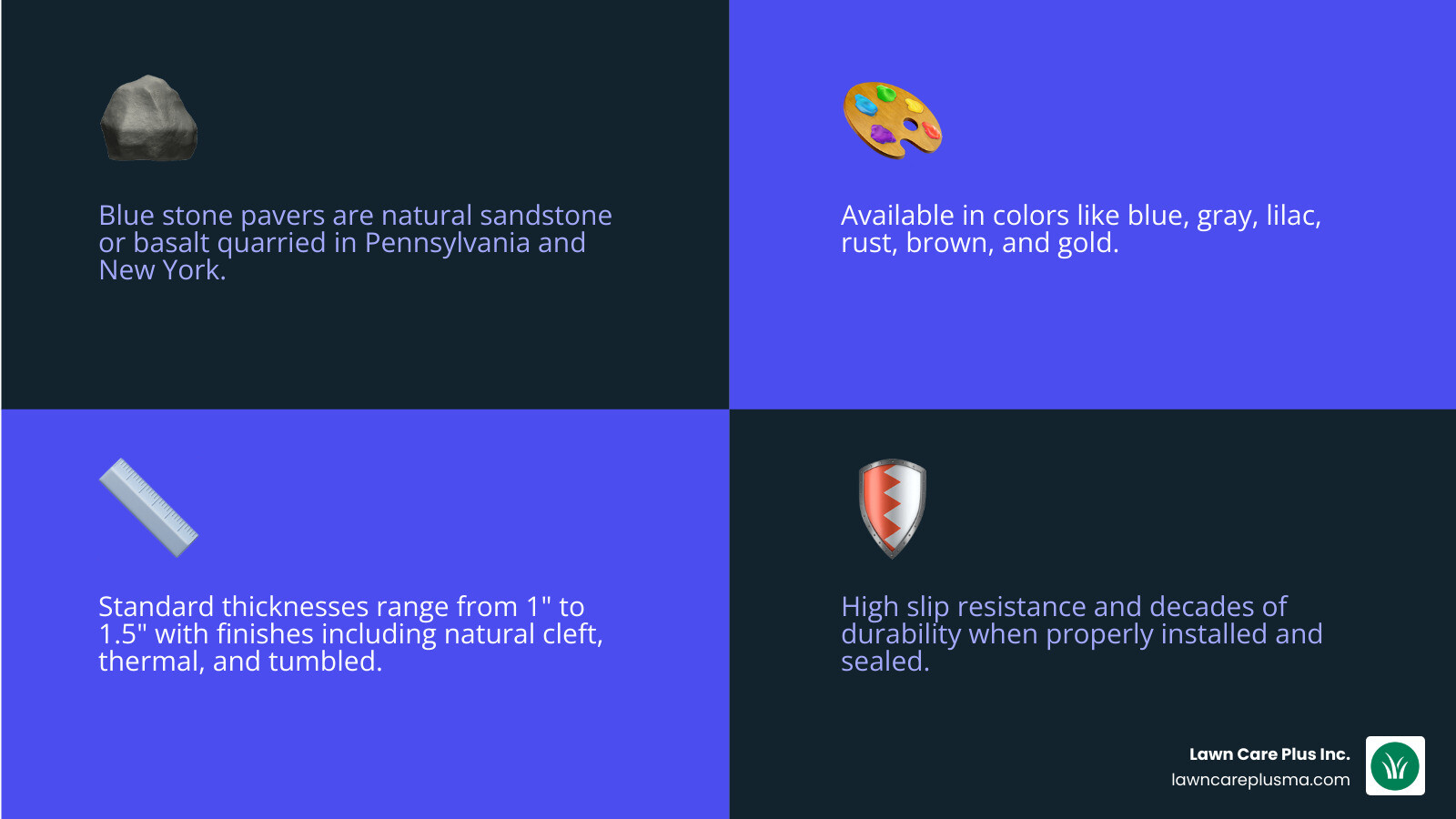
Here’s a quick snapshot of what you need to know before buying:
| Feature | Blue Stone Pavers |
|---|---|
| Material | Natural sandstone (PA/NY) or basalt |
| Common finishes | Natural cleft, thermal, tumbled |
| Thickness | 1″ to 1.5″ (porcelain: 3/4″) |
| Colors | Blue, gray, lilac, rust, brown, gold |
| Best uses | Patios, pool decks, walkways, steps |
| Maintenance | Periodic sealing required |
| Durability | Decades with proper installation |
| Slip resistance | High — especially natural cleft |
Pennsylvania and New York have been producing bluestone for decades. It shows up constantly in architectural and home design publications — and it’s easy to see why. The stone’s natural earth tones work with nearly any landscape style, from rustic to contemporary.
But bluestone isn’t perfect. It’s porous, can fade over time, and requires sealing to hold up against New England’s harsh freeze-thaw cycles. This guide covers everything you need to evaluate whether it’s the right material for your project.
I’m Tim DiAngelis, owner of Lawn Care Plus Inc., a full-service landscaping and hardscaping company serving Greater Boston and Metro-West — and our team has installed countless blue stone paver projects across the region. Read on for an honest, practical breakdown of everything from finishes and sizing to installation, maintenance, and cost.
Must-know blue stone pavers terms:
What are Blue Stone Pavers?
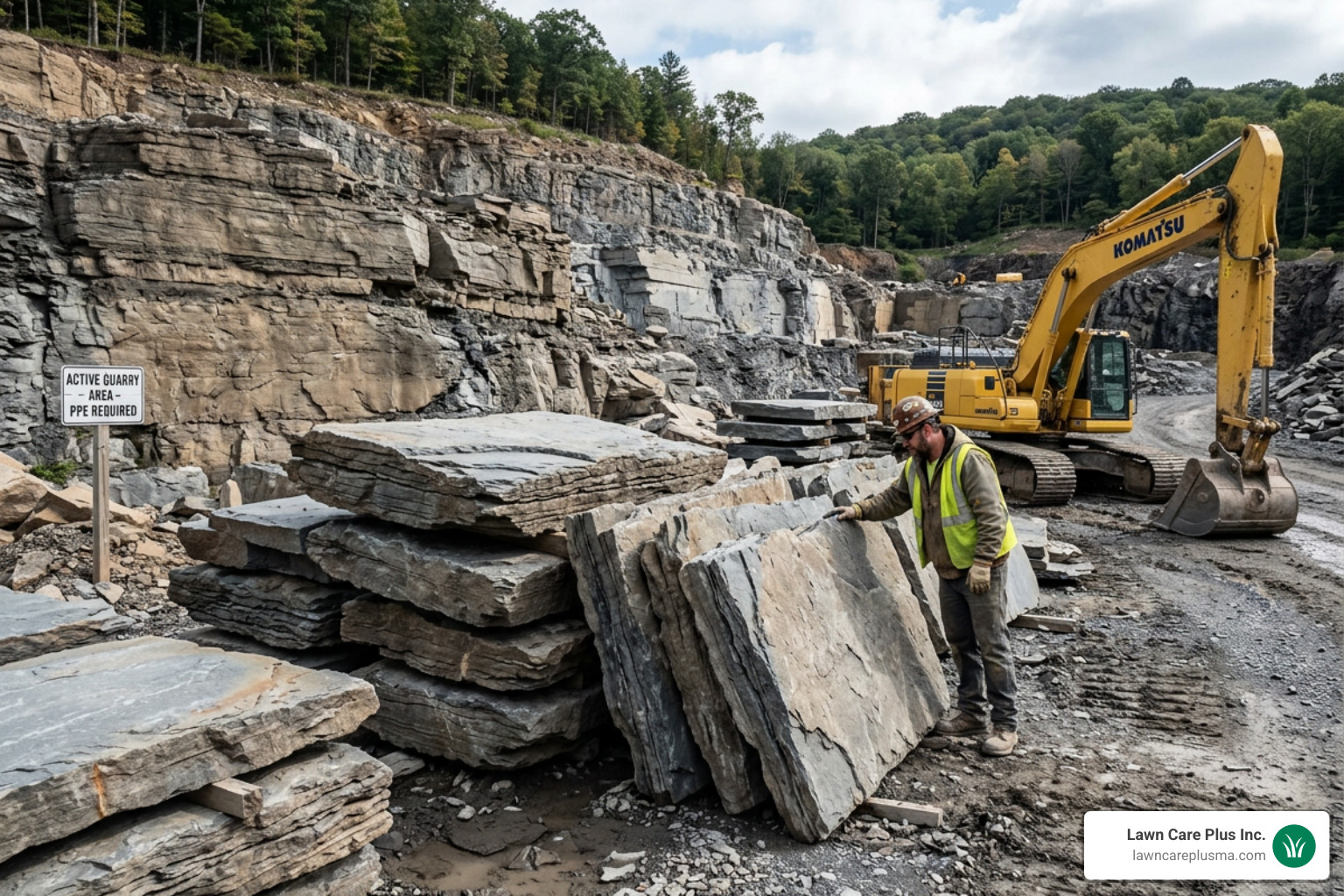
When we talk about blue stone pavers in the Northeast, we are almost always referring to a specific type of feldspar-rich sandstone. Geologically, this stone was formed hundreds of millions of years ago from ancient sea mineral deposits. These minerals—including bronze, lilac, green, and copper—give the stone its iconic “movement” and varied color palette.
In the United States, authentic natural bluestone is primarily sourced from a very specific region. According to Pennsylvania Bluestone Origins and Characteristics, this unique sandstone is found only in Northeastern Pennsylvania and parts of Southern New York. While you might hear the term used elsewhere—for instance, in Australia, where bluestone refers to a fine-grained igneous rock like basalt—here in Massachusetts, we’re working with the classic American sandstone.
Material Density and Strength
Don’t let the word “sandstone” fool you into thinking this material is soft. Blue stone pavers are incredibly dense and hard-wearing, making them ideal for the heavy foot traffic and harsh winters we experience in the Boston Metro-West area.
From a technical standpoint, quality bluestone boasts impressive mechanical properties:
- Compressive Strength: Approximately 31,662 psi (pounds per square inch).
- Modulus of Rupture: 2,858 psi.
- Density: 175 lbs per cubic foot.
- Water Absorption: A low 0.33%.
These stats mean the stone is highly resistant to crushing and can withstand the expansion and contraction caused by our local freeze-thaw cycles.
Common Color Palettes
One of the reasons we love working with bluestone is its aesthetic versatility. Depending on the quarry and the specific vein of stone, you can choose between two primary color categories.
- Blue-Blue (or Select Blue): This material is sorted to ensure a consistent range of light to deep blue and gray tones. It offers a cleaner, more uniform look that is perfect for contemporary designs.
- Full Color (Variegated): This is the “wild child” of the bluestone family. It includes a beautiful mix of earthy tones like rust, gold, tan, lilac, and even hints of green. If you are looking for a rustic or traditional feel, Blue/Gray Sawn Irregular Pavers or full-color mixes provide a natural, organic charm.
Popular Finishes for Blue Stone Pavers
The “finish” of a stone refers to how the surface is treated after it’s pulled from the earth. The finish you choose will dictate not just how the patio looks, but also how it feels under your feet and how slip-resistant it is.
Natural Cleft Blue Stone Pavers
A “natural cleft” finish is created by splitting the stone along its natural layers or fault lines. This results in a wavy, slightly irregular surface that mimics the look of the stone as it exists in nature.
- Texture: Somewhat rough to rough.
- Style: Perfect for a “cottage” or traditional aesthetic.
- Slip Resistance: Excellent. The natural ridges provide built-in traction, making it a top choice for flagstone walkway installation.
- Specifications: You can find detailed Natural Cleft Product Specifications that highlight the swirled and cloudy patterns inherent in this finish.
Thermal and Tumbled Finishes
For a more refined or modern look, many of our clients in areas like Newton and Brookline opt for a thermal finish. This is achieved by wet-heating the stone until the surface layer pops, leaving a smooth, uniform texture.
- Thermal Finish: These pavers are “gauged,” meaning they are cut to a consistent thickness (usually 1″ or 1.5″). This makes them much easier to lay in a precise pattern.
- Tumbled Finish: This process rounds the edges of the stone, giving it an aged, antique appearance. You’ll often see this in Full Color Cobblestone Pavers, which add a historic feel to driveways and entryways.
Pros and Cons of Natural Stone Hardscaping
Choosing the right material is a balance of aesthetics, performance, and budget. Here is how blue stone pavers stack up against other popular options like porcelain and granite.
| Feature | Natural Bluestone | Porcelain Pavers | Granite Pavers |
|---|---|---|---|
| Look | Natural/Unique | Uniform/Printed | Speckled/Consistent |
| Porosity | Moderate | Non-porous | Low |
| Sealing | Required | Not Required | Recommended |
| Heat | Can get hot | Stays cooler | Moderate |
| Cost | Mid-Range | High | Premium |
Benefits for Pool Decks and Patios
We frequently recommend bluestone for patio pavers and pavers walkways because of its incredible durability. It is naturally salt-resistant, which is a huge plus if you have a saltwater pool or if you’re worried about winter de-icing salts. Its rough texture provides a non-slip surface that is safer for wet feet on a pool deck. Plus, there is simply no manufactured material that can perfectly replicate the “movement” and soul of natural stone.
Potential Drawbacks to Consider
No material is perfect. Because bluestone is a natural sandstone, it is porous. This means it can absorb water, which can lead to “spalling” (surface flaking) over many years if the stone is of lower quality or left unsealed. It also tends to hold heat more than lighter-colored materials. If your patio is in direct sunlight all day, it might get a bit toasty for bare feet. Finally, while it is durable, it does require a professional paver patio installer to ensure the base is prepared correctly to prevent shifting.
Installation and Maintenance of Blue Stone Pavers
A beautiful bluestone patio is only as good as the foundation it sits on. In the Boston area, our soil can be quite heavy with clay, which makes proper drainage and compaction essential.
Jointing and Setting Methods
There are two main ways we install blue stone pavers:
- Dry-Laid: The pavers are set on a bed of compacted gravel and sand. The joints are then filled with stone dust or polymeric sand. This method is flexible, allowing the stone to move slightly with the ground’s natural heave. For more details, check out our paver patio installation guide.
- Mortar Set (Wet-Laid): The stones are set in a bed of mortar on top of a concrete slab. This creates a rigid, permanent surface. While more expensive, it is often the preferred method for bluestone walkway installation where a high-end, masonry look is desired.
Whether you are installing a paver walkway or learning how to install patio pavers yourself, the key is the base. We excavate deep enough to ensure a stable, well-draining foundation that can survive a Massachusetts winter.
Cleaning and Sealing Requirements
To keep your stone looking vibrant, we recommend a simple maintenance routine. Regular cleaning with water and a mild detergent is usually enough to remove surface dirt. However, because bluestone is porous, sealing is highly recommended.
A good sealer acts as a barrier against oil, grease, and organic stains (like fallen leaves or bird droppings). You can choose a “natural look” sealer that doesn’t change the color, or an “enhancing” sealer that gives the stone a permanent “wet” look, making the blues and lilacs pop. If you are building a paver patio, plan to re-seal the stone every 2–3 years.
Cost, Sizing, and Coverage Estimates
When planning your project, understanding how the stone is sold will help you estimate your needs. Bluestone is typically sold by the square foot or by the pallet.
Average Market Pricing
Note: The following are average market costs based on internet data and do not represent actual project quotes for Lawn Care Plus Inc. projects.
The cost of a bluestone project can vary significantly based on the type of stone (irregular vs. pattern), the thickness, and the complexity of the installation. On average, you might see market prices ranging from $15 to $65 per square foot installed.
Irregular flagging (jagged, natural shapes) is often cheaper per square foot for the material but can be more expensive in labor because it’s like putting together a giant, heavy jigsaw puzzle. Pattern bluestone (pre-cut squares and rectangles) is more expensive to buy but faster to install. For a more detailed breakdown, you can view our guides on the cost to install paver walkway and the cost to install paver patio.
Coverage and Pallet Quantities
If you are working with landscape paver contractors, they will handle the ordering, but it’s helpful to know the math.
- A pallet of 1.5-inch thick bluestone covers approximately 180 square feet.
- A pallet of 1-inch thick bluestone covers approximately 220 square feet.
Most landscape paver contractors near me will recommend the 1.5-inch thickness for dry-laid projects to ensure the stones are heavy enough to stay put without mortar.
Frequently Asked Questions
Is bluestone too hot for bare feet?
Like any dark-colored natural material, bluestone absorbs solar energy. On a 90-degree day in Boston, a “Blue-Blue” thermal patio in direct sun will get hot. However, “Full Color” bluestone often contains lighter tans and grays that stay slightly cooler. If you’re building a pool deck in a sunny spot, we often suggest incorporating some shaded areas or considering a lighter-colored stone like granite or specialized porcelain.
Does bluestone need to be sealed?
Technically, no—the stone won’t fall apart if you don’t seal it. However, we strongly recommend it for Massachusetts homeowners. Sealing protects the stone from the “freeze-thaw” cycle by preventing water from soaking into the pores and expanding when it turns to ice. It also prevents the stone from fading due to sun exposure and protects against stains from salt and chemicals.
How long do bluestone pavers last?
When properly installed and maintained, blue stone pavers can easily last for 30 to 50 years or more. Because it is a natural stone, it doesn’t “wear out” like wood or some manufactured products. In fact, many people believe bluestone looks even better as it ages and develops a natural patina.
Conclusion
Blue stone pavers are a timeless, durable, and stunning choice for any Massachusetts home. Whether you are envisioning a sleek, modern pool deck in Wellesley or a winding, rustic garden path in Belmont, bluestone offers a level of natural beauty that is hard to match.
At Lawn Care Plus Inc., we specialize in bringing these visions to life. From the initial design to the final joint of sand, our team provides expert masonry and hardscaping services across the Boston Metro-West area. We understand the local climate, the local soil, and exactly what it takes to make a natural stone project last for a lifetime.
If you are ready to transform your outdoor space with the elegance of blue stone pavers, we would love to help. We serve clients in Belmont, Boston, Brighton, Brookline, Canton, Chestnut Hill, Dedham, Hyde Park, Jamaica Plain, Mattapan, Medfield, Milton, Needham, Newton, Norwood, Randolph, Readville, Roslindale, Walpole, Watertown, and Westwood. Contact us today to start your next project!