
Why Your Concrete Driveway Deserves Better
You need to fix concrete driveway issues quickly to prevent minor problems from becoming major headaches. Here’s a quick overview of your options:
Quick Fix Guide:
- Small cracks (under 1/4″) – Use flexible concrete crack filler or sealant.
- Wide cracks (over 1/4″) – Insert backer rod, then apply patching compound.
- Surface damage – Resurface with a concrete overlay (1/16″ to 1/2″ thick).
- Sunken sections – Consider concrete leveling or slabjacking.
- Severe damage – Full replacement may be necessary.
All concrete eventually cracks. Hairline fractures grow, and small potholes deepen with every freeze-thaw cycle. The good news is that most concrete driveway damage is fixable, often as a DIY project. Whether you have minor cracks, surface spalling, or sunken sections, there’s a solution short of a full replacement.
The key is understanding the cause. In the Boston Metro-West area, the primary culprit is water seeping into cracks, freezing, and expanding. This damage is accelerated by deicing salts, heavy traffic, and natural ground settling.
Catching problems early saves you money. A crack sealed today for a few dollars can prevent a repair costing hundreds or a replacement costing thousands down the road. This guide will help you assess your driveway, choose the right fix, and complete the repair properly—or know when to call the pros.
Fix concrete driveway vocabulary:
Assess the Damage: Repair, Resurface, or Replace?
Before starting any work, determine the extent of the damage. Understanding why your concrete is failing helps you choose the right fix and avoid temporary solutions that don’t address the root cause.
Common causes of driveway damage include:
- Freeze-thaw cycles: In Massachusetts, water gets into cracks, freezes, expands, and pries the concrete apart. Deicing salts can worsen this by allowing more water to penetrate the surface.
- Poor installation: An improper concrete mix, a poorly compacted base, or a lack of control joints can lead to premature failure.
- Heavy loads: Parking vehicles heavier than what the driveway was designed for, like RVs or construction dumpsters, can cause stress cracks.
- Soil settlement: The ground beneath the slab can shift or settle, creating voids that lead to uneven slabs and cracks.
- Water damage: Poor drainage and standing water can erode the surface and undermine the base over time.
- Chemical exposure: Spills from oil, gasoline, and harsh cleaners can eat away at the concrete surface.
- Crazing: Fine, spiderweb-like cracks on new concrete are usually cosmetic, caused by the surface drying too quickly. They don’t typically indicate structural issues.
Based on your assessment, decide whether to repair, resurface, or replace.
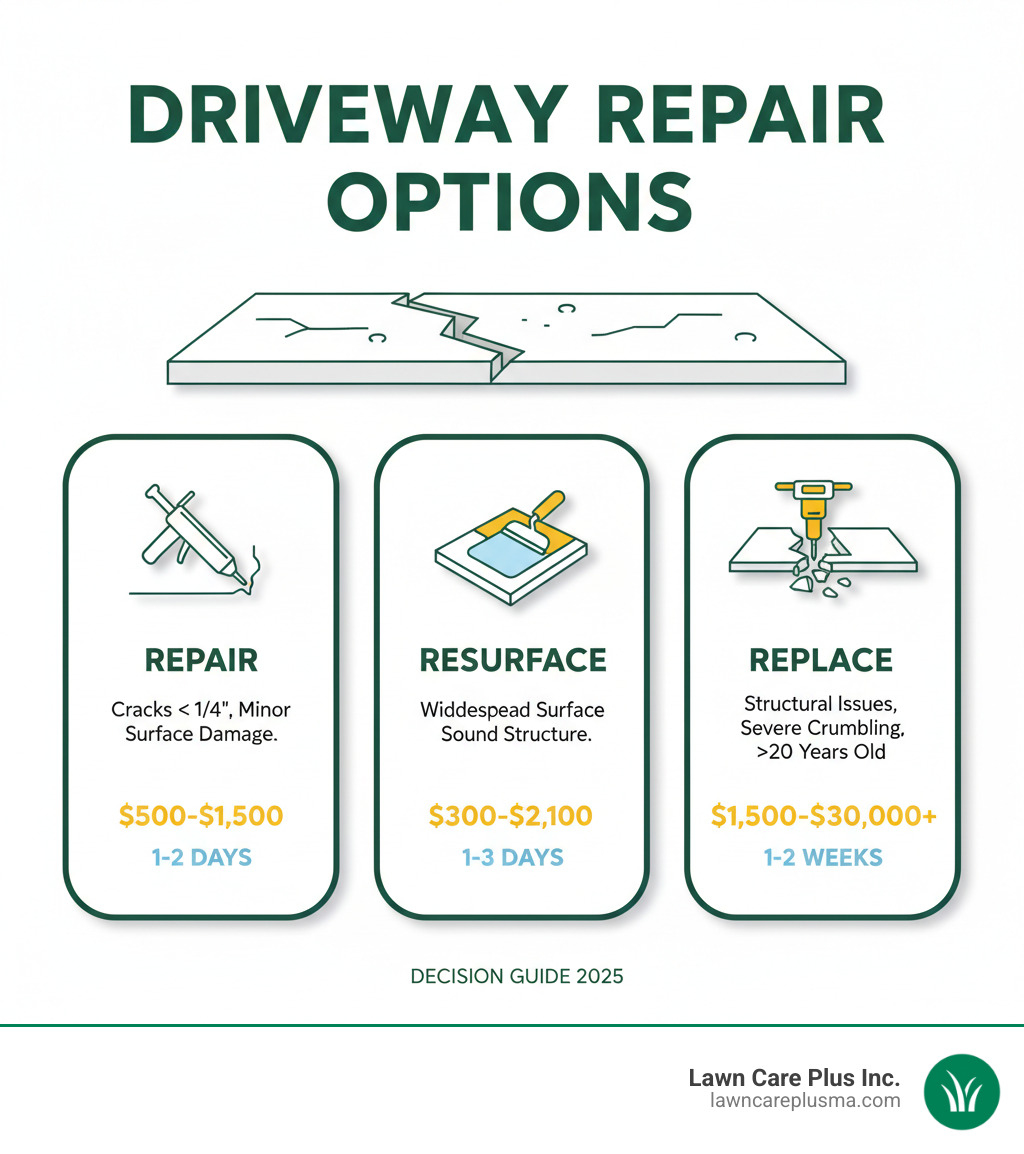
When to Repair
Repair is the quickest, most budget-friendly option for minor, localized damage. Choose this path for:
- Small cracks: Hairline fractures or cracks less than 1/4-inch wide can be filled with a flexible sealant to prevent water intrusion.
- Minor spalling or chipping: Small flakes or chips on the surface can be patched with a concrete repair compound.
- Sinking slabs: If only one or two sections have settled, concrete leveling (slabjacking) can raise them back to the proper height at a much lower cost than replacement.
Timely repairs stop small problems from becoming big ones. For more details, see our guide on Cement Driveway Repair.
When to Resurface
Resurfacing is like giving your driveway a facelift. It’s a great option when the underlying slab is structurally sound, but the surface is worn. Consider resurfacing for:
- Widespread surface damage: Extensive spalling, pitting, or a network of fine cracks.
- Stains and discoloration: A fresh overlay can cover stubborn oil stains, rust marks, or uneven fading.
- Cosmetic upgrades: Transform a plain gray slab with color, texture, or a decorative pattern to boost curb appeal.
Resurfacing involves applying a thin layer (1/16″ to 1/2″) of polymer-modified concrete over the existing, prepared surface. It’s less disruptive and less expensive than a full replacement.
When to Replace
Sometimes, a driveway is beyond saving, and replacement is the only long-term solution. This is often the case with:
- Severe structural issues: Deep, wide cracks (over 1/4-inch), major heaving, or widespread crumbling indicate the slab’s integrity is compromised.
- Extensive underlying problems: If the base has failed, drainage is poor, or tree roots are pushing up the slab, surface-level fixes won’t last. The problem is underneath.
- Age and condition: A driveway over 20 years old with multiple serious issues has likely reached the end of its service life.
While replacement is the most expensive option, it provides a fresh start with a properly prepared base and modern installation techniques, ensuring decades of performance. To see if this is a good investment for you, read Does Replacing Driveway a Good Investment?.
For a full overview of your options, visit our page on driveway replacement options.
Your Step-by-Step Guide to Fix a Concrete Driveway
Success in any project to fix concrete driveway issues depends on two things: having the right tools and materials, and proper surface preparation. Skipping steps can lead to a repair that fails within months.

Essential Tools and Materials
Gather your toolkit before you begin.
- Safety Gear: Always wear safety goggles, a dust mask or respirator, and waterproof gloves like these disposable vinyl gloves.
- Cleaning Tools: Pressure washer, wire brush, stiff broom, hammer, masonry chisel, and shop vac.
- Repair Tools: An angle grinder with a crack chaser blade for wide cracks, mixing buckets, a paddle mixer for your drill, trowels, a rubber squeegee for resurfacing, and a caulk gun.
- Repair Materials: For small cracks, use a flexible sealant like Sikaflex concrete sealer or a self-leveling version. For larger damage, use a concrete patching compound. For resurfacing, use a product like Quikrete Re-Cap Concrete Resurfacer.
- Other Supplies: Backer rod for wide cracks, concrete cleaner/degreaser, a bonding agent (if not included in your patch mix), and painter’s tape for clean edges.
How to Prepare the Driveway for Any Fix
Proper preparation is the most critical step for a lasting repair.
- Clear and Inspect: Remove all items from the driveway. Inspect the entire surface and mark all problem areas with chalk.
- Remove Loose Concrete: Use a hammer and chisel to break away any crumbling or flaking concrete. This material must be removed for the new patch to bond.
- Deep Clean: Sweep away all loose dirt and debris. For oil or grease stains, scrub with a concrete cleaner and degreaser, then rinse thoroughly.
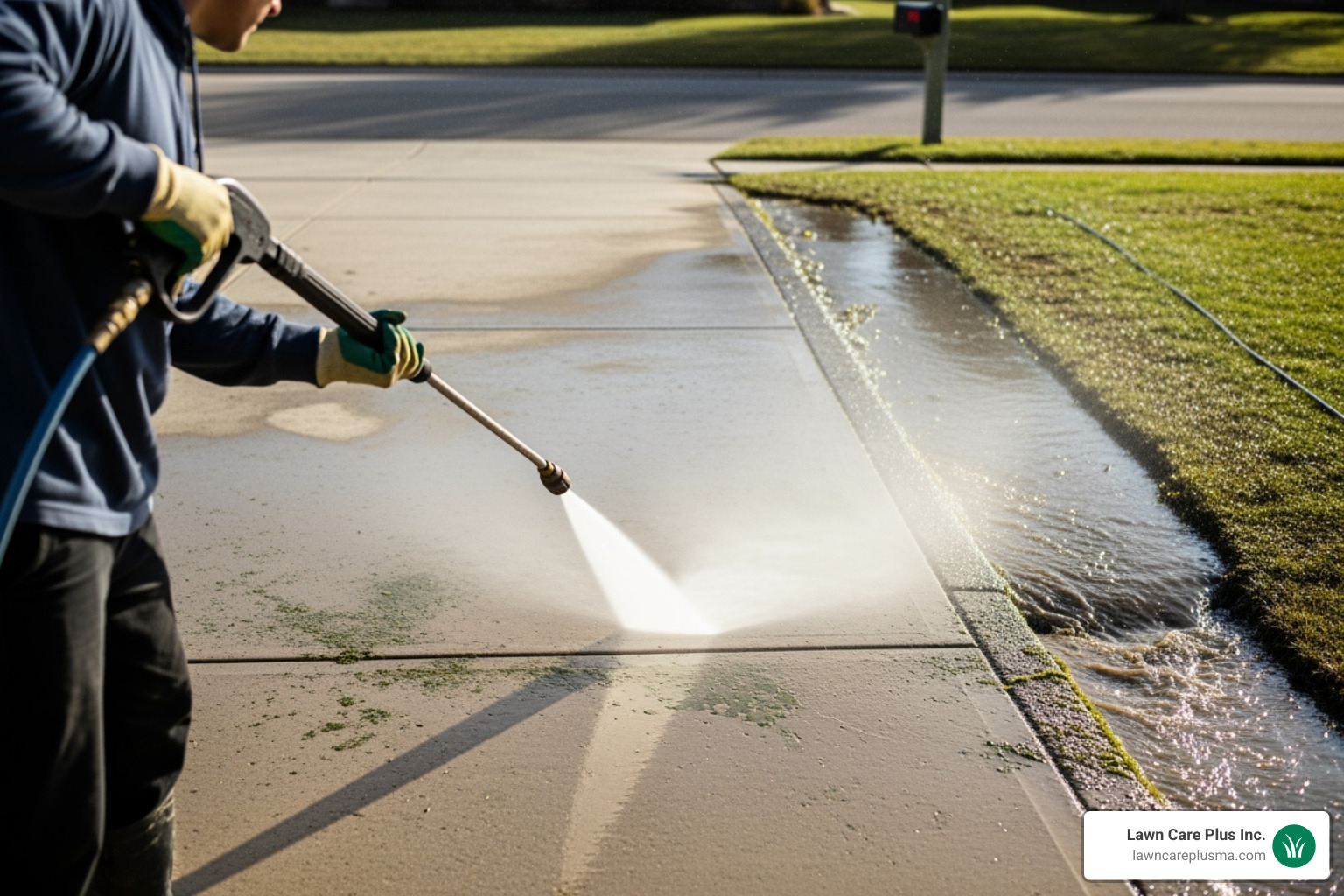
- Pressure Wash: Wash the entire driveway to remove embedded grime and open the concrete’s pores for better bonding. Let the surface dry completely.
- Clean Cracks: Use a screwdriver, wire brush, or shop vac to remove all debris from inside the cracks.
How to Fix Cracks in a Concrete Driveway
Most cracks are fixable if caught early.
For narrow cracks (under 1/4-inch):
- Ensure the crack is clean and dry.
- Apply a flexible concrete crack sealant like Sikaflex concrete sealer using a caulk gun. For a neat finish, apply painter’s tape along the crack edges before sealing.
- Smooth the sealant if necessary and remove the tape while it’s still wet. A self-leveling Sikaflex is great for flat surfaces.
For more tips, see our guide on Driveway Crack Repair.
For wide cracks (over 1/4-inch):
- Undercut the edges with a hammer and chisel or angle grinder to create an inverted “V” shape. This locks the patch in place.
- Clean out all debris. A shop vac is ideal for this.
- Insert a foam backer rod into deep cracks, leaving it about 1/2-inch below the surface. This saves material and allows for flex.
- Mix and apply the concrete patching compound, pressing it firmly into the crack with a trowel. Overfill it slightly.
- Smooth the patch flush with the surrounding surface, feathering the edges. Match any existing broom-finish texture while the patch is still wet.
- Cure the patch according to the manufacturer’s instructions, which often involves keeping it moist for several days.
The Process for Resurfacing Your Driveway
Resurfacing can make a structurally sound but worn driveway look new.
- Repair First: Complete all crack and hole repairs before resurfacing. A resurfacer is a thin coating, not a structural fix.
- Final Clean: Ensure the entire driveway is impeccably clean. Any contamination will prevent the resurfacer from bonding.
- Mix the Resurfacer: Use a paddle mixer and follow the package directions precisely. Aim for a thick, lump-free consistency. Do not add extra water, as this weakens the mix.
- Dampen the Surface: Lightly mist the concrete with water until it is damp but has no standing puddles (Saturated Surface Dry).
- Spread the Material: Working in small sections (e.g., 10’x10′), pour the resurfacer and spread it evenly with a rubber squeegee. Use firm pressure to ensure a good bond. Maintain a “wet edge” between sections to avoid lap marks.
- Apply Broom Finish: Within five minutes, drag a stiff-bristled broom across the wet surface in even strokes to create a non-slip texture.
- Cure Properly: This is critical. Follow the manufacturer’s instructions for curing, which usually involves misting with water or covering with plastic for several days. Do not walk or drive on the surface until the recommended time has passed.
For more on this topic, visit our page on how to Repair Concrete Driveway.
Costs, Curing, and Long-Term Care
Understanding the costs, proper curing times, and long-term care will help you protect your investment.
Understanding the Costs: DIY vs. Professional
Costs vary widely based on the scope of work and whether you do it yourself or hire a professional.
- DIY Repairs: For small cracks and patches, expect to spend $50 to $200 on materials and basic tools.
- Professional Repairs: For services like concrete leveling (slabjacking) or extensive repairs, costs can climb. Note: The typical cost for concrete driveway repair can range from $500 to $4,500 or more, based on internet data and not actual costs for Lawn Care Plus.
- Resurfacing: A DIY project might cost $300 to $500 in materials. Professional resurfacing typically ranges from $3 to $7 per square foot.
- Full Replacement: This is the most expensive option, generally costing between $1,500 and $30,000, or $5 to $10 per square foot, depending on size and site prep.
For more on replacement costs, see our Cost of Replacing Driveway page. For new installation pricing, check out How Much Does a Concrete Driveway Cost?.
Curing Times and Getting Back on Your Driveway
Patience during the curing process is essential for a durable repair.
- Foot Traffic: You can typically walk on repaired surfaces after 4 to 6 hours.
- Vehicle Traffic: Wait at least 24 hours before parking cars on the surface. Deeper patches may require several days.
- Full Strength: Concrete reaches its full design strength in about 28 days. During this time, avoid parking heavy equipment or making sharp turns on fresh repairs.
Weather significantly impacts curing. Hot, dry days accelerate curing (sometimes too fast), while cool, damp conditions slow it down. Always follow the product manufacturer’s instructions and avoid repairs if rain is in the forecast.
Best Practices for Driveway Maintenance
A little preventative maintenance goes a long way.
- Keep it Clean: Regularly sweep away debris. Pressure wash annually to remove grime.
- Seal Your Concrete: Apply a quality sealer every 3-5 years. This is the best way to protect against moisture, deicing salts, and stains, especially during harsh Massachusetts winters.
- Avoid Harsh Chemicals: Use sand or non-corrosive deicers instead of salt. Clean up oil and chemical spills immediately.
- Manage Drainage: Ensure water flows away from your driveway and doesn’t pool on the surface.
- Inspect Regularly: Catch and seal new cracks early before they become major problems.
- Be Mindful of Loads: Avoid parking exceptionally heavy vehicles on a standard residential driveway.
Frequently Asked Questions about Concrete Driveway Repair
Here are answers to some of the most common questions about concrete driveway repair.
How long does a concrete driveway repair last?
The lifespan of a repair depends on the quality of the work, the materials used, and ongoing maintenance.
- Crack Sealing: A properly sealed crack using a flexible sealant can last 5-10 years, especially if the underlying cause is addressed.
- Resurfacing: A well-applied concrete overlay can last 10-15 years with proper care.
- Structural Repairs: Full-depth patches that address base issues can last 20-30 years, similar to new concrete.
Regular maintenance, especially sealing, is the key to maximizing the life of any repair.
Can I repair my driveway in any weather?
No, weather is a critical factor. For best results, plan your repairs under the right conditions.
- Ideal Temperature: The best temperature for concrete work is between 50°F and 90°F.
- Rain: Avoid repairs if rain is forecast within 24 hours. Rain can wash away fresh material and ruin the bond.
- Extreme Heat (Above 90°F): Hot weather can cause the concrete to dry too quickly, leading to weakness and cracking. Work in the cooler parts of the day if you must.
- Cold (Below 50°F): Cold temperatures stop the curing process, resulting in a weak repair that may fail.
Spring and fall generally offer the best weather for concrete work.
What’s the difference between concrete and cement?
People often use these terms interchangeably, but they are not the same thing.
- Cement is an ingredient—a fine powder that acts as the binding agent or “glue.”
- Concrete is the final product. It’s a composite material made by mixing cement, water, and aggregates (sand and gravel).
Think of it like baking: cement is the flour, while concrete is the finished cake. When you fix concrete driveway issues, you’ll be using a pre-mixed concrete repair product, not just cement. Understanding this helps you choose the right materials and communicate effectively with professionals like our team at Lawn Care Plus Inc.
Your Partner for a Perfect Driveway
While many minor concrete repairs are suitable for a motivated DIYer, it’s important to know when to call a professional. If you’re facing extensive damage, deep structural cracks, or significantly settled slabs, a professional assessment is your best bet. The same is true if you lack the time or specialized equipment for a large-scale job.
That’s where we come in. At Lawn Care Plus Inc., we help homeowners throughout the Boston Metro-West area maintain beautiful and functional outdoor spaces. We serve Belmont, Boston, Brighton, Brookline, Canton, Chestnut Hill, Dedham, Hyde Park, Jamaica Plain, Mattapan, Medfield, Milton, Needham, Newton, Norwood, Randolph, Readville, Roslindale, Walpole, Watertown, Wellesley, and Westwood. We understand the challenges our local climate poses to concrete and how to build and repair surfaces that last.
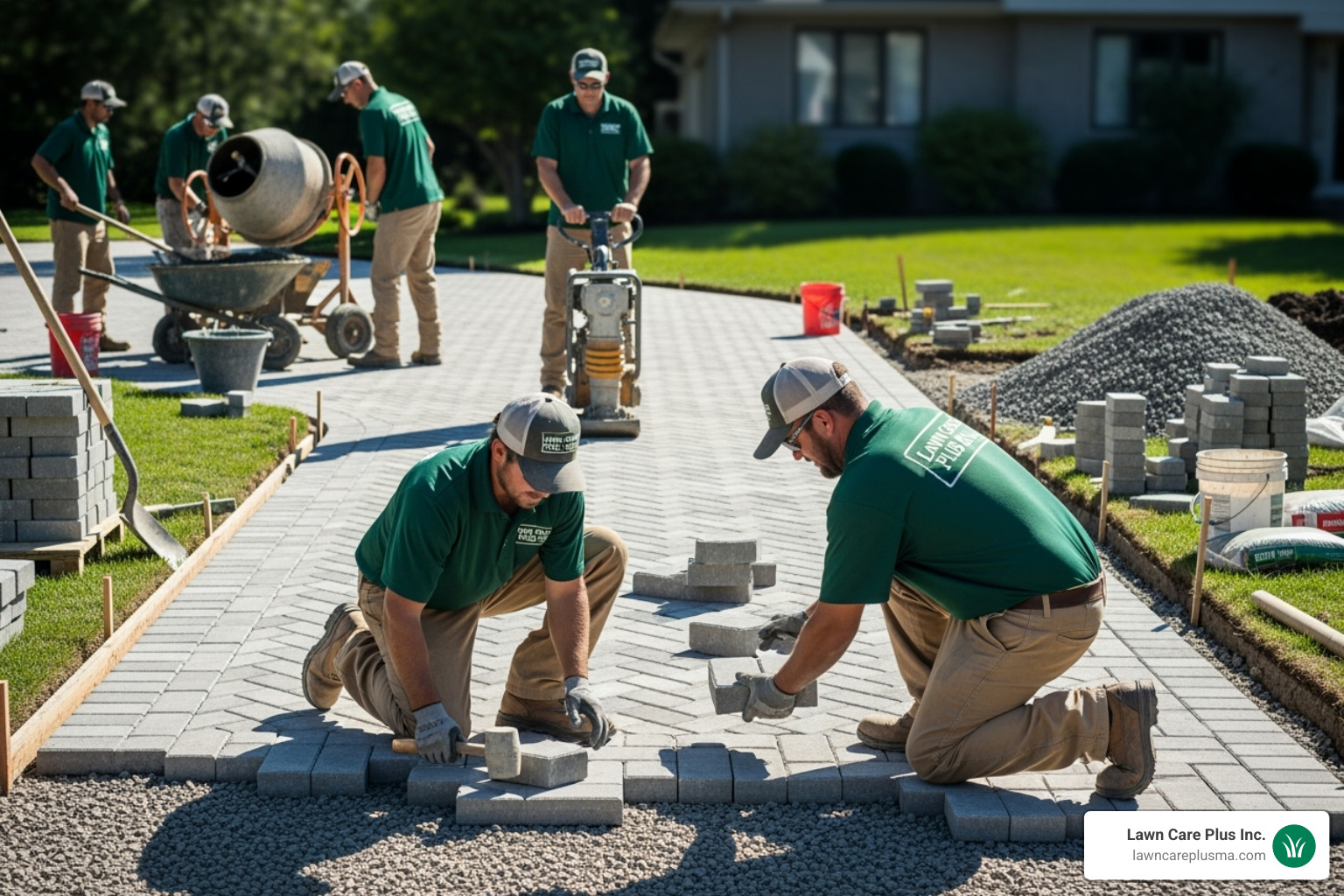
Our experienced team doesn’t just fix concrete driveway problems; we solve them using best practices and quality materials designed for New England weather. From patios and walkways to complete driveway replacements, we have the expertise to do the job right the first time.
For large-scale repairs or a full replacement, trust our experts. We provide honest assessments, clear explanations, and a straightforward plan to restore your driveway’s safety and curb appeal.
Don’t let a deteriorating driveway compromise your home’s value. Explore our hardscaping services and let us help you achieve the perfect driveway you deserve.
