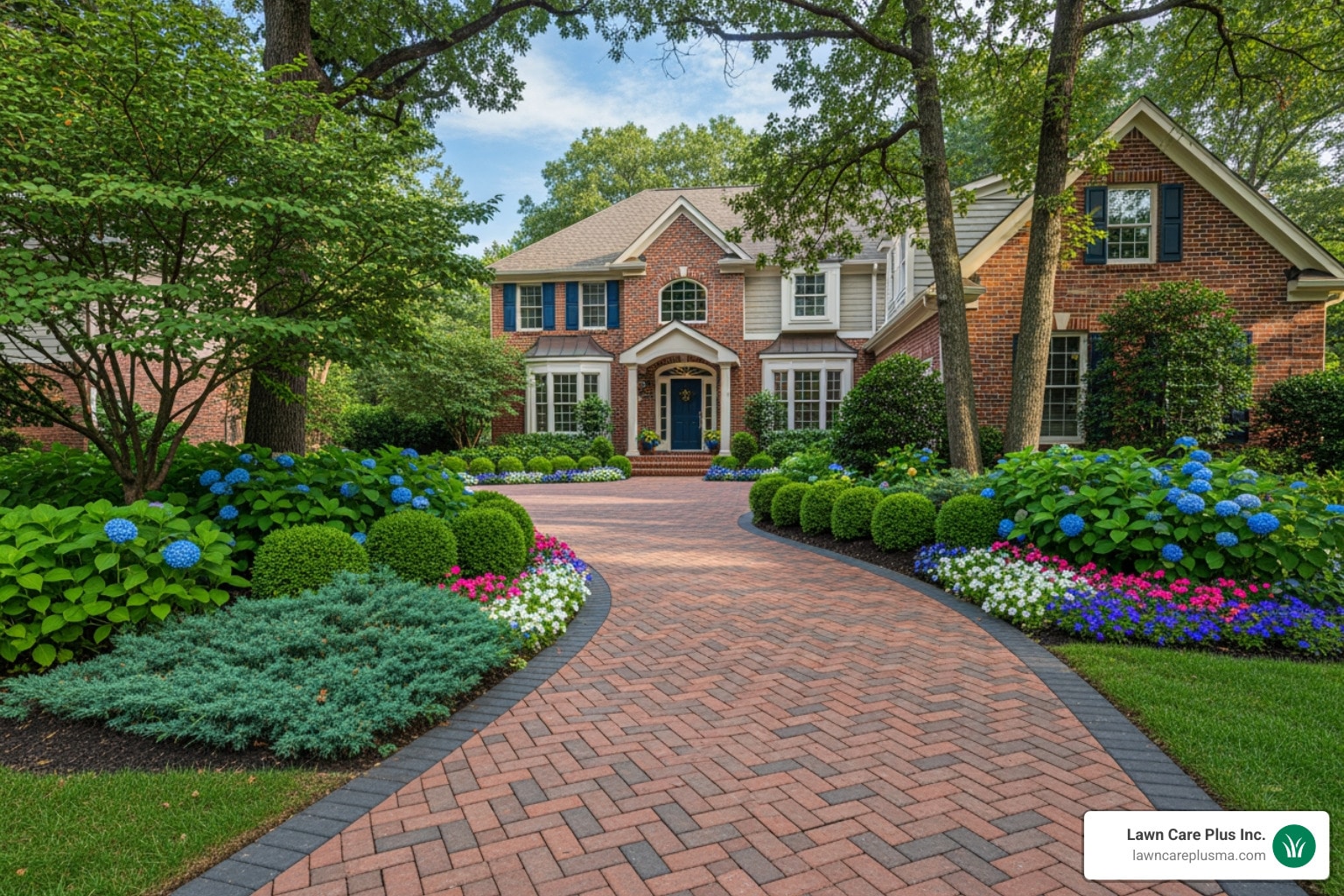
Introduction: The Enduring Appeal of Brick
A brick paver driveway offers a timeless combination of beauty and durability that can transform your home’s curb appeal. If you’re evaluating whether brick pavers are the right choice for your property, here’s what you need to know:
Key Considerations for Brick Paver Driveways:
- Durability: Brick and stone driveways can last well beyond 25 years, while concrete pavers typically last up to 20 years
- Aesthetics: Best visual appeal with customizable patterns and colors that retain their look longer than alternatives
- Maintenance: Relatively low upkeep compared to asphalt or poured concrete
- Repairability: Individual pavers can be easily replaced without redoing the entire surface
- Cost: Higher initial investment, but superior long-term value
- Weather Resistance: Excellent performance in freeze-thaw cycles common in New England
Your driveway is more than just a place to park; it’s a key component of your home’s curb appeal and value. Unlike rigid asphalt or concrete that cracks under pressure, a paver driveway is a flexible, interlocking system. This makes it ideal for handling the freeze-thaw cycles common in Massachusetts.
A quality brick paver driveway is a long-term investment that pays dividends in durability and lasting charm. With proper installation, these surfaces can last a lifetime.
I’m Tim DiAngelis, owner of Lawn Care Plus, Inc., and for over a decade, our team has specialized in creating custom hardscaping installations throughout Greater Boston and Metro-West. We’ve seen how a professionally installed brick paver driveway transforms a property’s appearance and value.
Let’s explore whether this premium driveway option is the right fit for your home.
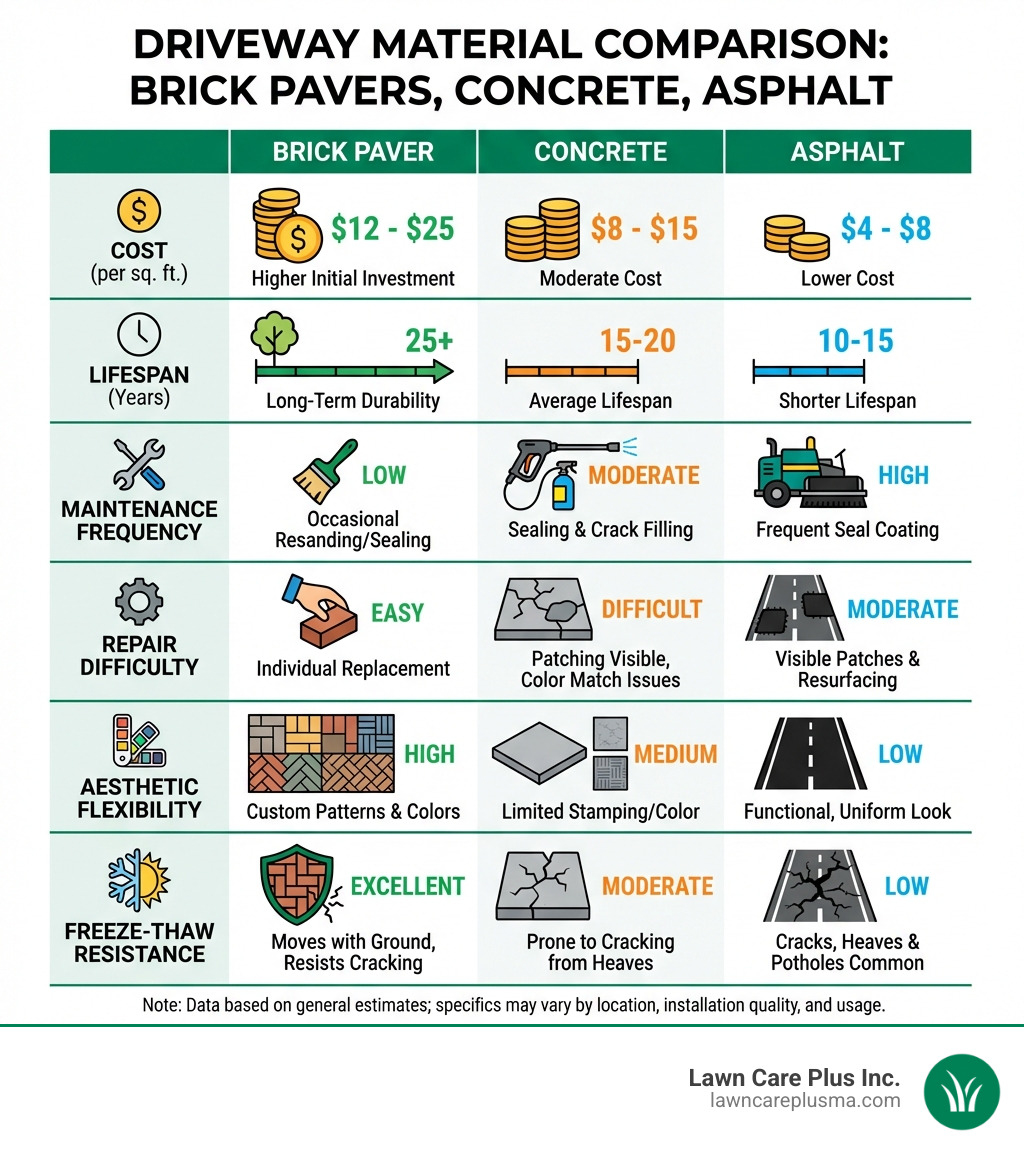
Quick look at brick paver driveway:
Brick vs. The Alternatives: A Head-to-Head Comparison
Choosing the right material for your driveway is a big decision. When considering a brick paver driveway, it’s helpful to understand how it stacks up against other popular options.
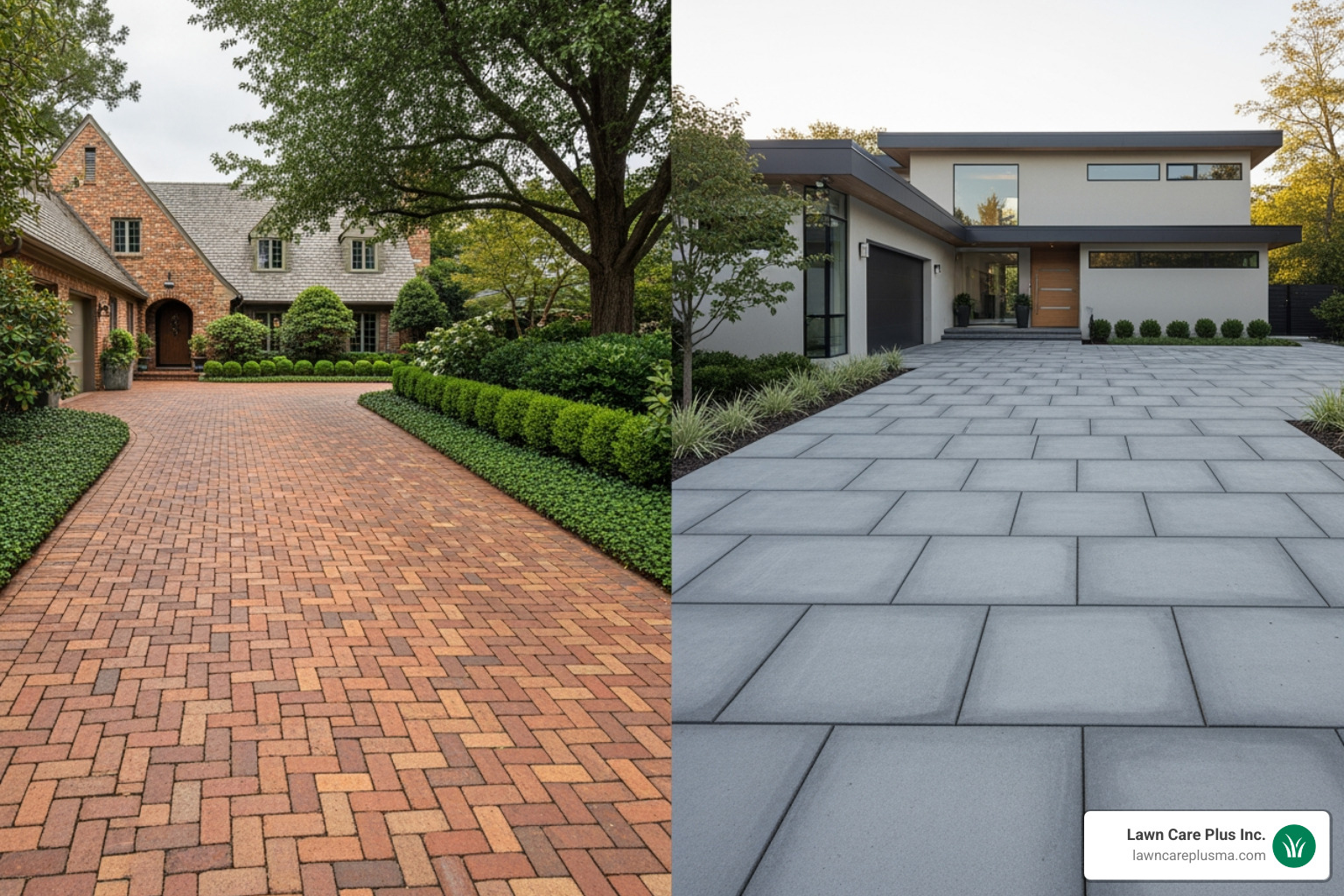
Clay Brick Pavers vs. Concrete Pavers
While both are interlocking surfaces, traditional clay bricks and modern concrete pavers have distinct characteristics.
Appearance & Color: Clay bricks offer a classic, rustic charm in earthy tones. Their color is baked through the material, making it highly resistant to fading. Concrete pavers provide vast design versatility with more shapes, sizes, and colors, even mimicking natural stone, though their color may fade over time without sealing.
Durability & Lifespan: Clay pavers are exceptionally dense and can last for generations. Concrete pavers are also highly durable (rated up to 8,000 psi) and can last 20+ years, but clay generally boasts a longer lifespan. For more technical details, we often refer to resources like the Technical Notes from The Brick Industry Association.
Cost Comparison: Please note that all prices mentioned are general estimates based on internet data and not a quote from Lawn Care Plus. Clay brick installation can range from $10 to $30+ per square foot, while concrete pavers are often slightly less, from $8 to $25+ per square foot. The higher initial cost of clay is often justified by its superior longevity.
Whether you lean towards the classic beauty of clay or the design flexibility of concrete, our team at Lawn Care Plus is skilled in all types of Masonry Services to bring your vision to life.
Pavers vs. Poured Concrete & Asphalt
Compared to traditional monolithic surfaces, pavers offer significant advantages.
Flexibility & Repairability: This is the biggest advantage. Asphalt and concrete are rigid and will crack from ground movement. Pavers are individual units that flex with the ground, preventing widespread cracking. If a single paver is damaged, it can be easily replaced, unlike a cracked concrete slab or potholed asphalt driveway, which require noticeable and costly patches.
Weather Resistance & Maintenance: Pavers excel in freeze-thaw conditions. Asphalt requires frequent seal coating, and concrete can be damaged by de-icing salts over time. Pavers require minimal maintenance—just sweeping, occasional washing, and ensuring the joint sand is intact.
Long-term Value: While the initial cost of a paver driveway is higher than asphalt or poured concrete, its superior durability, low maintenance, and aesthetic appeal contribute to a greater long-term value and a higher home resale value. It’s a smart investment, as we discuss in our guide, Does Replacing Driveway a Good Investment?.
Here’s a quick comparison (costs are general industry estimates):
| Feature | Brick Pavers | Poured Concrete | Asphalt |
|---|---|---|---|
| Cost (per sq ft) | $10 – $30+ (Clay) / $8 – $25+ (Concrete) | $4 – $20+ | $3 – $15+ |
| Lifespan | Generations (Clay) / 20-25+ years (Concrete) | 20-30 years | 15-20 years |
| Maintenance | Low (sweeping, re-sanding, optional sealing) | Moderate (sealing, crack repair) | High (seal coating every 2-3 years, patching) |
| Repair | Easy (individual paver replacement) | Difficult (patching, noticeable) | Moderate (patching, noticeable) |
| Aesthetics | High (classic, versatile, colorfast) | Moderate (can be stamped, limited color) | Low (black, functional) |
| Flexibility | High (resists cracking from ground movement) | Low (prone to cracking) | Moderate (can crack, pothole) |
Breaking Down the Cost of a Brick Paver Driveway
Understanding the financial investment is a crucial step when considering a brick paver driveway. While it’s a premium option, the long-term benefits often outweigh the initial outlay.
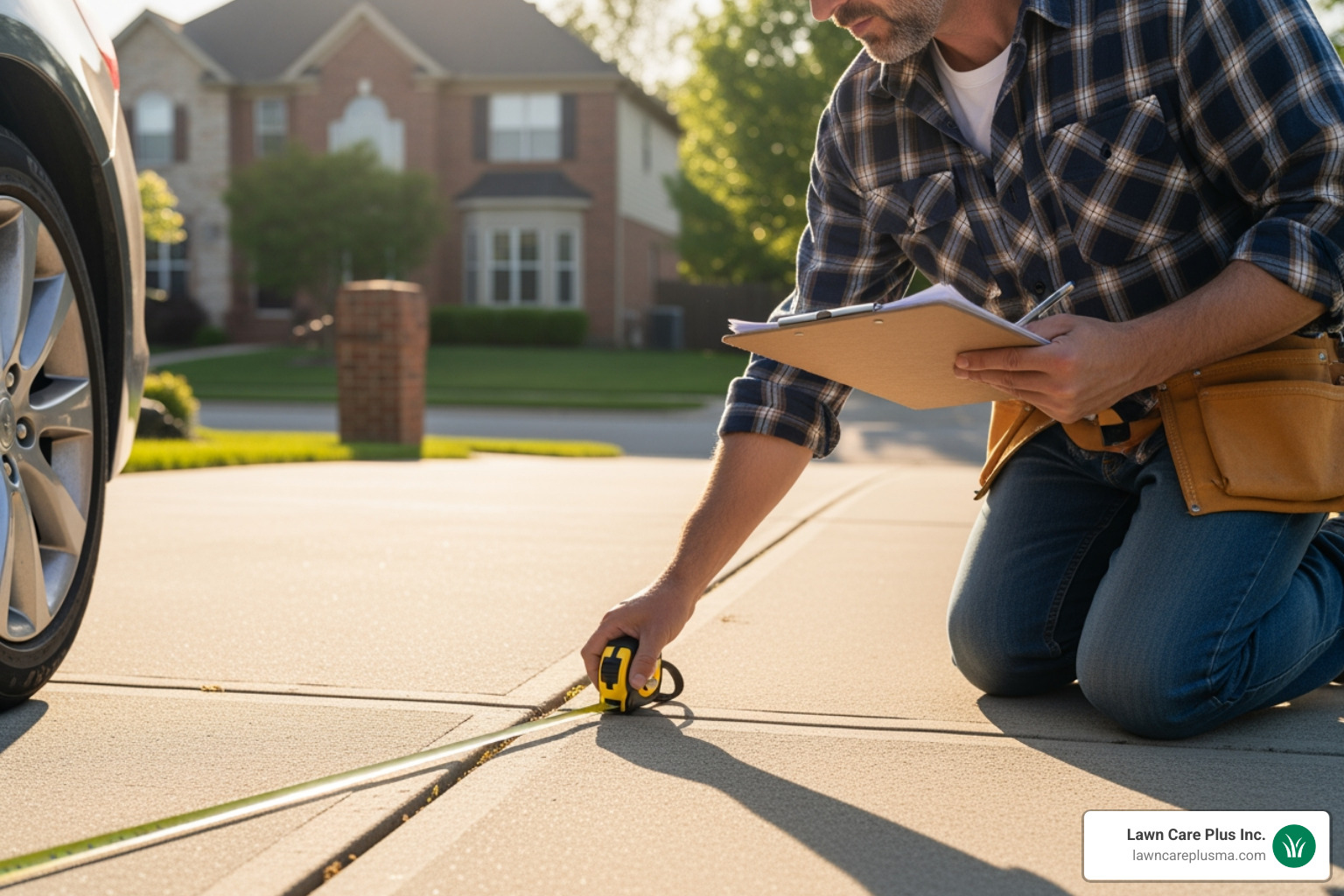
Average Cost of a Brick Paver Driveway
When you’re exploring the cost of a new driveway, prices can vary significantly. Based on internet data, the average cost for installing a paver driveway generally falls somewhere between $15 and $45 per square foot. This can translate to a total project cost of roughly $6,000 to $25,000 or more for a standard two-car driveway. These are average costs reported across the industry and not actual costs for Lawn Care Plus. High-end designs or complex installations can push costs higher. For a more comprehensive look at driveway paving costs, our Driveway Paving Cost: Complete Guide provides additional insights.
As noted, clay brick pavers tend to be on the higher end, often ranging from $10 to $30+ per square foot for installation. Concrete pavers might come in slightly lower at $8 to $25+ per square foot.
Key Factors That Influence Price
Several elements determine the final price of your brick paver driveway:
- Driveway Size: A larger area requires more materials and labor, increasing the cost.
- Paver Type and Quality: Clay brick typically costs more than concrete. High-quality, vehicle-rated pavers cost more than those for light-duty use.
- Design Complexity: Intricate patterns like herringbone or basketweave with borders are more labor-intensive than simple designs.
- Site Preparation: This is a critical factor. Extensive demolition, removal, or soil stabilization will add to the cost. Proper prep is non-negotiable for a long-lasting driveway.
- Labor Costs: The expertise of the installation team is a major component. Experienced professionals ensure a durable result.
- Geographic Location: Material and labor costs vary throughout the Boston Metro-West area.
- Additional Features: Incorporating elements like permeable pavers, drainage solutions, or lighting will also influence the total cost.
At Lawn Care Plus, we provide transparent pricing for our Hardscape Construction Service that reflects the quality and longevity you can expect from your new brick paver driveway.
Design, Planning, and Installation Process
A brick paver driveway isn’t just a functional surface; it’s an extension of your home’s aesthetic. The journey from conception to completion involves thoughtful design, meticulous planning, and expert installation.
Designing Your Dream Driveway
The beauty of a paver driveway lies in its versatility. We can help you create a design that perfectly complements your home and landscape.
Laying Patterns: The pattern impacts both appearance and structural integrity. The Herringbone pattern is the strongest and most traditional option for driveways, providing excellent stability against vehicle forces. The Ashlar pattern uses varied sizes for a natural stone look and is also great for high-traffic areas. We generally advise against patterns like running bond for driveways as they offer less interlock.
Color, Borders, and Accents: Paver color can be chosen to complement your home’s roof, creating a cohesive look. Borders and accents using contrasting colors or patterns add a sophisticated, custom finish. These details can lift your driveway from a simple path to a work of art. For more inspiration, check out our Creative Walkway Ideas That Will Make Your Neighbors Jealous.
Permeable vs. Impervious Pavers: This is a crucial consideration in Massachusetts. Permeable paver systems use special pavers with wider joints to allow rainwater to filter through to a stone base below. This prevents water pooling, reduces runoff, and minimizes ice buildup. They can even accommodate subsurface heating systems for snow melting, making them an excellent choice for our New England winters and for properties needing effective Garden Land Drainage Solutions.
The Installation Process: From Ground Up
A durable brick paver driveway relies entirely on a carefully executed installation process. This is about building a robust foundation.
- Excavation: We remove the old surface and excavate the soil to the proper depth (often 12+ inches for MA driveways) to ensure a stable subsoil foundation. We always contact utility companies to mark lines before digging.
- Base Preparation: We install and compact 8 to 12 inches of granular base material in layers. This is the most critical step for a long-lasting driveway that won’t settle.
- Sand Bedding: A uniform 1-inch layer of concrete sand is screeded to create a perfectly level bed for the pavers.
- Paver Laying & Edge Restraints: Pavers are carefully laid in your chosen pattern. Sturdy edge restraints are then installed around the perimeter to lock the entire system in place and prevent shifting.
- Jointing: Polymeric sand is swept into the joints and activated with water. This hardens to lock the pavers together, deter weeds, and complete the installation.
This systematic approach, also detailed in guides like How to Install a Brick Patio, ensures your driveway is both beautiful and structurally sound.
DIY vs. Hiring a Professional
A DIY brick paver driveway is a complex, labor-intensive project rated as highly difficult for amateurs. It requires renting heavy equipment (plate compactor, masonry saw), significant time and physical effort, and carries a high risk of costly errors. Improper base compaction is a common DIY mistake that leads to settling and premature failure.
Benefits of Professional Installation:
- Expertise and Experience: We have the knowledge and specialized equipment to ensure proper grading, compaction, and paver laying.
- Efficiency: Our team can complete the project much faster than a DIY approach.
- Quality Assurance: We guarantee a durable and beautiful result that adheres to industry best practices.
- Warranty: We stand by our work, offering peace of mind that your investment is protected.
For a project as significant as a driveway, hiring a professional is the smartest investment, a topic we cover in DIY Hardscaping: Pros and Cons in Massachusetts.
Durability, Maintenance, and Long-Term Care
A brick paver driveway is an investment designed to last, but like any valuable asset, it benefits from understanding its durability and providing proper care.
Lifespan and Durability
The lifespan of a brick paver driveway is truly impressive. Clay brick pavers can last generations, while well-installed concrete paver driveways can easily last 25 years or more. Their strength (concrete pavers are rated up to 8,000 psi) and flexible, interlocking design make them resistant to cracking from vehicle weight and New England’s freeze-thaw cycles. Proper paver thickness (2.36″ or more) combined with a deep, well-compacted base is the secret to a long-lasting driveway, a principle that applies to all quality hardscaping like the projects in our Retaining Wall Design Ideas for Every Style of Home.
Essential Maintenance for Your Brick Paver Driveway
One of the appeals of a brick paver driveway is its low maintenance.
- Routine Care: Maintenance is simple. Regularly sweep away debris to prevent it from breaking down in the joints. An occasional power wash on a low setting will refresh the pavers’ appearance.
- Stains & Weeds: Address oil or other fluid spills with a paver-specific cleaner. The use of polymeric sand in the joints is the best defense against weed growth.
- Sealing (Optional): Sealing your pavers is not required for structural integrity but can be done for aesthetics. A good sealer can improve color and protect against stains but requires reapplication every 3-5 years. We recommend non-glossy sealers to maintain a natural look and traction.
- Re-sanding and Repairs: Over time, you may need to replenish the jointing sand. A major benefit of pavers is easy repairs. If a paver is damaged, a professional can easily lift it out and replace it, avoiding the large, unsightly patches required for concrete or asphalt.
For comprehensive care of all your outdoor hardscaping elements, our Hardscape Maintenance Service can ensure everything stays in top condition.
Frequently Asked Questions about Brick Paver Driveways
We often hear similar questions from homeowners considering a brick paver driveway. Here are some of the most common inquiries and our expert answers.
How long does a brick paver driveway last?
A professionally installed brick paver driveway can last for decades. Clay bricks often last 50 years or more, while high-quality concrete pavers can exceed 25 years. This longevity, achieved through proper base preparation and installation, significantly outlasts asphalt and cracking-prone poured concrete.
Are brick paver driveways slippery when wet or icy?
Generally, no. The textured surface of the pavers and the numerous joints provide better grip than smooth concrete. Permeable pavers are an excellent option for our Massachusetts winters, as they allow water to drain through, minimizing surface ice. If you choose to seal your driveway, we recommend a non-glossy, slip-resistant sealer. Pavers are also resistant to damage from de-icing salts, which our Snow Management teams use to keep driveways safe.
Can you plow a brick paver driveway?
Yes, you can plow a brick paver driveway, but it must be done with care. We strongly recommend using a plow equipped with a rubber or polyurethane cutting edge. This type of blade glides over the paver surface without scratching it or catching an edge. Metal plow blades should be avoided as they can damage the pavers. Shoveling is also a perfectly safe and effective method for snow removal. We follow these best practices in our Commercial Snow Removal Complete Guide.
Conclusion: Pave Your Way to Lasting Curb Appeal
A brick paver driveway is more than just an entryway; it’s a statement, a testament to quality, and a smart, long-term investment in your home. We’ve seen how these driveways transform properties, offering an unparalleled blend of aesthetic appeal, robust durability, and straightforward maintenance. From the classic elegance of clay brick to the versatile designs of concrete pavers, the options are as varied as the homes they adorn.
The flexibility of a paver system makes it ideally suited for the challenging freeze-thaw cycles and diverse soil conditions we experience across the Boston Metro-West area. With proper installation and minimal care, your brick paver driveway will improve your property’s curb appeal for generations.
For homeowners in our service area, trusting a professional team like Lawn Care Plus Inc. ensures your project is built to last. Our expertise in hardscaping means your investment will be protected by meticulous site preparation, expert paver laying, and adherence to the highest industry standards.
Ready to explore the possibilities for your home? Let’s discuss how a beautiful and durable brick paver driveway can lift your property.