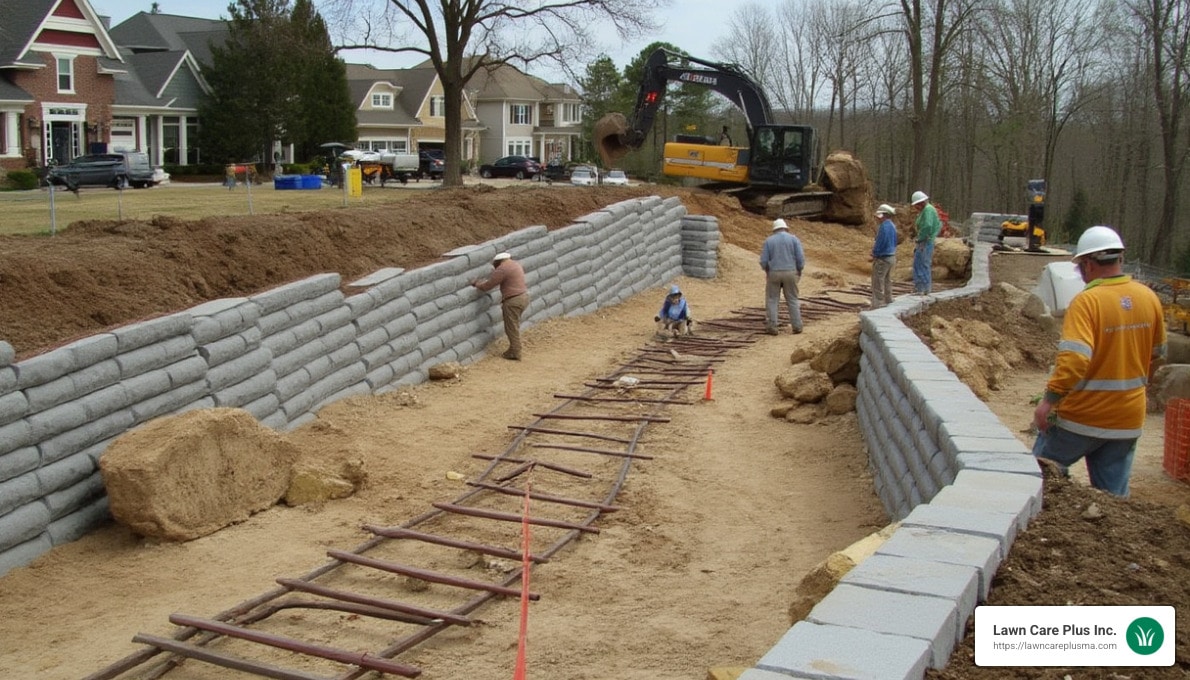
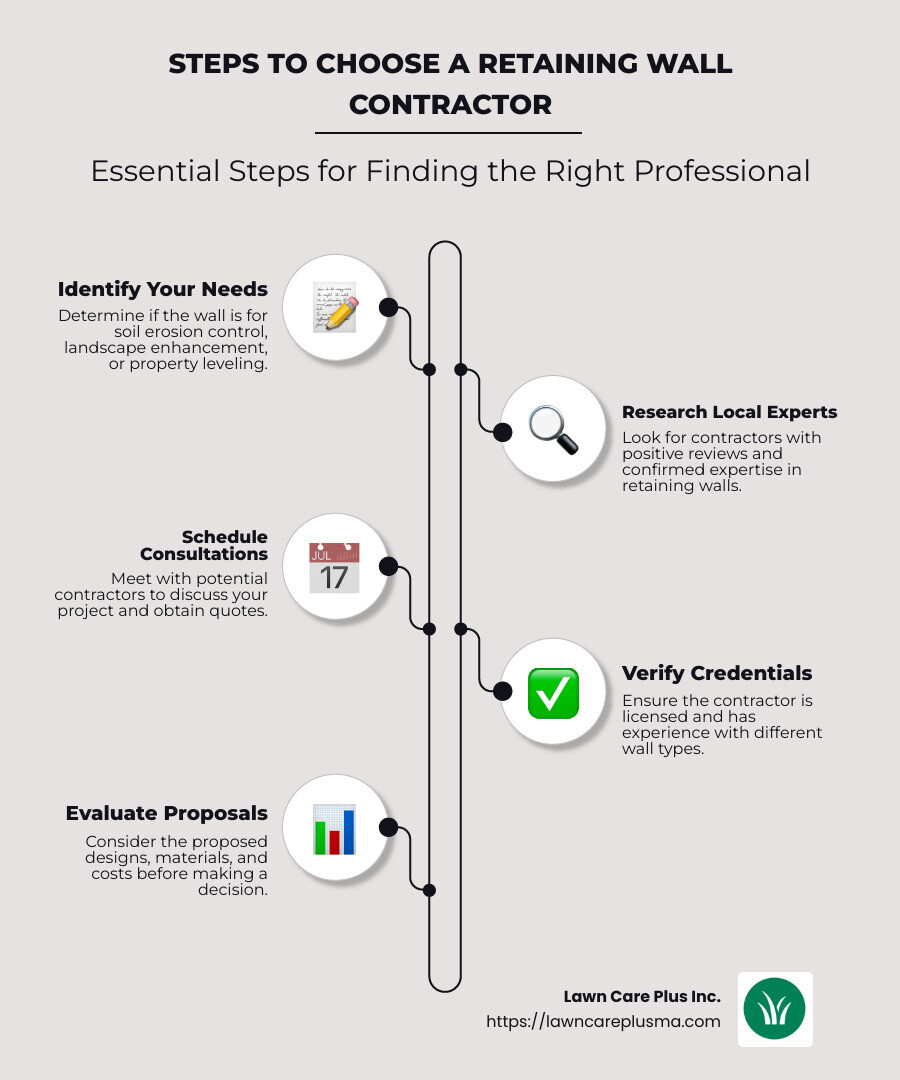
If you’ve ever found yourself searching for retaining walls contractors near me, here’s what you need first:
- Determine Your Needs: Identify why you need a retaining wall. Is it for landscape improvement, soil erosion control, or property leveling?
- Research Local Experts: Look for reputable contractors with strong reviews and proven expertise.
- Schedule Consultations: Meet with potential contractors to discuss your project and get quotes.
- Verify Credentials: Ensure the contractor is licensed and experienced in constructing different types of walls.
Retaining walls play a critical role in both residential and commercial landscapes. These structures not only hold back soil but also help prevent erosion, manage water drainage, and create beautiful, flat surfaces in sloped areas.
A well-constructed retaining wall is an investment in property stability and curb appeal. Whether you’re eyeing an neat stone wall to lift the aesthetic around your Boston Metro-West home or a sturdy concrete wall for functional purposes, get professional help.
Hiring the right contractors can make a difference. They will guide you through material selection, design, and installation, ensuring your wall is both effective and visually appealing.
Important retaining walls contractors near me terms:
– Landscape Wall
– block wall
– retaining walls and landscaping
Understanding Retaining Walls
Retaining walls are essential structures in both residential and commercial landscapes. They serve multiple purposes, from holding back soil to preventing erosion and managing water drainage. These walls are particularly useful in creating flat surfaces on sloped terrains, making them a popular choice for property owners looking to improve both functionality and aesthetics.
Types of Retaining Walls
There are several types of retaining walls, each with its unique benefits:
- Gravity Walls: These rely on their weight to hold back soil. Often made from heavy materials like stone or concrete, they are suitable for shorter walls.
- Cantilevered Walls: Supported by a slab foundation, these walls use less material than gravity walls and are ideal for taller constructions.
- Piled Walls: Made from long poles driven deep into the ground, these are perfect for areas with loose soil or high water tables.
- Anchored Walls: These walls use cables or other stays anchored in the rock or soil behind them, providing extra support for tall or heavily loaded walls.
Materials for Retaining Walls
The choice of material significantly impacts both the cost and appearance of a retaining wall. Here are some common options:
- Concrete Blocks: Known for their durability and versatility, concrete blocks are a popular choice for both functional and decorative walls.
- Natural Stone: Offers a timeless aesthetic but can be more expensive than other materials.
- Timber: Provides a rustic look and is often used for smaller residential projects. However, timber can rot over time if not properly treated.
- Gabion: Consists of wire cages filled with rocks. It’s a cost-effective solution that also allows for good drainage.
Cost-Effective Options
For those on a budget, certain materials and designs offer cost-effective solutions:
- Concrete Blocks: These are generally more affordable and easy to install, making them a great option for those looking to save on costs.
- Timber Sleepers: While not as durable as stone or concrete, treated timber sleepers can be an economical choice for low walls.
- Gabion Walls: These are not only budget-friendly but also environmentally friendly, as they can be filled with recycled materials.
When considering a retaining wall, it’s crucial to weigh the benefits of different types and materials. Consulting with retaining walls contractors near me can provide valuable insights into what will work best for your specific landscape needs and budget.
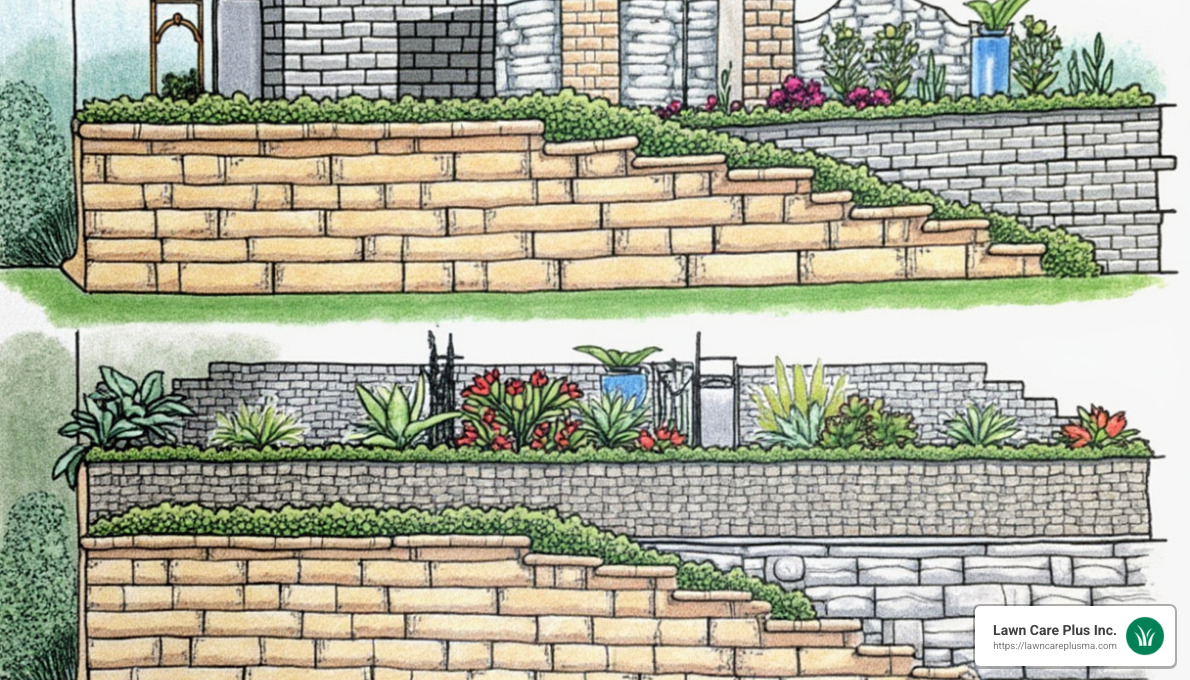
By understanding the types, materials, and cost-effective options available, you can make an informed decision that improves your property’s beauty and functionality.
How to Choose Retaining Walls Contractors Near Me
When it comes to selecting retaining walls contractors near me, making the right choice can save you time, money, and stress. Here’s a straightforward guide to help you hire the perfect contractor for your project.
Hiring Tips
- Check Credentials and Experience
Always verify that the contractor has the necessary licenses and insurance. Experience matters, especially with projects that require structural integrity and aesthetic appeal. Ask about their past work and if possible, visit a few completed sites. - Ask for Recommendations
Word of mouth is powerful. Ask neighbors, friends, or family for recommendations. They can provide honest feedback about their experiences. For example, one homeowner found that only one out of four contacted contractors followed up with a quote and phone call, highlighting the importance of choosing a contractor who values communication and professionalism. - Review Online Presence
Look for contractors with a strong online presence and positive reviews. According to the 2024 State of Local SEO for Contractors report, retaining wall suppliers have a perfect customer satisfaction score of 5.0. This indicates that many customers are satisfied with their services. Make sure the contractor you choose has good reviews and a professional website. - Get Multiple Estimates
Don’t settle on the first quote you receive. Obtain at least three estimates to compare pricing and services. This will give you a better sense of the market rate and help you identify any outliers. - Discuss Design and Materials
A good contractor should offer guidance on the best materials and designs for your specific needs. Whether you prefer the modern simplicity of concrete blocks or the rustic appeal of natural stone, your contractor should tailor the project to fit your style and budget.
Local Services
If you’re in the Boston Metro-West area, you’re in luck. Lawn Care Plus Inc. offers comprehensive landscaping and hardscaping services across various locations including Belmont, Boston, and Newton. Their team specializes in crafting retaining walls that not only prevent erosion but also add aesthetic value to your property.
- Expertise and Experience: Lawn Care Plus has extensive knowledge in soil composition and drainage, ensuring your wall is both functional and durable.
- Customized Design: They take into account your yard’s slope and soil conditions to create a retaining wall that complements your landscape.
- Quality Materials: They use high-quality materials sourced from reputable suppliers, ensuring longevity and visual appeal.
Choosing the right contractor is crucial for the success of your retaining wall project. Take the time to research, ask questions, and select a contractor who understands your vision and can deliver exceptional results.
Next, we’ll dig into the cost considerations for retaining walls, helping you understand the factors that influence pricing and how to budget effectively.
Cost Considerations for Retaining Walls
When planning a retaining wall project, understanding the costs involved is crucial. This section will guide you through the average cost, pricing factors, and how to calculate the total expense for your retaining wall.
Average Cost
The cost of building a retaining wall can vary widely based on several factors. On average, comprehensive landscaping projects, which often include retaining walls, can add up to 15% to a home’s value with a return on investment ranging from 100% to 200%. While this statistic highlights the potential value-add, the initial investment is influenced by multiple elements.
Pricing Factors
Several key factors impact the pricing of a retaining wall:
- Material Choice: The type of material you choose plays a significant role in the cost. Concrete blocks and timber sleepers are often the most cost-effective options. In contrast, natural stone like bluestone or flagstone can be more expensive due to their luxurious appeal.
- Wall Dimensions: The height and length of the wall affect the amount of material needed and the complexity of the construction. Taller walls may require additional engineering for stability.
- Site Preparation: Preparing the site might involve clearing vegetation, grading the land, and addressing drainage issues. Proper drainage is essential to prevent water damage and ensure the wall’s longevity.
- Labor and Expertise: Hiring skilled professionals ensures the wall is built to last. Labor costs cover everything from excavation to laying the foundation and constructing the wall.
- Additional Features: If you add elements like seating or planters, these will increase the overall cost.
Cost Calculation
Calculating the cost of your retaining wall involves a few steps:
- Determine Wall Size: Measure the length and height of the wall to estimate the amount of material needed.
- Select Materials: Choose materials based on your budget and aesthetic preferences. That while some materials may have a higher upfront cost, they might offer better durability and lower maintenance over time.
- Estimate Labor Costs: Obtain quotes from multiple contractors to get a sense of labor expenses. Experienced contractors might charge more, but their expertise can save you money in the long run by avoiding costly mistakes.
- Factor in Site Prep and Drainage: Don’t overlook the cost of preparing the site and installing a proper drainage system. These are critical for the wall’s performance and longevity.
By considering these factors, you can create a more accurate budget for your retaining wall project. Taking the time to understand these elements will help ensure that your investment not only improves your property’s functionality but also its aesthetic appeal.
Next, we’ll explore the top five affordable retaining wall options, helping you choose the best materials for your project.
Top 5 Affordable Retaining Wall Options
When it comes to building a retaining wall, choosing the right material is key to balancing cost and durability. Here are five affordable options to consider:
1. Concrete Blocks
Concrete blocks are a popular and cost-effective choice for retaining walls. They are versatile, durable, and relatively easy to install, making them a favorite for DIY enthusiasts and professionals alike. Concrete blocks come in various shapes and sizes, allowing for creative designs. Plus, they offer a modern look that can complement many home styles.
2. Railroad Ties
Railroad ties provide a rustic charm and are another budget-friendly option. Made from treated wood, they are sturdy and offer a natural appearance. However, they may require more maintenance over time due to potential rot or insect damage. Despite this, their low initial cost makes them an attractive choice for many homeowners.
3. Gabion Walls
Gabion walls are constructed using wire cages filled with stones or other materials. These walls are highly durable and provide excellent drainage, which is crucial for preventing erosion. Gabion walls can be a DIY project if you have access to the right materials, making them a cost-effective solution. They also offer a unique, industrial look that can add character to your landscape.
4. Timber Sleepers
Timber sleepers are similar to railroad ties but often come from more sustainable sources. They are easy to work with and can be used to create a natural-looking wall. While they might not last as long as stone or concrete, their affordability and ease of installation make them a viable option for many projects.
5. Natural Stone
Natural stone is the most expensive option on this list but can still be affordable depending on the type of stone used. Stones like limestone or sandstone can be cost-effective while providing a timeless, neat appearance. Natural stone walls are not only beautiful but also incredibly durable, with a lifespan that can exceed 100 years.
Selecting the right material for your retaining wall depends on your budget, desired aesthetic, and the specific needs of your landscape. Each of these materials offers a balance of cost-effectiveness and functionality, ensuring you can find an option that suits your project requirements.
In the next section, we’ll address some frequently asked questions about retaining walls to help you make informed decisions.
Frequently Asked Questions about Retaining Walls
What is the most cost-effective retaining wall?
When considering cost-effective options for retaining walls, concrete blocks and timber sleepers are two popular choices. Concrete blocks are favored for their durability and versatility. They are relatively easy to install and can be arranged in various designs, which makes them a great choice for both DIY projects and professional installations. On the other hand, timber sleepers offer a natural look and are easy to work with, although they may require more maintenance over time due to potential rot or insect damage.
How much does it cost to build a 4-foot retaining wall?
The average cost to build a 4-foot retaining wall can vary significantly based on several factors such as materials, labor, and location. Generally, using concrete blocks or timber sleepers can be more budget-friendly than other materials like natural stone. While exact costs depend on the specifics of your project, it’s important to consider not just the material costs but also the expenses related to site preparation, drainage, and labor.
How to calculate the cost of a retaining wall?
Calculating the cost of a retaining wall involves several pricing factors:
- Material Costs: This is the price of the materials per unit, such as per block or sleeper. Concrete blocks are typically priced per block, while timber sleepers are priced per length.
- Labor Costs: Depending on whether you choose a DIY approach or hire professionals, labor can significantly affect the total cost. Professional installation might be necessary for walls over four feet tall.
- Site Preparation: This includes clearing the area, leveling the ground, and ensuring proper drainage, which is crucial for the wall’s longevity.
- Additional Features: Features like curves, steps, or decorative elements can add to the overall cost.
To get a precise estimate, measure the length and height of your desired wall, choose your materials, and then factor in labor and any additional features you want. Consulting with local retaining walls contractors near me can also provide a more accurate cost assessment based on your specific project needs.
Understanding these aspects can help you make informed decisions about building a retaining wall that fits your budget and improves your landscape.
Conclusion
At Lawn Care Plus Inc., we’re dedicated to changing your outdoor spaces into beautiful and functional areas. Serving the Boston Metro-West area, we offer comprehensive landscaping and hardscaping services custom to both residential and commercial clients. From lawn maintenance and landscape installations to patios, walkways, and of course, retaining walls, our team is equipped with the expertise and experience to handle any project.
Why Choose Lawn Care Plus Inc.?
- Comprehensive Services: We provide a wide range of landscaping services, ensuring that all your outdoor needs are met under one roof. Whether it’s installing a new retaining wall or maintaining your lawn, we’ve got you covered.
- Local Expertise: Being based in Massachusetts, we understand the unique landscaping needs and regulations in the Boston Metro-West area. Our local knowledge ensures that your project is compliant with all necessary building codes and regulations.
- Quality Craftsmanship: Our team is committed to delivering exceptional results with attention to detail. We use high-quality materials and proven techniques to ensure that your retaining wall is not only aesthetically pleasing but also durable and long-lasting.
- Customer Satisfaction: We pride ourselves on our reputation for excellent customer service. From the initial consultation to the final installation, we work closely with you to bring your vision to life.
Choosing the right contractor for your retaining wall is crucial to achieving the desired outcome. By selecting us at Lawn Care Plus Inc., you can rest assured that your project is in capable hands. We invite you to explore our landscape retaining walls services and find how we can improve your property’s value and appeal.
Contact us today to discuss your project and let us help you create an outdoor space that you’ll love for years to come.