Why Replacing Your Driveway is a Smart Home Investment
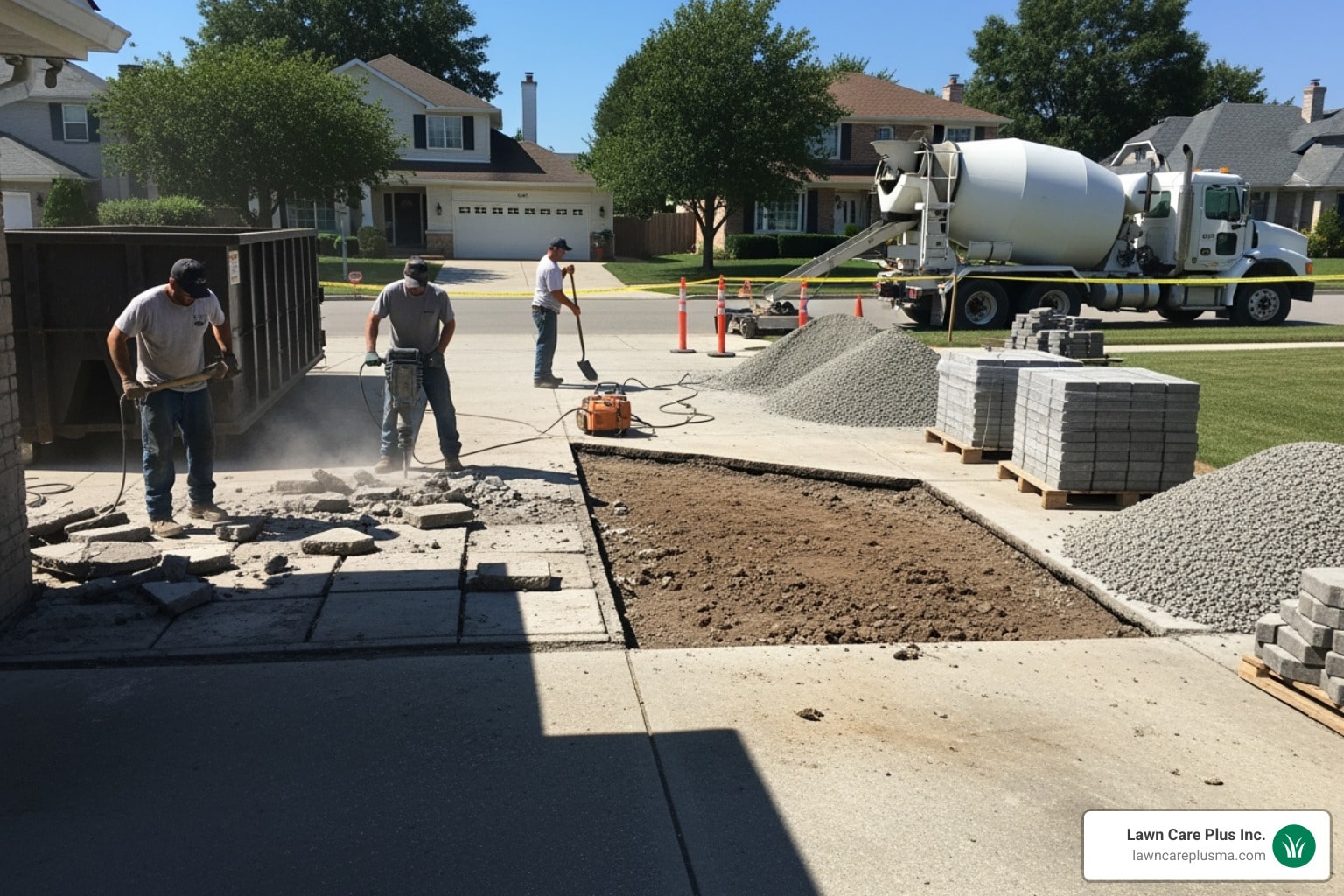
When you need to replace driveway surfaces, the project involves removing your old driveway and installing a new one. This process typically takes 2-4 days and includes demolition, site preparation, base installation, and paving.
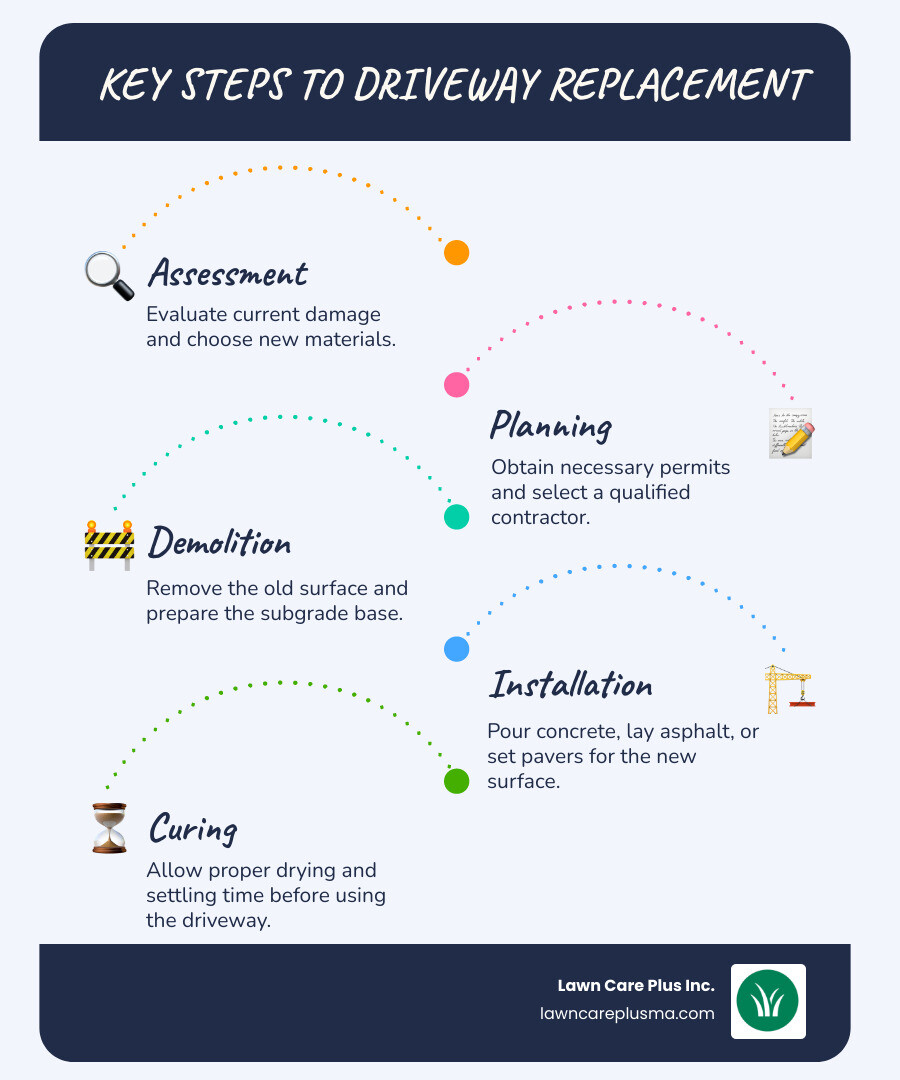
Key steps to replace a driveway:
- Assessment – Evaluate current damage and choose new materials
- Planning – Obtain permits and select a qualified contractor
- Demolition – Remove old surface and prepare the base
- Installation – Pour concrete, lay asphalt, or set pavers
- Curing – Allow proper drying time before use
Your driveway does more than just park cars; it often serves as a play area for kids or a workspace for projects. When cracks, potholes, or drainage issues make your driveway unsafe or unsightly, replacement becomes necessary.
A new driveway offers immediate benefits:
- Eliminates safety hazards from uneven surfaces
- Dramatically improves curb appeal and property value
- Provides decades of reliable service with proper materials
- Reduces ongoing maintenance headaches
This guide walks you through every aspect of driveway replacement—from deciding between repair and replacement to choosing materials, understanding costs, and finding the right contractor for your Boston Metro-West property.
Simple replace driveway word guide:
- asphalt driveway cost
- how much does a concrete driveway cost
- driveway expansion joint replacement
Is It Time to Repair or Replace Your Driveway?
Deciding whether to repair or replace a cracked, weathered driveway is a common homeowner dilemma. Understanding your options is key to making the right financial choice.
Minor issues don’t always mean you need to replace driveway surfaces entirely. Smaller problems can often be addressed with repairs that extend your driveway’s life.
Sealcoating is a protective shield for asphalt driveways that are aging but still structurally sound. For concrete, targeted driveway crack repair can fix hairline fractures before they worsen.
Resurfacing is a middle-ground solution where a new top layer is applied over the existing base. It’s more involved than patching but less so than a full replacement. For specific concrete issues, our cement driveway repair services can address problems like surface scaling.
However, as experts note, “patched cracks are likely to be visible and may require repatching later.” When repairs become a recurring expense or fail to restore your driveway’s safety and appearance, replacement is the smarter long-term investment.
Signs You Need to Replace Your Driveway
Some driveway problems demand a complete solution. Here are clear signs it’s time to replace your driveway:
- Alligator cracks: These interconnected, spiderweb-like cracks indicate deep structural failure that patching cannot fix. When you see this pattern, it’s time to replace driveway surfaces.
- Multiple large cracks: Widespread cracking suggests the foundation is compromised. Constantly filling cracks can be more expensive over time than a permanent replacement.
- Poor drainage: Standing water erodes the driveway’s base and can direct water toward your home’s foundation. This requires regrading, which is part of a full replacement.
- Sunken areas and potholes: These safety hazards indicate serious subgrade problems that patching can’t solve. They worsen with each freeze-thaw cycle, especially during Massachusetts winters.
- Age: If your driveway is over 20 years old, its materials are likely near the end of their lifespan. At this point, repairs become less effective and more costly.
Understanding Driveway Repair Costs
Before deciding, it’s helpful to understand repair costs. Please note that these are average costs based on internet data and not actual costs for Lawn Care Plus. Your project costs will vary.
- Minor crack filling: Approximately $0.10–$0.60+ per linear foot, according to internet averages. This is a budget-friendly but often temporary fix.
- Patching: Typically $3–$15+ per square foot based on online data. It works for isolated damage but is costly for multiple areas.
- Sealcoating: Generally ranges from $200 to $900+ based on internet sources. It’s an excellent preventive measure for structurally sound asphalt.
- Resurfacing: A more comprehensive option at $500 to $4,500+ based on online averages. This works if your base is solid but the surface is worn.
When repair estimates approach 50-70% of replacement costs, or if you anticipate needing multiple repairs in the near future, replacement becomes the more financially sound choice, offering decades of worry-free service.
Choosing Your New Driveway Material
When you replace driveway surfaces, choosing the right material is a critical decision that affects curb appeal, maintenance, and longevity. Key factors to consider include durability, maintenance tolerance, aesthetics, and the local Massachusetts climate, with its harsh freeze-thaw cycles.
For deeper insights into long-lasting options, you might find helpful information at resources discussing what are the best materials for my driveway to ensure it lasts.
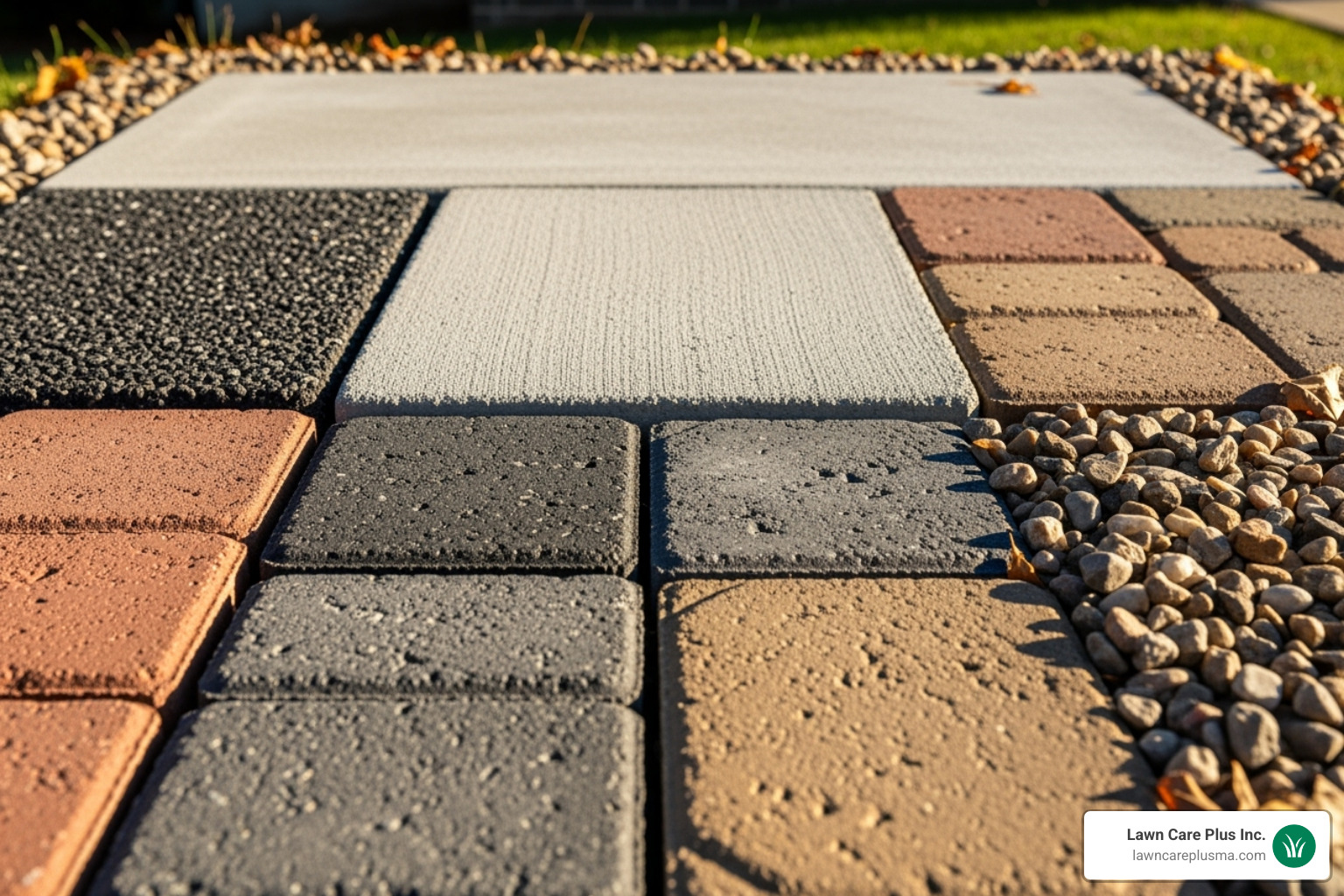
Material Comparison: Asphalt, Concrete, Pavers, and Gravel
Let’s break down your main options. Understanding these differences will help you make the best choice for your property.
| Feature | Asphalt | Concrete | Pavers | Gravel |
|---|---|---|---|---|
| Average Cost | Lower initial | Moderate to high | High | Lowest initial |
| Lifespan | 15-20 years with maintenance | 30+ years with proper care | 30-40 years with proper installation | Indefinite with regular maintenance |
| Maintenance | Regular sealcoating (every 2-3 years), crack filling | Cleaning, occasional sealing (every 4-5 years), crack repair | Joint sanding, occasional cleaning, weed control | Leveling, topping off, weed control |
| Pros | – Affordable initial cost – Quick installation – Flexible, good for freeze-thaw cycles – Easy to repair (patching) |
– Very durable, long lifespan – Low long-term maintenance – Versatile in design (stamped, colored) – Improves curb appeal |
– Highly aesthetic, customizable designs – Individual units can be replaced – Excellent drainage (permeable options) – Long lifespan |
– Very low initial cost – Good drainage – Natural, rustic look – Easy DIY maintenance |
| Cons | – Requires regular sealcoating – Can soften in extreme heat – Less decorative options – Susceptible to oil stains |
– Higher initial cost – Can crack if subgrade is poor or during extreme temp changes – Repairs can be noticeable – Longer curing time |
– Highest initial cost – Can shift or settle if base is poor – Weeds can grow between joints – Hard to shovel snow (for some types) |
– Requires frequent leveling – Can scatter, needs edging – Dusty – Less formal appearance – Can be noisy to drive on |
- Asphalt is a practical, budget-friendly choice for New England. Its flexibility handles our weather well, though it requires sealcoating every few years.
- Concrete offers a clean, durable look with a long lifespan. The initial cost is higher, and repairs can be visible.
- Pavers are a luxury option with stunning aesthetics and a very long life. If a paver is damaged, it can be replaced individually, but the initial cost is the highest.
- Gravel is an affordable, rustic option with excellent drainage. It requires periodic raking and adding fresh gravel to maintain its appearance.
Lifespan and Durability of Common Materials
When you replace driveway surfaces, you’re making a long-term investment. Here’s what to expect from each material with proper installation and maintenance:
- Asphalt driveways last 15-20 years. Consistent sealcoating is key to reaching this lifespan. Our asphalt driveway replacement service ensures a professional installation.
- Concrete driveways are very durable, often lasting 30 years or more. Regular cleaning and sealing every 4-5 years protects them from harsh New England winters. Our concrete driveway removal and replacement service handles the entire process.
- Paver driveways can last 30-40 years or longer. Their modular design allows for easy spot repairs, contributing to their longevity.
- Gravel driveways can last indefinitely with regular maintenance, such as leveling and adding new stone as needed.
Proper installation and consistent maintenance are the most critical factors in maximizing the lifespan of any driveway material.
Breaking Down the Cost to Replace a Driveway
Understanding the financial investment to replace driveway surfaces is a crucial first step. The total cost depends on several factors, making a detailed, custom quote essential.
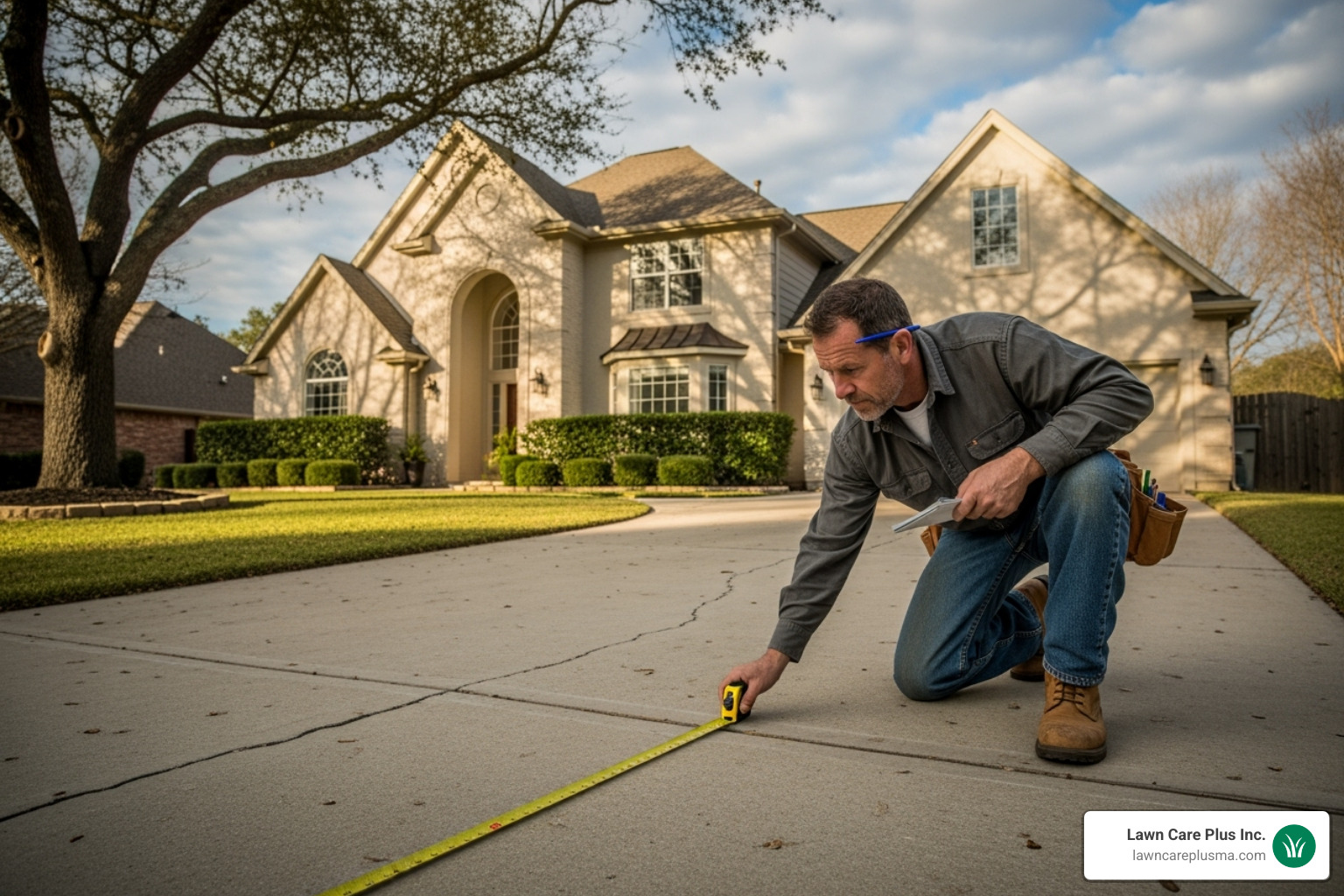
Key elements that impact the final cost include:
- Driveway size: A larger area requires more material and labor.
- Material choice: Prices vary significantly between asphalt, concrete, and pavers.
- Labor rates: These depend on location, contractor experience, and job complexity.
- Site preparation: Extensive excavation or removal of the old driveway can add to the budget.
- Grading and drainage: Proper grading to direct water away from your home is vital and may increase costs, but it protects your investment.
For a comprehensive look at the financial aspects, explore our guide on the cost of replacing driveway.
Average Driveway Replacement Costs
These are average costs based on internet data and not actual costs for Lawn Care Plus. Real costs vary based on project details and site conditions.
For a typical 600-square-foot driveway:
- Asphalt replacement can range from $750 to $12,000+ according to internet averages. This includes removal and installation.
- Concrete driveway replacement typically falls between $2,400 and $30,000+ based on online sources. This reflects its higher upfront cost but lower long-term maintenance.
- Paver driveways have the highest price tag, with internet data suggesting costs from $6,000 to $90,000+ depending on paver type and pattern complexity.
Removing your old driveway is a necessary first step that typically costs between $1,000 and $6,000+ based on internet averages, depending on material and accessibility.
How to Save Money on Your Project
Smart planning can help you manage costs without sacrificing quality when you replace driveway surfaces.
- Get multiple quotes: Obtain detailed, written estimates from at least three reputable contractors to compare pricing and scope.
- Time your project: Some contractors may offer better rates during slower periods, like late fall or early spring, but weather is a critical factor for proper installation.
- Select materials wisely: If budget is a primary concern, a well-installed asphalt or gravel driveway offers excellent value compared to pavers.
- Consider the footprint: Reducing the total square footage, if possible, can lead to savings on materials and labor.
- Plan for maintenance: Investing in preventative care extends your new driveway’s lifespan, preventing costly premature repairs and answering the question, is replacing your driveway a good investment?
The Step-by-Step Guide to Replace a Driveway
When you’re ready to replace driveway surfaces, a professional process ensures quality results that last for decades. Here’s a look at what to expect from start to finish.
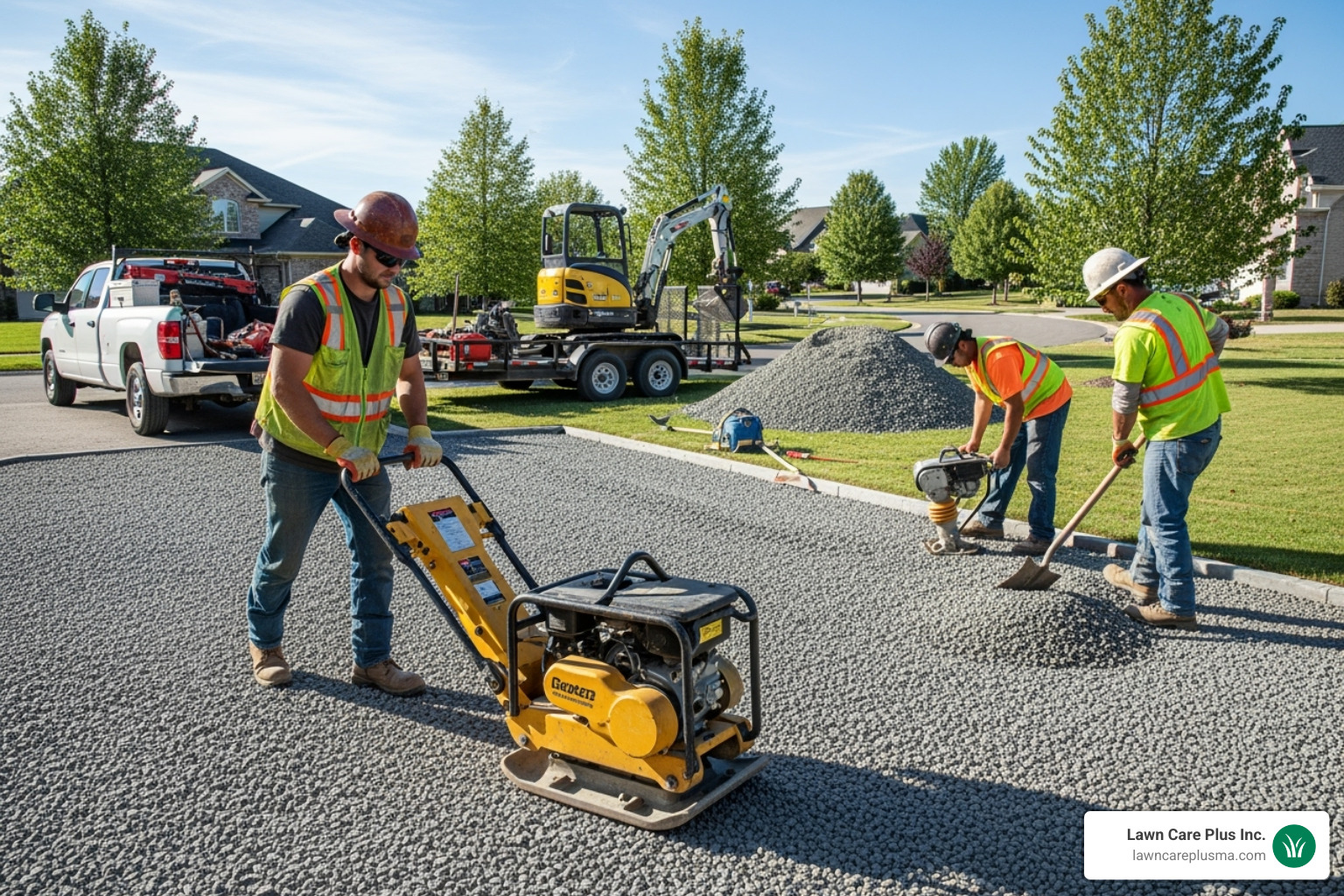
The entire process typically takes several days, followed by a curing period. Here’s how experienced contractors approach each phase.
Step 1: Assessment and Planning
Thorough planning sets the stage for a successful project.
- Professional evaluation: We examine your current driveway to identify underlying issues like poor drainage or soil settlement that caused it to fail.
- Materials and design: Based on the assessment and your goals, we help you choose the best material and plan for proper slope and drainage.
- Permits and rules: We help steer local permit requirements, such as those in Brookline, MA, and check for any HOA restrictions on materials or design.
Step 2: Demolition and Site Preparation
This phase creates the clean slate needed for a durable new driveway.
- Removing old surface: The existing driveway is demolished and all debris is hauled away.
- Excavation and subgrade work: The soil beneath is inspected, graded, and compacted to create a stable, even base. Addressing issues like tree roots and ensuring a solid subgrade is crucial to prevent premature failure.
- Proper grading: We create a gentle slope to guide water away from your home’s foundation, protecting both your house and your new driveway.
Step 3: Base Installation and Paving
This is where your new driveway takes shape on its solid foundation.
- Gravel base layer: Several inches of crushed stone are spread over the subgrade to provide support and drainage.
- Compaction: Heavy equipment compacts the gravel base into a dense, stable platform that won’t shift or settle.
- Paving: For concrete, we pour, level, and finish the mix, adding control joints. For asphalt, hot material is spread and compacted with heavy rollers. For pavers, each unit is placed over a sand bed with edge restraints.
- Curing time: This final, patient step is vital. Asphalt needs a few days before use, while concrete requires at least a week for cars and up to 28 days to fully cure. Pavers are typically ready for traffic once joint sand is swept in and compacted.
Hiring a Pro and Maintaining Your New Driveway
After deciding to replace driveway surfaces, finding the right professionals and learning how to protect your investment are the next crucial steps.
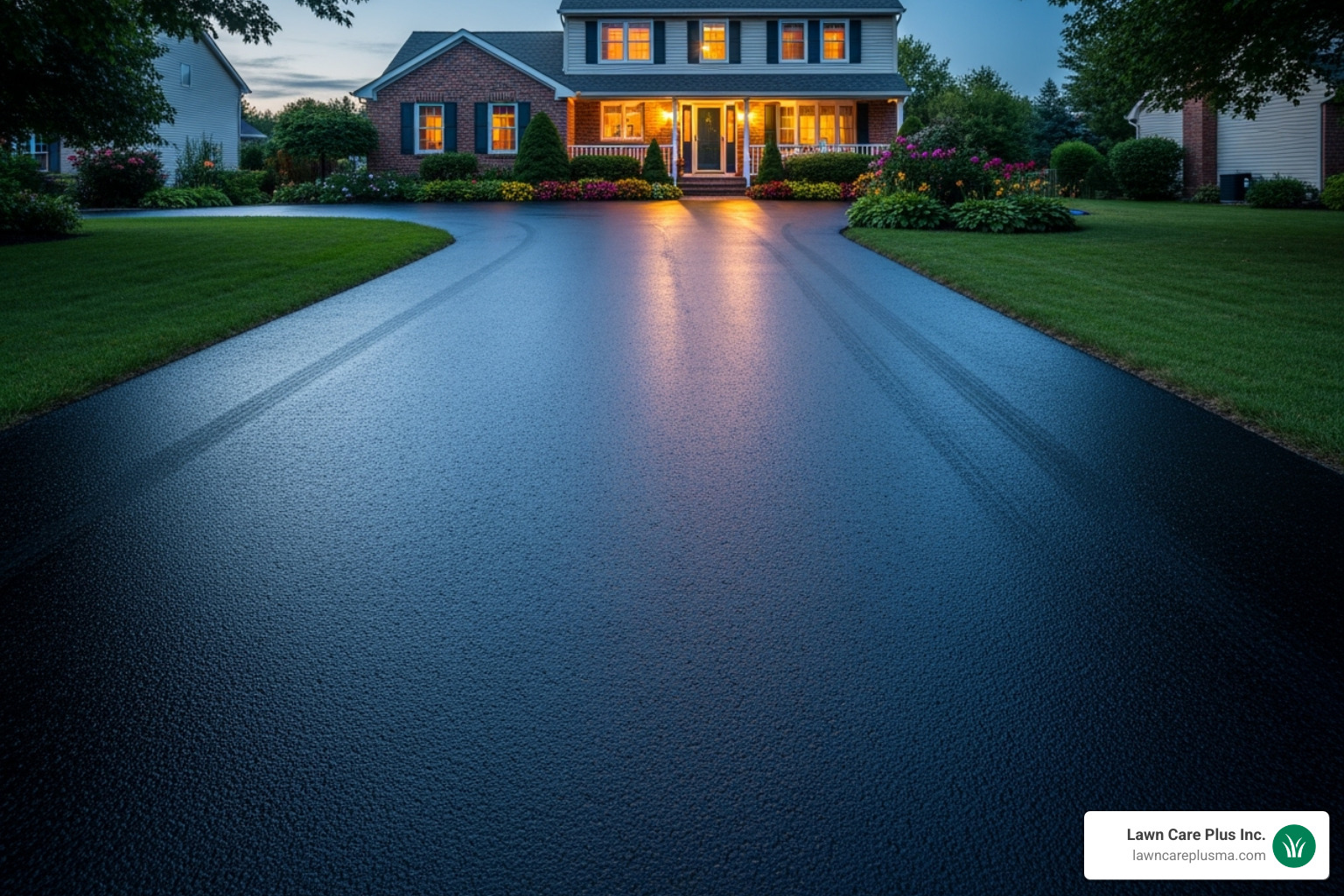
While DIY projects can be rewarding, a full driveway replacement requires heavy machinery, precise grading, and knowledge of local codes. Mistakes can lead to costly drainage problems or premature failure. Working with experienced driveway replacement contractors is essential for protecting your property and investment.
How to Choose the Right Driveway Contractor
Focus on these key factors to find the right contractor in the Boston Metro-West area:
- Local Expertise: Choose companies that understand Massachusetts’ unique climate, soil conditions, and local permit requirements in towns like Newton or Wellesley.
- Credentials: Verify that any contractor is properly licensed and carries both liability insurance and worker’s compensation. Ask to see current certificates.
- Reputation: Read online reviews and ask for references from recent projects. If possible, drive by completed jobs to see their work firsthand.
- Detailed Quotes: Insist on comprehensive written quotes that outline all costs, materials, and the project timeline. Get at least three to compare.
- Warranties: Reputable contractors stand behind their work with clear warranties on materials and workmanship. Understand what is covered and for how long.
Best Practices for Driveway Maintenance
Proper maintenance is key to protecting your new driveway for decades. Consistent, simple care can significantly extend its lifespan.
- Keep it Clean: Wash your driveway at least twice a year to remove dirt, leaves, and salt residue from winter, which prevents staining and degradation.
- Follow Sealing Schedules: Asphalt should be resealed every 2-3 years to protect against UV damage and water. Concrete should be sealed every 4-5 years to prevent moisture damage from de-icing salts.
- Address Small Problems Quickly: Prompt driveway crack repair prevents water from seeping underneath and causing major damage during freeze-thaw cycles. Our repair concrete driveway services can help with more serious issues.
- Be Winter-Smart: Avoid harsh de-icing salts, which can deteriorate asphalt and concrete. Use gentler alternatives like sand or calcium chloride for traction.
- Clean Spills Immediately: Automotive fluids can break down driveway materials. Clean up spills quickly to prevent permanent staining and damage.
Frequently Asked Questions about Driveway Replacement
Homeowners considering a replace driveway project often have questions. Here are answers to some of the most common ones.
How long does it take to replace a driveway?
The physical work to replace driveway surfaces typically takes 2-4 days, depending on size, material, and weather. However, the curing period after installation is critical.
- Asphalt: Wait about 3-7 days before driving on it.
- Concrete: Wait at least a week before parking cars. It takes a full 28 days to reach maximum strength.
- Pavers: Ready for use almost immediately after the joint sand is compacted.
Patience during curing ensures your driveway will last for decades.
Is replacing a driveway a good investment?
Yes. A new driveway is one of the most rewarding home improvements. It offers an excellent return on investment by:
- Boosting curb appeal: A pristine driveway makes a powerful first impression.
- Increasing property value: Real estate professionals agree that a new driveway signals a well-cared-for property to potential buyers.
- Enhancing safety: It eliminates tripping hazards from cracks and potholes.
- Reducing headaches: A quality replacement provides decades of reliable service, ending the cycle of temporary patches and repairs.
When a driveway shows serious wear, replacement is a smarter investment than repeated, short-term fixes.
When is the best time of year to replace a driveway in Massachusetts?
Timing your replace driveway project is crucial in Massachusetts. The ideal window is from late spring through early fall (roughly May to October).
During these months, temperatures are consistently above 50°F. Both asphalt and concrete require these warm, stable, and dry conditions to cure properly and reach their full strength. Installing them in cold or wet weather can lead to premature cracking and a shorter lifespan. Planning your project for the optimal season ensures you get the most durable result.
Conclusion
Deciding to replace driveway surfaces is one of the smartest home improvement investments you can make. A new driveway immediately boosts curb appeal, increases property value, and creates a safe, smooth surface for your family. A properly graded driveway also protects your home’s foundation by directing water away, preventing costly damage.
For homeowners in the Boston Metro-West area, the challenges of Massachusetts weather demand local expertise. Understanding local soil, permits, and climate factors is the difference between a driveway that lasts for decades and one that fails early.
At Lawn Care Plus Inc., we’ve helped countless families through the driveway replacement process. Our comprehensive approach covers everything from assessment and material selection to professional installation and maintenance guidance. We are your neighbors, and we know what it takes to build driveways that stand up to New England weather.
Ready to transform your property with a stunning new driveway? Explore our professional hardscaping services today and find out how we can create an entrance that truly makes your home shine.