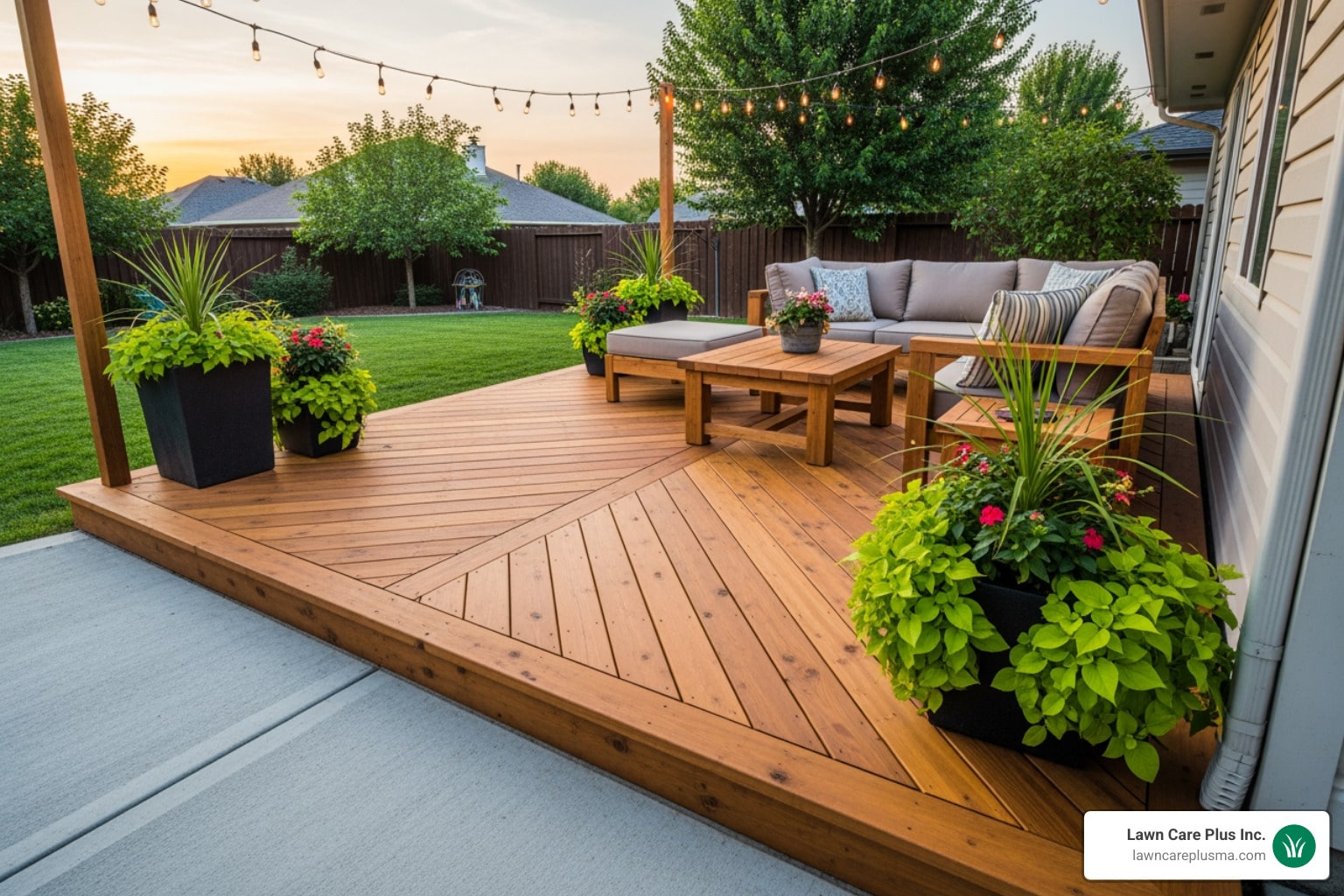
Why Planning Matters When You Design a Deck
When you design a deck, you’re creating more than just an outdoor platform—you’re adding functional living space and potentially increasing your home’s value by 10-15%. Here’s what you need to know to get started:
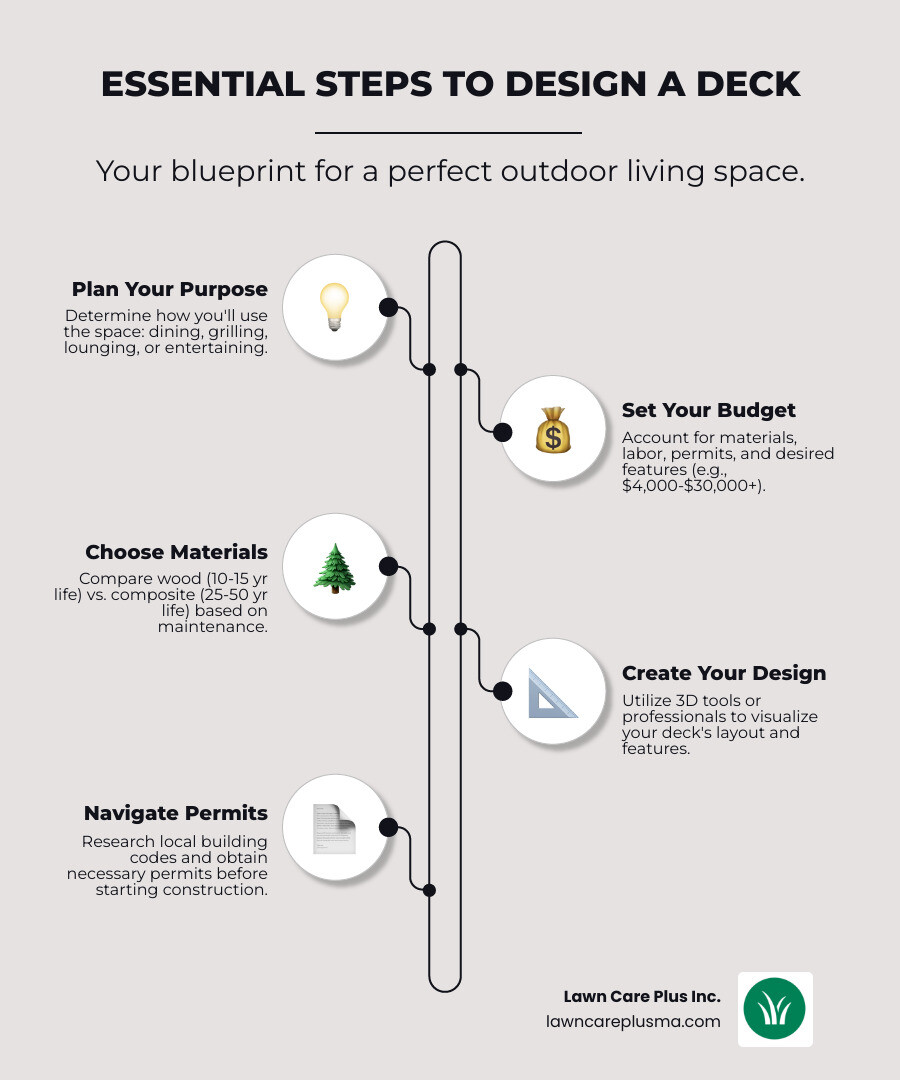
Essential Steps to Design a Deck:
- Define Your Purpose – Determine how you’ll use the space (dining, grilling, lounging, entertaining)
- Set a Realistic Budget – Account for materials, labor, permits, and features (typical range: $4,000-$30,000+)
- Choose Your Materials – Compare wood (10-15 year lifespan) vs. composite (25-50 years) based on maintenance tolerance
- Create Your Design – Use online 3D tools or work with professionals to visualize your space
- Steer Permits – Research local building codes and submit plans for approval before construction
A gorgeous deck starts with a great plan. Without proper planning, you risk costly mistakes like choosing materials that won’t last, creating a layout that doesn’t fit your lifestyle, or running into permit problems mid-project.
The good news? Modern deck design tools have made the planning process more accessible than ever. You can now visualize your deck in 3D, compare material costs instantly, and generate detailed shopping lists—all before you purchase a single board.
As Tim DiAngelis, owner of Lawn Care Plus Inc., I’ve guided countless Boston Metro-West homeowners through the deck design and construction process, helping them avoid common pitfalls while creating outdoor spaces that perfectly match their needs. Whether you’re considering a DIY build or professional installation, understanding the fundamentals of deck design ensures you’ll end up with a space you’ll love for decades.
Quick design a deck definitions:
The Foundation of Your Dream Deck: Planning and Budgeting
Before we even think about hammer and nails, the true foundation of your dream deck lies in meticulous planning and smart budgeting. This initial phase is where we define the deck’s purpose, scope, and how it integrates with your home and lifestyle. It’s about asking the right questions now to avoid headaches later.
Key considerations when you design a deck layout
When you set out to design a deck, the first thing to consider is its intended use. Will it be your primary outdoor dining area, a cozy lounge for morning coffee, a sunbathing spot, or a spacious hub for entertaining guests? The activities you envision for your deck will heavily influence its size, shape, and overall layout.
For instance, if you’re an avid griller and entertainer in Belmont, MA, you’ll need ample space for a large dining table, a grill, and comfortable seating, along with clear traffic paths to and from your kitchen. On the other hand, if you’re dreaming of a quiet backyard sanctuary in Brookline, a smaller, more intimate design might be perfect.
Here are some layout considerations to guide your planning:
- Intended Use: As mentioned, this is paramount. Envision where your grill will go, where people will gather, and how furniture will be arranged.
- Size and Scale: Ensure the deck is proportionate to your home and yard. We often recommend sketching out the potential footprint in your yard with stakes and string or even painter’s tape to get a real feel for the space. Standard deck board widths (typically 5-1/2 inches) should be considered to avoid awkward narrow pieces at the ends.
- Traffic Flow: Design paths that allow easy movement without bumping into furniture or railings. Think about how people will move from the house to the deck, and around different activity zones on the deck itself.
- Connection to the House: How will the deck interact with your home’s entry points? Ensure railings don’t obstruct windows or out-swinging doors. For attached decks, a ledger board connects the deck to your house, and its placement is crucial. While some homeowners consider this a DIY task, we generally recommend leaving ledger board attachment to professionals to ensure structural integrity and proper flashing.
- Yard Integration: Consider your existing landscaping, trees, and any sloped terrain. Your deck should complement, not conflict with, its surroundings. We excel at creating custom decks and patios that seamlessly blend with the natural beauty of your Massachusetts property.
How to Account for Budget in Your Deck Design
Budgeting is a critical step when you design a deck. The average cost of building a deck in the US can range from $4,000 to over $30,000, with many homeowners spending around $7,000 for a standard 12×16 foot composite deck. Please note that these are average costs based on internet data and not actual costs for Lawn Care Plus. Your specific project cost will depend on numerous factors, including size, materials, complexity, and whether you opt for DIY or professional installation.
When planning your budget, we encourage you to consider two main components:
- Material Costs: This includes decking boards, framing lumber, fasteners, railings, stairs, and any additional features like lighting or built-in seating. The choice between wood and composite materials will significantly impact this portion of your budget.
- Labor Costs: If you’re hiring a professional contractor, labor will be a substantial part of the total cost. While a DIY approach might save on labor, it requires a significant time commitment (an average DIY deck project can take anywhere from 10 to 30 days) and access to the right tools and expertise.
A deck is an investment that can increase your home’s value by an average of 10-15%, making it a worthwhile project when planned correctly. Many online deck design tools can help you compare pricing for different components and even provide estimated costs with and without labor, giving you a clearer financial picture before you begin.
Navigating Local Regulations and Obtaining Permits
We can’t stress this enough: always check with your local building department in Massachusetts (whether you’re in Boston, Needham, Canton, or any of our service areas) and your homeowners association (HOA) for specific requirements and to obtain necessary permits before starting any deck construction. Permits are required for deck construction in most municipalities, with costs varying by location but often ranging from $100 to $500.
Permits ensure your deck meets safety standards and local building codes, protecting your investment and ensuring the safety of everyone who uses it. Failing to obtain proper permits can lead to fines, construction delays, or even the requirement to dismantle your newly built deck.
Here’s what you generally need to do:
- Research Local Codes: Visit your local government website or contact the building department directly to understand the specific building codes and procedures in your area. This includes requirements for setbacks, height, structural integrity, and materials.
- Submit Plans: You’ll typically need to submit detailed blueprints of your design a deck project. Many online deck design tools can generate professional blueprints that help ensure your design meets safety codes and are suitable for permit applications.
- Permit Approval Timeline: The time it takes to get a permit approved can vary, so factor this into your project timeline. Starting the permit application process during the winter months can be a smart move, allowing you to be ready for spring and summer construction.
Remember to also call 811 a few days before you plan to dig footing holes to have any underground utilities marked. This crucial step prevents accidental damage to power, gas, or water lines.
For more detailed information on this essential step, explore our guide on planning to build a deck and patio.
Choosing Your Canvas: Decking Materials and Tools
Once your vision is clear and your budget and permits are in order, it’s time to select the right materials and gather the necessary tools. This stage heavily influences the aesthetic, durability, and long-term maintenance of your deck.
Wood vs. Composite Decking: A Head-to-Head Comparison
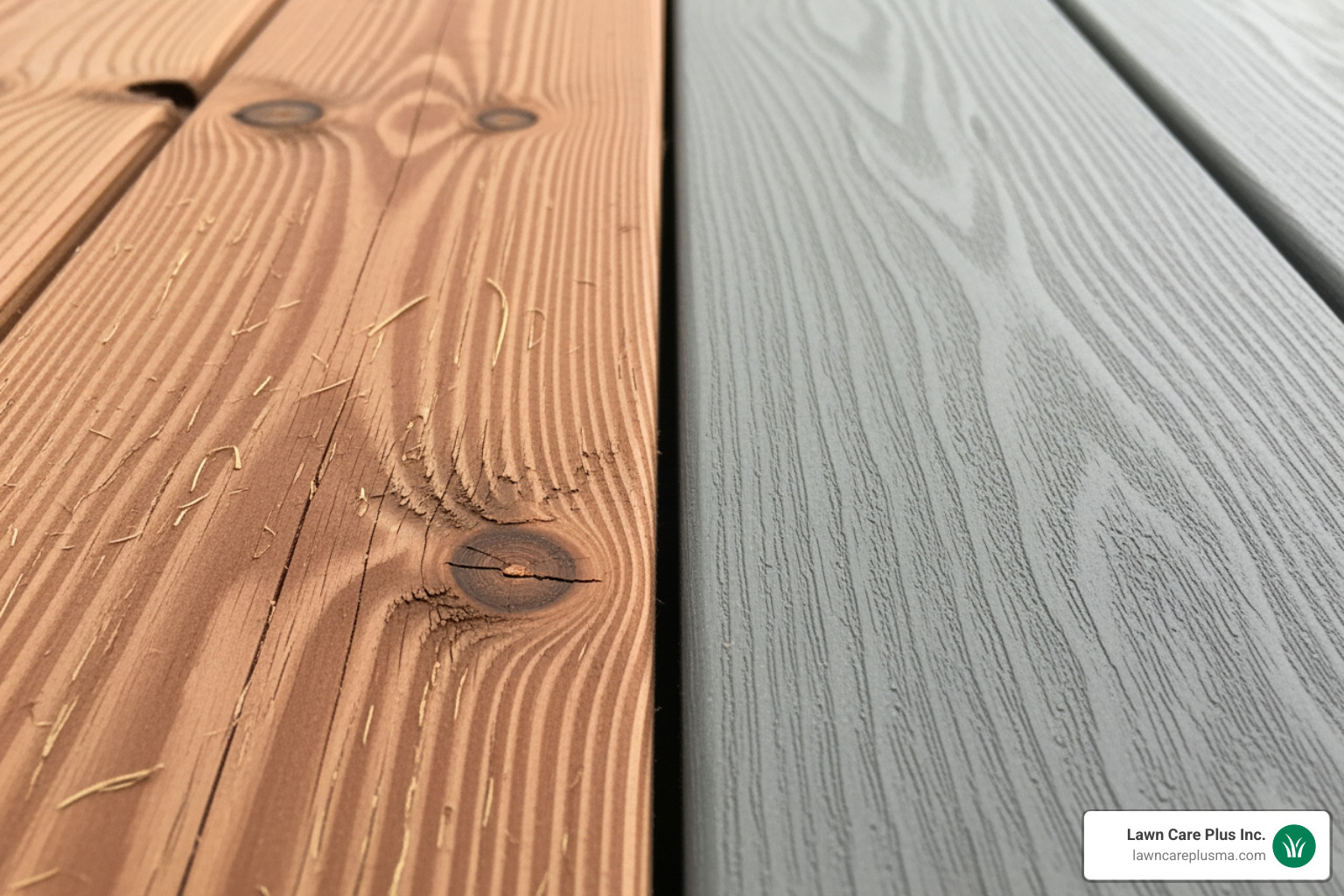
Choosing between wood and composite decking is one of the most significant decisions when you design a deck. Both have unique characteristics that suit different preferences and budgets.
Here’s a quick comparison:
| Feature | Wood Decking [TRAFFIC LIGHT DESIGN A DECK – IMAGE] (/image.png)
Maintenance Requirements for Different Decking Materials
The effort you put into maintaining your deck largely depends on the material you choose.
- Wood Deck Maintenance: Wood decks, particularly those made from pressure-treated lumber like what we use in our projects across Canton and Dedham, MA, require regular maintenance to preserve their beauty and extend their lifespan. This typically involves:
- Cleaning: Annually or bi-annually, power washing or scrubbing with a deck cleaner to remove dirt, mildew, and grime.
- Staining/Sealing: Applying a stain or sealant every 1-3 years to protect the wood from UV damage, moisture, and rot. This also helps maintain its color.
- Repairs: Addressing splinters, loose boards, or fastener issues as they arise.
- For those concerned about wood preservatives, the EPA provides an overview of wood preservative chemicals used in lumber.
- Composite Deck Maintenance: This is where composite decking truly shines. Its low-maintenance nature is a major draw for homeowners. Composite decks are resistant to fading, rot, termites, and require significantly less upkeep. Maintenance typically involves:
- Simple Cleaning: Regular sweeping and occasional washing with soap and water to remove dirt or spills.
- Mold Prevention: For shaded or damp areas, a composite deck cleaner can help prevent mold and mildew growth.
- No staining, sealing, or painting is required, freeing up your time to enjoy your deck rather than work on it.
Essential Tools for Deck Design and Construction
Whether you’re tackling a DIY project or simply want to understand the process, knowing the tools involved is helpful.
For Deck Design:
- Traditional:
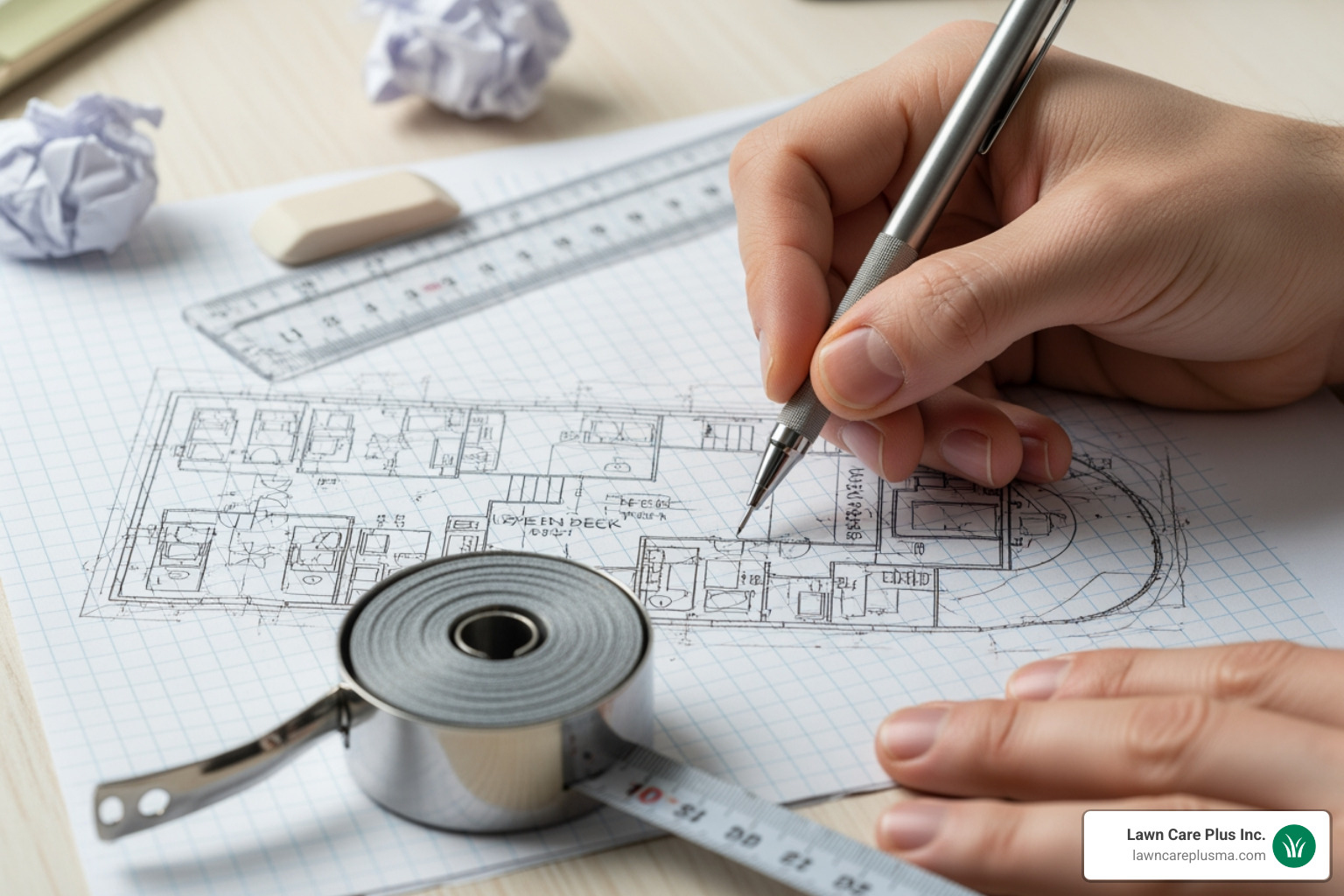
- Tape Measure: Essential for accurate measurements of your yard and desired deck dimensions.
- Graph Paper & Pencils: For sketching out layouts, experimenting with shapes, and planning furniture placement.
- Modern:
- Online Design Software: Virtual deck designers are invaluable. They allow you to create 2D and 3D models, experiment with materials, and generate material lists and blueprints. We’ll dive deeper into these tools shortly.
For Deck Construction (if you’re going DIY or just curious):
- Cutting Tools:
- Circular Saw: For cutting deck boards and framing lumber.
- Miter Saw: Provides precise angle cuts for railings and trim.
- Drilling/Fastening Tools:
- Power Drill: Essential for driving screws and drilling pilot holes (especially important for pressure-treated lumber to prevent splitting).
- Impact Driver: Speeds up the process of driving many screws.
- Measuring & Leveling Tools:
- Level: Crucial for ensuring your deck is perfectly flat and structurally sound.
- Framing Square: For verifying right angles in your framing.
- Digging Tools:
- Post Hole Digger: For excavating holes for footings.
- Shovel: For general digging and moving earth.
- Safety Gear: Always wear safety glasses, gloves, and hearing protection.
How to Design a Deck with Modern Tools
The days of carefully drawing every joist by hand are largely behind us (unless you enjoy that sort of thing!). Today, virtual deck designers have revolutionized how we design a deck, making the process more accessible, accurate, and visually engaging.
Getting Started: From Scratch vs. Using Templates
When you approach a deck design tool, you typically have two main starting points:
- Designing from Scratch: This option offers full customization. You input your desired dimensions, choose the shape, and build every element from the ground up. This is ideal if you have a unique vision or an unusually shaped yard in Newton, MA. It allows for complete creative freedom to match your home’s architecture and your personal style.
- Using Pre-made Templates: Many tools offer a library of pre-designed deck plans. This is a fantastic starting point if you’re looking for inspiration or a simpler design. You can select a template that closely matches your needs and then modify it to suit your specific space and preferences. This can save a lot of time and provide a solid structural foundation for your design. Inspiration galleries on sites like TimberTech and Decks.com are excellent resources for browsing various styles and layouts.
The Power of a 3D Virtual Deck Designer
The benefits of using a 3D virtual deck designer are truly transformative for anyone looking to design a deck. These tools move beyond flat sketches, allowing you to immerse yourself in a realistic representation of your future outdoor space.
Here’s why they’re so powerful:
- Realistic Visualization: See your deck come to life in 3D. This helps you visualize how different materials, colors, and features will look in relation to your home and yard. You can “walk through” your design and get a true sense of scale and proportion.
- Error Reduction: By visualizing the deck in 3D, you can spot potential design flaws or impractical layouts before construction begins, saving time and costly rework. You can ensure adequate traffic flow and furniture placement.
- Comparing Designs: Easily create and save multiple versions of your deck, comparing different layouts, materials, and railing styles side-by-side. This helps you make informed decisions without commitment.
- Sharing Plans: Share your 3D designs with family members, friends, or your contractor (like us!). This facilitates collaboration and ensures everyone is on the same page about the final vision.
- Material Lists and Blueprints: Many tools automatically generate detailed material lists and blueprints from your design. This simplifies the purchasing process and provides essential documentation for permits and construction.
To make the most of these powerful tools, it’s important to be aware of their system requirements. Most virtual deck designers perform best on a desktop or laptop computer with a WebGL-enabled browser (such as the latest versions of Chrome, Safari, Firefox, or Microsoft Edge Chromium). While some tools offer mobile apps for visualization, detailed design work is typically best done on a larger screen with a robust graphics card.
A Step-by-Step Guide to Using a Deck Designer Tool
Using a virtual deck designer tool is generally intuitive, but here’s a typical workflow you can expect when you design a deck with one:
- Create an Account: Most tools require you to create a free account to save your designs. This allows you to return to your project later and make revisions.
- Set Dimensions and Shape: Start by inputting the basic dimensions of your desired deck. You can usually choose from various shapes (rectangular, L-shaped, multi-level, octagonal) and adjust them to fit your space.
- Select Materials: Experiment with different decking materials (wood, composite, PVC), colors, and finishes. You can also choose railing styles (wood balusters, cable, glass panels) and even the type of framing.
- Add Features: Incorporate stairs, varying levels, and other elements like built-in benches, planters, or privacy screens. Many tools also allow you to add lighting fixtures to visualize the ambiance.
- Visualize in 3D: Toggle between 2D and 3D views to get a comprehensive understanding of your design.
- Generate Reports: Once you’re happy with your design, the tool can typically generate a detailed material list (often exportable as a CSV file) and blueprints. These reports are invaluable for budgeting, purchasing, and permit applications.
- Save and Compare: Save your designs and create multiple versions if you’re still exploring options. This allows you to compare different ideas before making a final decision.
Bringing Your Deck Design to Life
After all the planning and virtual designing, the exciting part begins: bringing your deck design to life! This phase involves site preparation, actual construction, and adding those finishing touches that make your deck truly yours.
How to prepare for the deck building process
Proper preparation is key to a smooth and successful deck construction. Once you’ve finalized your design a deck plans, secured your permits, and chosen your materials, here’s how to get ready:
- Finalize Your Plan & Order Materials: Double-check your material list generated by your design tool. Account for any potential waste or errors by ordering a little extra (often 10-15%). Ensure all materials are on-site before construction begins to avoid delays.
- Site Clearing: Clear the construction area of any vegetation, debris, or existing structures. You might need to remove sod if required by local codes.
- Marking Utilities: As mentioned, call 811 to have underground utilities marked before any digging for footings. This is a non-negotiable safety step.
- Layout and Footings: Using batter boards and string lines, accurately mark the perimeter of your deck. Ensure the layout is perfectly square by measuring the diagonals. Mark the precise locations for your footings and begin digging.
- Staging Area: Designate a convenient, clear area for storing materials and tools. This keeps the work site organized and efficient.
For a more in-depth look at the construction process, our Deck Builder Guide 2025 offers valuable insights.
Incorporating Features: Lighting, Railings, and More
The features you incorporate into your deck design can lift its functionality, safety, and aesthetic appeal. These elements are often best planned during the design phase to ensure seamless integration.
- Deck Lighting: Lighting is not just for aesthetics; it’s crucial for safety and extending the usability of your deck into the evening. Options include:
- Post Cap Lights: Decorative and functional, illuminating the perimeter.
- Stair Lights: Essential for safe navigation after dark.
- In-Deck Lights: Small, flush-mounted lights that create a soft glow.
- String Lights: For a festive and inviting atmosphere.
- Sconces or Floodlights: For broader illumination of the deck area.
- Railing Styles: Railings are a safety requirement for most raised decks, but they also offer a significant design opportunity. Consider styles such as:
- Wood Balusters: Traditional and can be painted or stained to match your deck.
- Cable Railings: Modern, sleek, and preserve views.
- Glass Panels: Offer unobstructed views and a contemporary look.
- Aluminum or Composite Railings: Low-maintenance and durable.
- Other Features:
- Privacy Screens: Essential for creating secluded zones on your deck, especially in urban areas like Brighton or Jamaica Plain, MA. These can be decorative lattice, slatted wood, or even living walls of climbing plants.
- Built-in Seating: Benches integrated into the deck design save space and offer permanent seating.
- Planters: Built-in or decorative planters can add greenery and color, blending your deck with the surrounding landscape.
DIY vs. Hiring a Pro: Finding the Right Deck Contractor
The decision to build a deck yourself or hire a professional depends on your skill level, time availability, and budget.
DIY (Do-It-Yourself):
- Pros: Can save on labor costs, offers a sense of accomplishment, and allows for flexibility in scheduling.
- Cons: Requires significant time commitment (10-30 days for an average project), access to specialized tools, and a solid understanding of construction techniques and safety codes. Mistakes can be costly and compromise safety.
Hiring a Professional:
- Pros: Ensures structural integrity and code compliance, saves you time and effort, provides access to experienced craftsmanship, and often comes with warranties. Professionals can also steer complex designs and site challenges more efficiently.
- Cons: Higher upfront cost due to labor.
If you choose to hire a professional, especially for complex designs or when attaching the deck to your house, vetting contractors is crucial. Here’s how we recommend finding the right deck contractor in your area:
- Ask for Recommendations: Word-of-mouth from friends, family, or neighbors in Walpole or Wellesley can be invaluable.
- Check Licenses and Insurance: Verify that the contractor is properly licensed and insured in Massachusetts. This protects you from liability in case of accidents or damage.
- Review Portfolios: Look at examples of their previous work to assess their quality and style.
- Get Multiple Bids: Obtain detailed quotes from at least three different contractors to compare costs and services.
- Check References: Speak to past clients about their experience with the contractor.
As local experts in hardscaping and deck building, we at Lawn Care Plus Inc. are proud to serve communities across the Boston Metro-West area, from Dedham to Mattapan. We have the experience and knowledge to turn your deck design vision into a beautiful, safe, and long-lasting reality. Learn more about finding a trusted professional on our Find a Deck Contractor Near Me page.
Frequently Asked Questions about Deck Design
How long does it take to build a deck?
The average DIY deck project can take anywhere from 10 to 30 days to complete, depending on the complexity of the design, the size of the deck, and the amount of help you have. A professional crew, with their experience and specialized tools, can often complete a similar project much faster, sometimes in just a few days to a week.
Can I build a deck over an existing concrete patio?
Yes, it is definitely possible to build a deck over an existing concrete patio, and it’s a popular way to update and transform an outdoor space without the extensive demolition and groundwork required for a completely new foundation. This process involves specific techniques to ensure proper drainage, prevent moisture issues, and maintain structural stability. Key considerations include ensuring the patio is level, installing a proper substructure to lift the deck boards, and allowing for adequate ventilation. For detailed guidance, you can learn how to install a deck over a concrete patio.
What are the most important structural parts of a deck design?
When you design a deck, the structural integrity is paramount. The most critical structural components are:
- Footings: These are the underground concrete supports that anchor the deck posts, transferring the deck’s weight to the ground and preventing settling or shifting.
- Ledger Board: This heavy-duty board attaches directly to the house’s rim joist, supporting one side of the deck and connecting it securely to the home. Proper installation and flashing of the ledger board are crucial to prevent water damage to your house.
- Frame (Posts, Beams, Joists): This forms the skeleton of your deck. Posts support the beams, beams carry the weight of the joists, and joists run perpendicular to the beams, providing the framework for your decking boards. Together, these elements ensure the deck can safely bear weight and withstand environmental stresses.
Conclusion
Designing a deck is an exciting journey that can significantly improve your home’s outdoor living space and curb appeal. As we’ve explored, a successful project begins with thorough planning, careful budgeting, and a clear understanding of local regulations. Modern tools make it easier than ever to visualize your dream, but the choice of materials, from the natural beauty of wood to the low-maintenance appeal of composite, will define your deck’s longevity and upkeep.
Whether you’re starting on a DIY adventure or seeking professional expertise, preparation, attention to detail, and a focus on safety are paramount. At Lawn Care Plus Inc., we pride ourselves on being Massachusetts’ deck building experts, serving communities from Belmont to Canton, and Chestnut Hill to Roslindale. Our experienced team is ready to help you steer every step of the process, ensuring your vision for the perfect outdoor oasis becomes a reality.
Don’t let the complexities of deck design deter you. With the right approach and a trusted partner, your dream deck is within reach.