Retaining wall—these two words could be the secret to changing a challenging outdoor space into a beautiful and functional landscape. If you’re dealing with slopes or uneven terrain, a retaining wall can shift the landscape design from mundane to magnificent.
Here are key points about retaining walls:
- Purpose: Primarily used to hold back soil and prevent erosion, creating stable, level areas.
- Materials: Options include concrete, stone, bricks, and even treated timber.
- Design: A well-planned wall improves aesthetics, changing steep slopes into beautiful terraces or creating a distinct focal point in your garden.
- Benefits: Besides soil retention, they add value and charm to your property, serving as neat backdrops for garden spaces.
Retaining walls are more than just practical solutions; they are essential components of landscape design that add style and functionality to your outdoor areas. Whether you envision a rustic stack of stones or a sleek concrete structure, retaining walls can be customized to fit every style and need.
Think of retaining walls as both artists and engineers—sculpting the land to meet your vision while ensuring stability and durability. Interested in learning more about how these structures can improve your landscape? Read on for a comprehensive guide to retaining walls and their role in landscape design.
Key retaining wall vocabulary:
– landscape wall
– build retaining walls
– retaining walls and landscaping
What is a Retaining Wall?
A retaining wall is a structure designed to hold or retain soil behind it. It plays a crucial role in landscape design by changing uneven terrain into usable, level spaces. Whether you have a sloped backyard or need to prevent soil erosion, retaining walls are the unsung heroes of many outdoor spaces.
Definition
At its core, a retaining wall is a barrier that holds back soil. It’s like a sturdy arm that keeps earth from spilling over, maintaining the landscape’s shape and integrity. These walls are not just barriers; they are essential for managing slopes and supporting structures above them.
Purpose
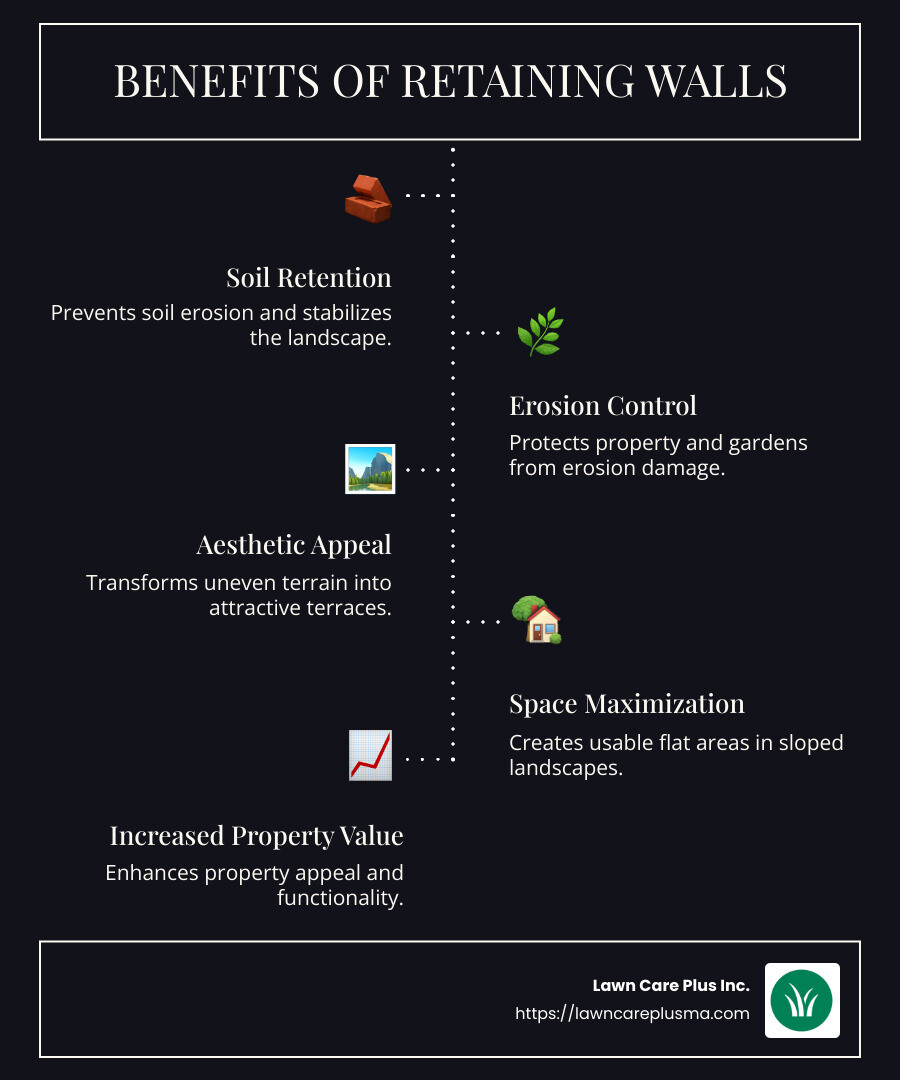
The primary purpose of a retaining wall is soil retention. By keeping soil in place, these walls prevent erosion and landslides, which can be especially important in areas prone to heavy rains or shifting grounds.
But retaining walls do more than just hold soil. They create flat areas in hilly landscapes, making room for gardens, patios, and walkways. In this way, they not only protect but also improve the functionality and beauty of outdoor spaces.
Soil Retention
Soil retention is at the heart of any retaining wall’s function. Imagine a steep hill in your backyard that’s hard to maintain or even walk on. A retaining wall can transform that slope into a series of terraces, each capable of hosting plants, flowers, or even a small vegetable garden.
By preventing soil from moving, retaining walls also protect the foundations of nearby structures, like houses or garages. This stability is crucial for preventing damage over time, especially in areas with varying weather conditions.
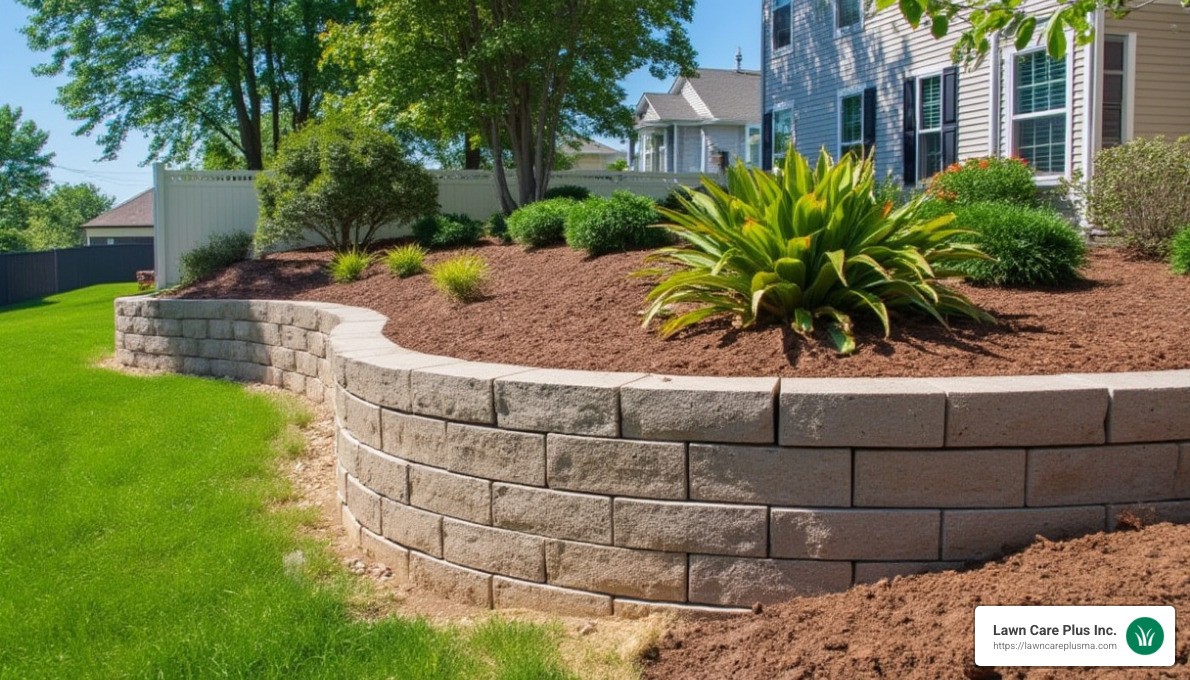
In conclusion, retaining walls are vital for both practical and aesthetic reasons. They provide the support needed to maintain the landscape’s shape while offering opportunities to improve and beautify your outdoor environment.
Continue reading to find the different types of retaining walls and how they can be custom to meet your specific landscape needs.
Types of Retaining Walls
When it comes to retaining walls, there are several types to consider, each with its own strengths and applications. Understanding these will help you choose the right one for your landscape needs.
Gravity Walls
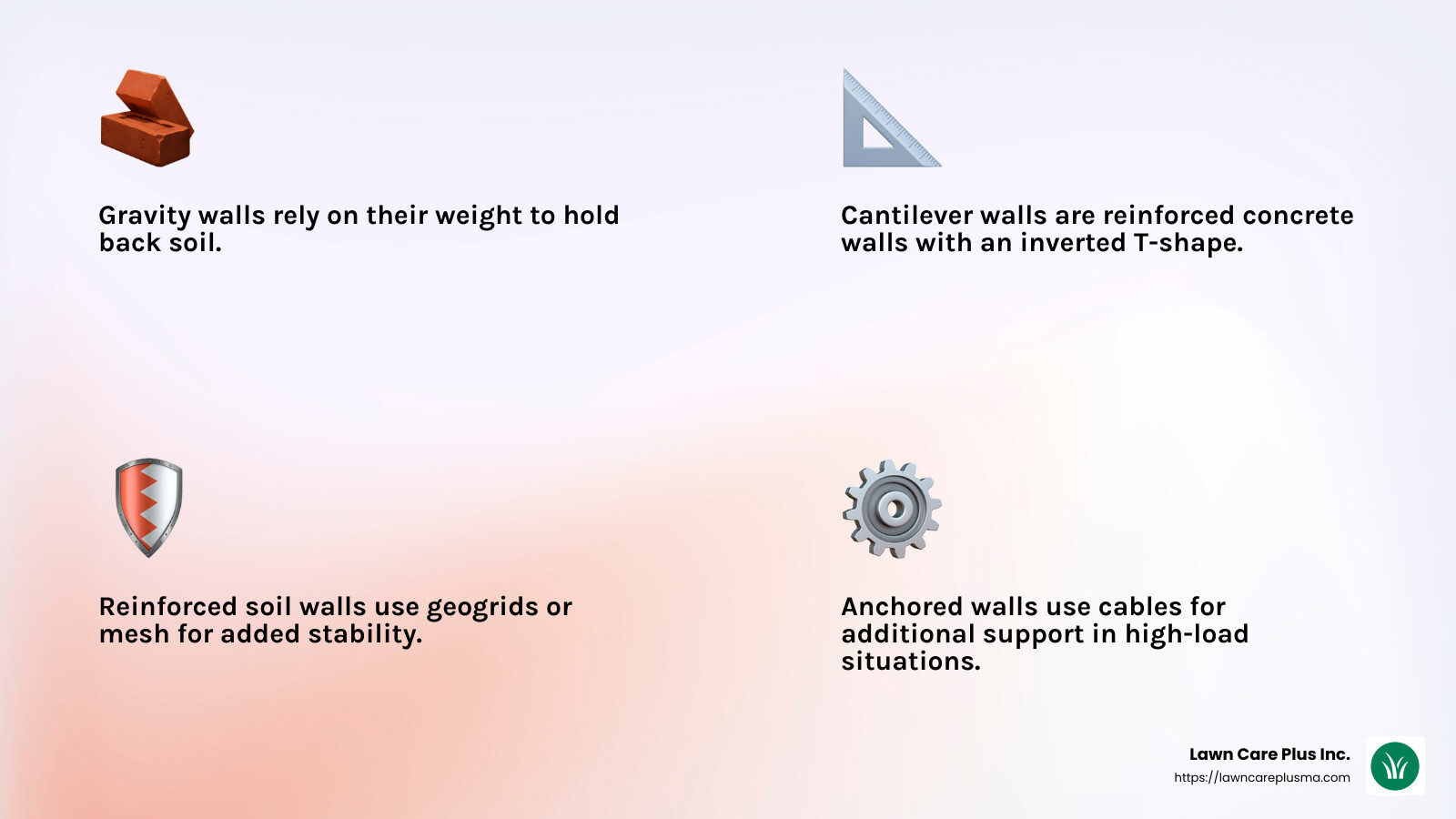
Gravity walls rely on their own weight to hold back soil. They are typically made from heavy materials like concrete, stone, or brick. These walls are ideal for lower heights and are straightforward to construct. The weight and setback of the wall itself provide the necessary resistance against the pressure from the soil.
Cantilever Walls
Cantilever walls are a bit more complex. They are made from reinforced concrete and have an inverted T-shape. This design allows them to convert horizontal pressures from the soil into vertical pressures on the ground. Cantilever walls use less material than gravity walls and are suitable for taller structures where space is limited.
Reinforced Soil Walls
Reinforced soil walls incorporate materials like geogrids or mesh that extend into the soil behind the wall. This reinforcement increases the wall’s strength and stability. These walls are often used in larger projects where additional support is necessary. The combination of the wall, reinforcement, and soil creates a unified structure capable of withstanding significant pressure.
Sheet Piling
Sheet piling is commonly used in soft soil and tight spaces. These walls are made from steel, vinyl, or wood planks driven deep into the ground. They are particularly useful for temporary structures or when space is a constraint. For taller sheet pile walls, tie-back anchors are often used to provide additional support.
Anchored Walls
Anchored walls can be constructed in various styles but include additional support using cables or stays anchored in the soil or rock behind the wall. This method is technically complex but extremely effective for supporting high loads. Anchors are driven into the material, expanding at the end to provide stability.
Each type of retaining wall offers unique benefits, making it important to consider the specific needs of your landscape. Whether you’re dealing with a small garden or a large commercial project, choosing the right wall type is crucial for both functionality and aesthetics.
Building a Retaining Wall: Key Considerations
Building a retaining wall is a significant project that can transform your landscape. Whether you’re considering a DIY approach or hiring a professional, there are key factors to keep in mind:
DIY vs. Professional
DIY Retaining Walls: For those with a knack for hands-on projects, a DIY retaining wall can be a rewarding challenge. It’s best suited for low walls, typically under three feet. Using interlocking concrete blocks can make the process easier, as they provide stability and are user-friendly. However, building a wall requires physical strength and time, so enlist a helper!
Professional Installation: For larger or more complex projects, hiring a professional is often the best route. Professionals bring expertise in soil composition, drainage, and structural stability, ensuring your wall is built to last. They also handle permits and adhere to local building codes, which can save you headaches down the road.
Materials
Choosing the right materials is crucial. Common options include:
- Concrete Blocks: Durable and easy to use, especially for DIY projects.
- Natural Stone: Offers a beautiful, rustic look but can be labor-intensive.
- Wood: Economical but less durable over time.
- Treated Timbers: A cost-effective choice but may not last as long as other materials.
When selecting materials, consider the wall’s purpose, aesthetic appeal, and your budget.
Drainage
Proper drainage is vital for the longevity of your retaining wall. Without it, water can accumulate behind the wall, increasing pressure and potentially causing failure. Here’s what you need to know:
- Backfill with Gravel: Use well-draining gravel or sand behind the wall to allow water to escape.
- Drainage Pipes: For higher walls or areas with poor drainage, consider installing a perforated drain pipe to direct water away from the wall.
- Soil Type: Be mindful of your soil type. Clay retains water, while sandy soil drains too quickly. A well-draining soil mix is ideal.
Permits
Before you start digging, check if you need a building permit. This depends on your wall’s height and local regulations. Contact your local building department and homeowner’s association (HOA) for guidance. Failing to secure the necessary permits can lead to fines or having to dismantle your wall.
By considering these factors, you’ll be well-prepared to tackle your retaining wall project, ensuring it’s both functional and visually appealing.
Next, we’ll explore alternatives to traditional retaining walls that might suit your landscape design needs.
Retaining Wall Alternatives
If you’re looking for alternatives to traditional retaining walls, there are several creative options that can improve your landscape design while serving the same purpose. Let’s explore some popular alternatives:
Wooden Timber Panels
Wooden timber panels are a popular choice for those seeking a natural, rustic look. They are cost-effective and can easily blend into various landscapes. However, keep in mind that wood, being an organic material, may have a shorter lifespan compared to stone or concrete. To extend its durability, consider using pressure-treated wood and applying a wood preservative. Be cautious when planting nearby, as chemicals in treated wood might affect your plants.
Modular Designs
Modular designs offer flexibility and ease of installation, making them a great choice for DIY enthusiasts. Products like SRWs (Segmental Retaining Walls) use interlocking concrete blocks that are simple to stack without mortar. These blocks come in various sizes, shapes, and textures, allowing you to customize your wall to your liking. Modular designs not only provide structural stability but also add a modern touch to your landscape.
Landscaping Aesthetics
For those who prioritize aesthetics, integrating a retaining wall into your landscape design can lift the overall look of your outdoor space. Consider these ideas:
- Mixing Materials: Combine different materials like natural stone and wood accents for a unique appearance. This can soften the industrial feel of concrete and create a harmonious blend with nature.
- Color Choices: Opt for colors that complement your home and garden. Black retaining walls can recede into the background, creating a sleek look, while cream-colored walls offer a warm, welcoming vibe.
- Incorporating Features: Improve your wall with built-in seating or a firepit for added functionality. These features can transform your retaining wall into a cozy gathering spot.
By exploring these alternatives, you can find a solution that fits your landscape design and personal style, while still providing the essential benefits of a retaining wall. Whether you choose wooden timber panels, modular designs, or prioritize aesthetics, these options can help you achieve the perfect balance between form and function in your outdoor space.
Next, we’ll address some frequently asked questions about retaining walls to further guide your decision-making process.
Frequently Asked Questions about Retaining Walls
What is the cheapest type of retaining wall?
When considering cost-effective options for a retaining wall, poured concrete and pressure-treated pine are popular choices.
- Poured Concrete: This option is often economical for larger projects. It’s durable and can be molded into various shapes, offering flexibility in design. The smooth finish of concrete also allows for easy painting or staining to match your landscape.
- Pressure-Treated Pine: Wood is generally less expensive than stone or concrete. While it offers a natural look, keep in mind that wood may have a shorter lifespan due to weathering. Using pressure-treated wood can extend its durability, making it a cost-efficient choice for smaller walls.
What are the main types of retaining walls?
Retaining walls come in several types, each with unique advantages:
- Gravity Walls: These rely on their weight to hold back soil. They are often made from heavy materials like stone, concrete, or brick.
- Cantilever Walls: These use a lever arm structure embedded in the ground to provide stability. They are typically made from reinforced concrete and are suitable for taller walls.
- Embedded Walls: Also known as sheet piling, these walls use thin, vertical materials driven deep into the ground. Ideal for tight spaces, they provide strong support with minimal surface footprint.
- Reinforced Soil Walls: These incorporate materials like geogrid to strengthen the soil behind the wall. They are often used in conjunction with modular blocks or other facing materials.
What can you do instead of a retaining wall?
If a traditional retaining wall isn’t the right fit for your project, consider these alternatives:
- Wooden Panels: These offer a rustic charm and are great for smaller projects. They can be installed quickly and are relatively inexpensive.
- Modular Designs: Interlocking blocks or panels provide flexibility and are easy to install. They can be customized to fit various styles and are perfect for DIY projects.
By understanding the different types and alternatives to retaining walls, you can make informed decisions that suit your landscape design and budget. Whether you prioritize cost, function, or aesthetics, there’s a solution that can meet your needs.
Conclusion
Choosing the right retaining wall for your landscape can transform your outdoor space into a functional and beautiful area. At Lawn Care Plus Inc., we understand the importance of creating a landscape that not only meets your needs but also improves the aesthetic appeal of your property. Our team is dedicated to delivering exceptional landscaping and hardscaping services across the Boston Metro-West area.
Whether you’re looking to prevent soil erosion, create more usable space, or simply add a stunning visual feature to your yard, our experienced professionals are here to help. We offer a wide range of services, from lawn maintenance to complex landscape installations, ensuring that every project is completed to the highest standards.
Our expertise extends beyond just installing retaining walls. We provide comprehensive solutions that include drainage systems, yard cleanups, and more, to ensure your landscape remains beautiful and functional year-round.
If you’re ready to improve your property with a professionally installed retaining wall, or if you have any questions about our services, we invite you to learn more about our landscape retaining walls. Let us help you create an outdoor space that you’ll love for years to come.