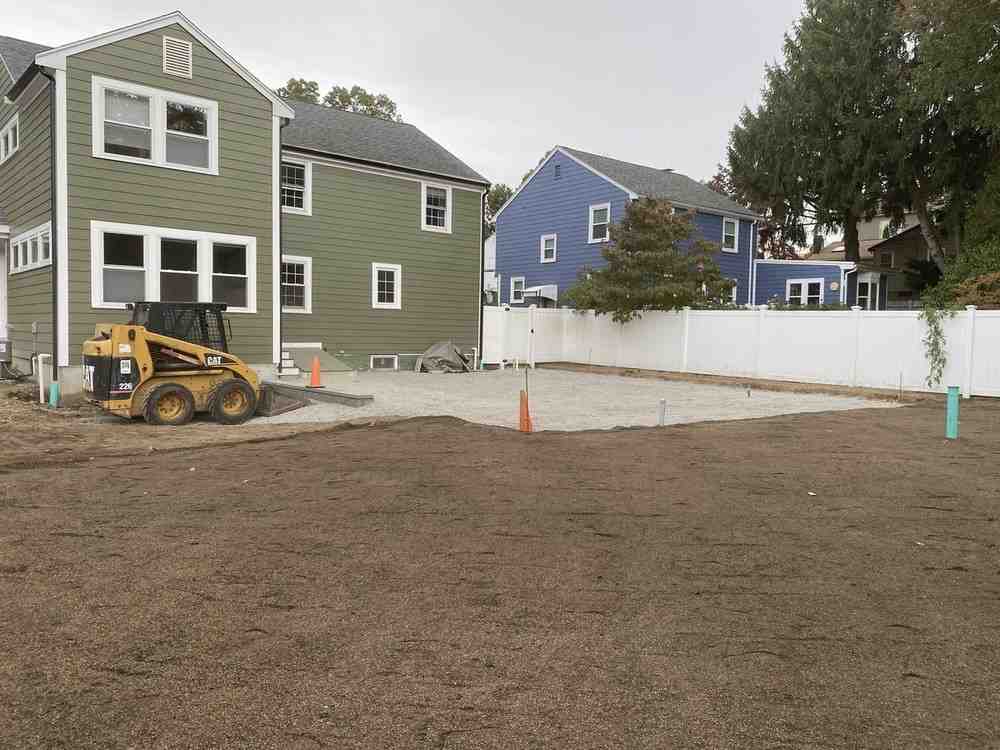
Is Your Yard Drowning? Here’s What Actually Works
Choosing the best drainage system for your yard is one of the most important decisions you can make as a homeowner — and the right answer depends on your specific situation.
Quick answer: The best yard drainage systems by use case:
| Drainage System | Best For |
|---|---|
| French drain | Subsurface water, soggy lawns, foundation protection |
| Catch basin | Low spots, downspout runoff, high-volume pooling |
| Channel drain | Driveways, patios, and other hard surfaces |
| Dry well | Collecting and slowly releasing stormwater underground |
| Bioswale / rain garden | Eco-friendly filtration, gentle slopes, natural landscapes |
Most yards need a combination of two or more systems for complete protection.
Water problems rarely announce themselves with a dramatic flood. More often, the signs are quieter: a lawn that stays soft for days after rain, mulch that keeps washing into the driveway, or a patio edge that turns slick in winter. Left unchecked, poor drainage can damage your home’s foundation, kill landscaping, and create conditions that attract pests and mold.
The good news? There are proven systems — ranging from simple DIY fixes to engineered subsurface solutions — that can keep your yard dry, healthy, and looking its best through every season.
I’m Tim DiAngelis, owner of Lawn Care Plus, Inc., a full-service landscaping company based in Roslindale, Massachusetts, and I’ve spent over a decade helping homeowners across Greater Boston and Metro-West find the best drainage system for their yard — from French drains to catch basins to full grading overhauls. In the sections below, I’ll walk you through every major option so you can make a confident, informed decision.
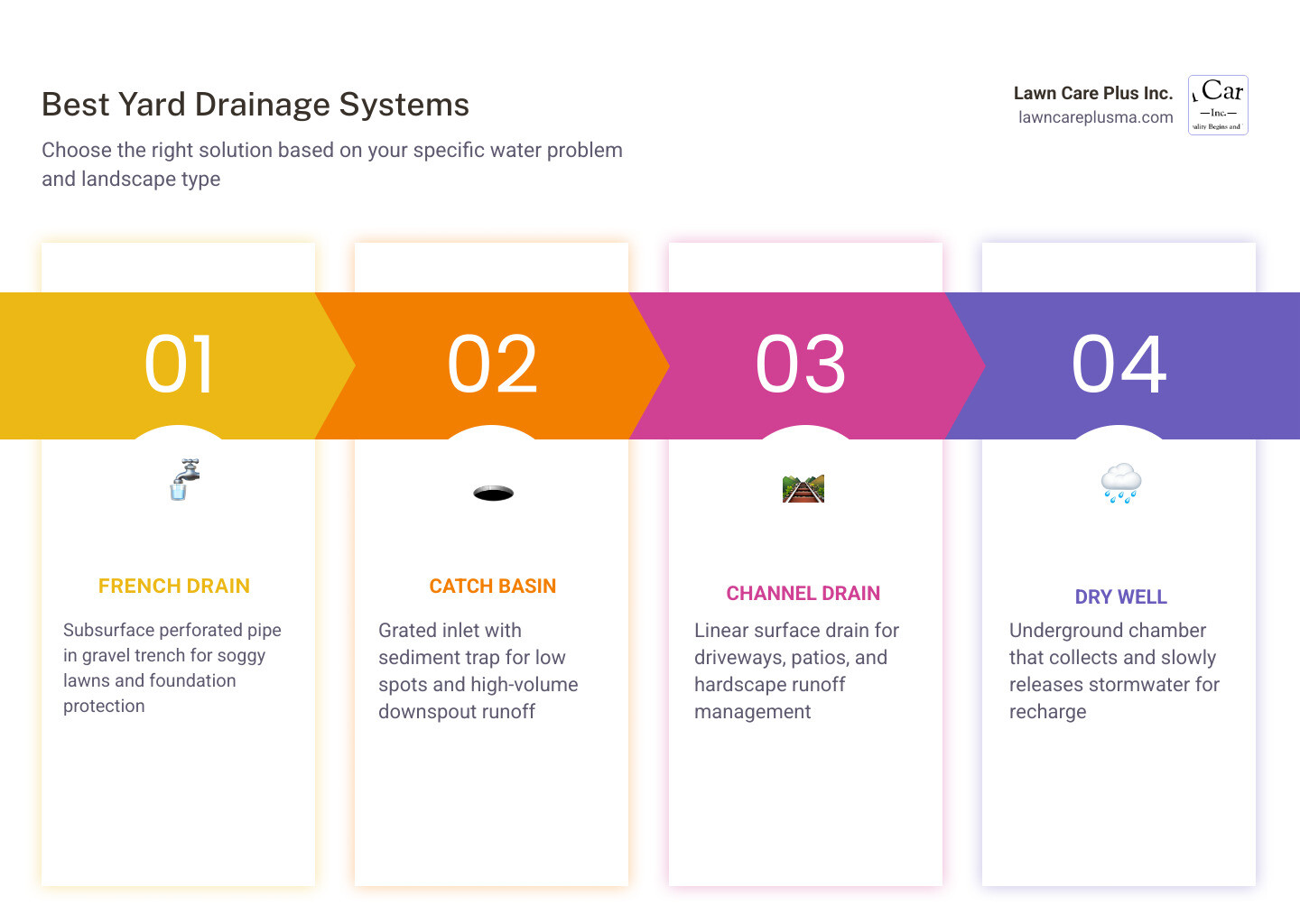
Best drainage system for yard terms at a glance:
Why Water Management Matters: Protecting Foundation, Landscaping, and Health
Living in the Boston Metro-West area means we experience all four seasons in their full intensity. From heavy spring downpours to sudden summer thunderstorms and winter snowmelts, our properties have to process an immense volume of water. When water has nowhere to go, it begins to accumulate, posing serious risks to your property. Understanding these risks is the first step in realizing why choosing the best drainage system for your yard is a critical investment.
First and foremost is the threat of foundation damage. When water pools around the perimeter of your home, it saturates the soil. This saturated soil exerts extreme hydrostatic pressure against your basement walls. Over time, this pressure causes concrete to crack, bow, and leak. In cold weather, this trapped moisture undergoes rapid freeze-thaw cycles, expanding and contracting, which accelerates structural deterioration. If you are experiencing water entering your basement, exploring subsurface options is essential, as detailed in our guide Drainage Demystified: A Guide to Above and Below Ground Solutions.
Beyond structural concerns, poor drainage directly threatens your landscape investment. Saturated soils suffocate turfgrass and plant roots by cutting off their oxygen supply. This leads to root rot, yellowing leaves, and eventually, the death of expensive plantings. Furthermore, pooling water causes rapid soil erosion. High-velocity runoff can wash away topsoil, mulch, and gravel, cutting deep ruts into lawn areas and destabilizing slopes.
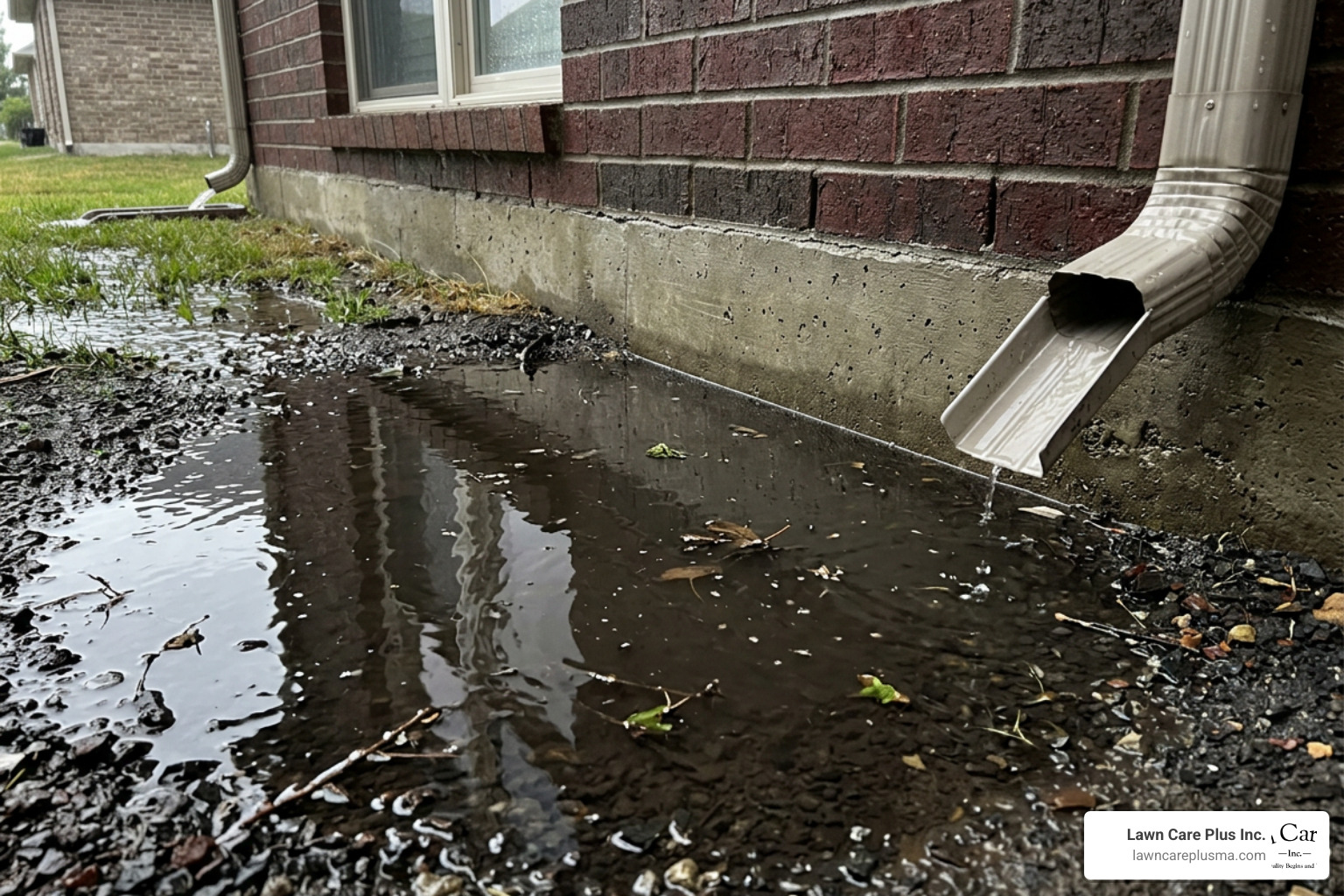
Finally, excess moisture creates health and pest hazards. Standing water that lingers for more than 24 to 48 hours becomes an ideal breeding ground for mosquitoes. Damp soils and pooling water near the home also attract wood-destroying pests like termites, while promoting the growth of mold, mildew, and wood rot along outer walls and in crawlspaces. Implementing proper drainage is the only reliable way to break this cycle and keep your home safe.
Comparing the Best Drainage System for Yard Options
No two properties are identical, and the right solution depends on whether you are dealing with surface water, subsurface saturation, or hardscape runoff. To help you visualize the landscape of options, we have compiled a comparison of the most common yard drainage systems.
| Drainage System | Primary Function | Installation Difficulty | Performance Level | Best Use Case |
|---|---|---|---|---|
| French Drain | Redirects subsurface water | Moderate to High | High | Soggy lawns, foundation protection, retaining walls |
| Dry Well | Underground water retention | High | Very High | Directing gutter runoff away from municipal sewer systems |
| Catch Basin | Collects surface pooling | Moderate | High | Low spots in lawns, downspout discharge zones |
| Channel Drain | Intercepts hardscape runoff | High | High | Driveways, patios, walkways, pool decks |
| Bioswale | Natural filtration & runoff control | Low to Moderate | Moderate to High | Eco-friendly yards, gentle slopes, property borders |
Choosing the right system involves assessing your property’s specific water sources. For a comprehensive look at how these systems function in harmony, refer to our Drainage Solutions Complete Guide.
French Drains: The Gold Standard for Subsurface Water
For properties suffering from chronically soggy lawns, spongy turf, or wet basements, a French drain is often the ideal choice. Considered the gold standard of subsurface water redirection, a traditional French drain consists of a sloped trench filled with clean gravel and a perforated pipe wrapped in filter fabric.
The system works on a simple principle of gravity: water always seeks the path of least resistance. As groundwater rises, it flows through the gravel, enters the perforations in the pipe, and flows downhill to a safe outlet point, such as a dry well, swale, or daylight exit at the property line. For properties with severe groundwater issues, installing a robust Land Drainage System can permanently transform a marshy backyard into a usable, dry lawn.
Dry Wells: Sustainable Runoff Solutions
A dry well is an eco-friendly subsurface structure designed to collect stormwater runoff, hold it temporarily, and slowly release it back into the surrounding soil. This process, known as groundwater recharge, is highly effective for managing large volumes of roof runoff from downspouts without overloading municipal storm systems.
Modern dry well installations, such as the modular NDS Flo-Well® Dry Well System for Stormwater Drainage | NDS , utilize gravel-free structural plastic wells. These systems offer up to 250% more detention volume than traditional, stone-filled pits of a comparable size. A single modular unit can hold approximately 50 gallons of water, and multiple units can be connected in series to handle larger runoff volumes.
To maximize infiltration, these systems feature knocked-out weep holes wrapped in filter fabric to prevent surrounding soil from clogging the chamber. They must be installed at least 10 feet away from any home foundation to prevent water from migrating back toward basement walls.
Catch Basins and Area Drains for High-Risk Zones
If your primary issue is surface water pooling in localized low spots, catch basins are a highly effective solution. A catch basin is a buried box topped with a grated inlet. It is positioned at ground level in areas prone to flooding, such as low lawn spots or beneath downspouts.
Water enters through the grate, while heavy sediment and debris sink to the bottom of the basin, preventing clogs in the underground pipes connected to the box. The captured water is then directed through solid PVC pipes to an appropriate discharge point.
Because they capture surface water before it has a chance to saturate the soil, catch basins are essential for high-risk zones. To learn more about selecting the right grates and box sizes for your property, read our article, Keep Your Yard Dry: The Essential Guide to Channel and Area Drains.
Channel Drains: Best Drainage System for Yard Hardscapes
Hardscapes like driveways, patios, and pool decks are completely impermeable, meaning 100% of the rain that falls on them becomes surface runoff. If these surfaces are sloped toward your home, garage, or foundation, the resulting sheet flow can cause severe localized flooding.
A channel drain (often called a trench drain) is a long, narrow drainage trough covered by a flush-mounted grate. It is installed across the width of a driveway or along the edge of a patio to intercept sheets of water before they reach structure walls.
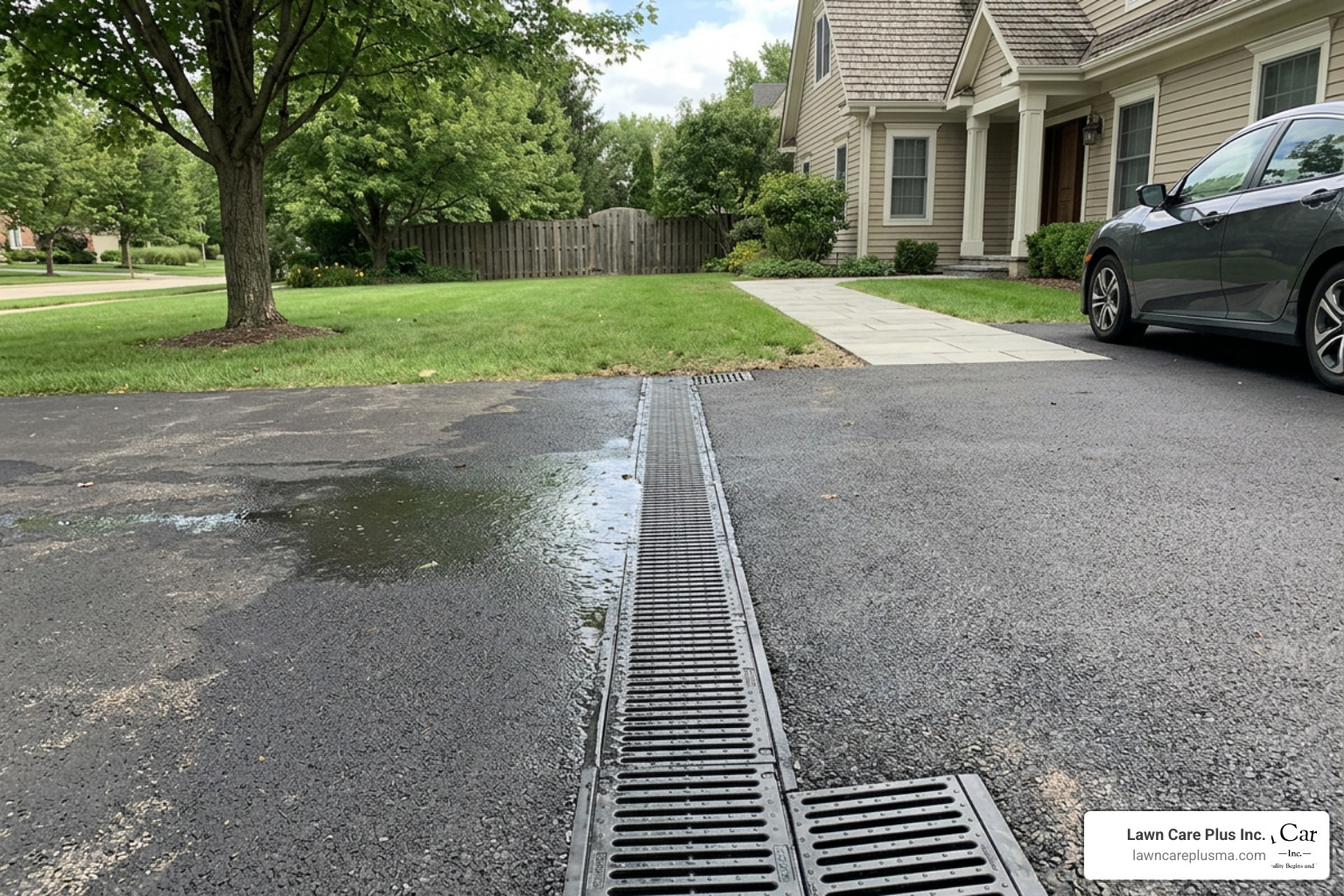
By cutting a clean channel into concrete or asphalt and setting the drain body in a concrete slurry, we can route large volumes of fast-moving water safely away from critical entryways.
Bioswales and Rain Gardens: Eco-Friendly Alternatives
For homeowners looking for sustainable, low-maintenance, and visually appealing drainage, bioswales and rain gardens are excellent options. These methods work with nature to slow down, filter, and absorb stormwater runoff.
A bioswale is a wide, shallow, vegetated channel designed to guide water along a gentle, natural slope. Unlike traditional concrete swales, bioswales are planted with deep-rooted native grasses and lined with rocks. This slows the water down, allowing it to filter into the ground naturally while preventing erosion.
Rain gardens are shallow, bowl-shaped planting beds placed in natural low areas. They are filled with native wildflowers, shrubs, and water-tolerant plants that act like a sponge, absorbing standing water within 24 hours while filtering out pollutants like fertilizers and oils before they reach the water table.
Key Factors to Consider: Soil, Slope, and Climate
Designing the best drainage system for your yard requires a thorough assessment of your property’s unique physical characteristics. In Massachusetts, our weather patterns and native soil types present specific challenges that must be addressed to ensure long-term system performance.
Our local climate has shifted significantly over the past several decades. According to meteorological data, average precipitation in Massachusetts has increased by approximately 4.7 inches since 1970 compared to the historical baseline of 1895–1969. We are also experiencing a record-setting number of extreme precipitation events.
This means drainage systems must be designed to handle sudden, high-intensity storms. For detailed information on municipal stormwater guidelines in our service area, you can review resources like the Stormwater | Brookline, MA – Official Website .
Additionally, our harsh New England winters bring severe freeze-thaw cycles. When water is trapped in shallow pipes or poorly drained soils, it freezes and expands. This can crack pipes, lift shallow catch basins out of the ground, and buckle overlying hardscapes. All subsurface drainage pipes must be installed with proper slopes and bedded correctly to ensure they drain completely before freezing temperatures set in.
Evaluating Soil Type and Slope for the Best Drainage System for Yard
Your property’s soil composition dictates how quickly water can percolate into the ground. In many parts of the Boston Metro-West area, we find heavy clay soils or highly compacted glacial till. Clay soil has tiny pore spaces that trap water, leading to slow infiltration rates. If you install a dry well or infiltration-based French drain directly in heavy clay without proper modifications, the system may simply fill up like a bathtub and fail to drain.
To make drainage systems work in clay, we must use specific engineering techniques, such as backfilling trenches with coarse sand or clean pea gravel, and daylighting pipe outlets so water has an active escape route.
Slope is the other critical factor. Water relies entirely on gravity to move. A yard drainage pipe must maintain a minimum slope of 1% (a 1-foot drop for every 100 feet of run) to keep water moving and prevent sediment from settling inside the pipe. If your property is flat or slopes toward your house, regrading and land contouring must be performed first to establish positive flow. For properties with challenging topography, managing water flow requires specialized approaches, which we discuss in Drainage Solutions for Sloping Land.
Traditional Gravel French Drains vs. Modern EZflow Systems
When planning a French drain, homeowners often choose between a traditional gravel-and-pipe trench and a modern, engineered gravel-free system like the NDS EZflow.
Traditional French drains require excavating a wide trench, hauling in tons of heavy washed stone, laying a perforated pipe, wrapping the assembly in geotextile fabric, and backfilling with more stone. While highly effective, this process is incredibly labor-intensive, damages surrounding lawns, and is prone to eventual clogging if soil fines migrate into the gravel.
In contrast, the EZflow® Gravel-Free French Drain System | NDS is a preassembled bundle consisting of a slotted pipe surrounded by engineered polystyrene aggregate (Poly-Rock) wrapped in a durable geotextile mesh.
This system offers several distinct advantages:
- 30% Better Flow Rate: The engineered flow channels in the Poly-Rock aggregate increase void space, resulting in a 30% higher water flow rate than traditional gravel systems.
- 50% Labor Savings: Because the aggregate is preassembled around the pipe, there is no need to haul, shovel, or backfill tons of heavy stone, cutting installation times in half.
- Lightweight and Durable: A 10-foot section of EZflow weighs under 6 pounds, compared to over 100 pounds of gravel required for an equivalent length of traditional drain. The inert polystyrene aggregate does not absorb water, resist compaction, and has a material lifespan exceeding 100 years.
While traditional gravel drains are still useful in specific structural applications, EZflow is often the superior choice for residential lawn and landscape projects.
Professional Installation vs. DIY: Costs and Considerations
For handy homeowners, simple drainage projects like adding downspout extensions or clearing surface swales can be rewarding DIY tasks. However, larger subsurface installations — such as French drains, dry wells, or channel drains — carry significant risks if executed incorrectly.
Improper grading is the most common DIY mistake. Without precise laser levels, it is incredibly easy to dig a trench that slopes the wrong way, trapping water and worsening your pooling issues. Additionally, digging without knowing what lies beneath can result in costly and dangerous utility line punctures.
Professional installation ensures your system is hydraulically engineered to handle your property’s specific runoff volume, soil type, and legal requirements. In Massachusetts, grading or drainage work near wetlands, streams, or protected buffers may require local Conservation Commission reviews and permits. A professional team handles these regulatory hurdles to ensure compliance.
When considering budget, it is helpful to understand average industry costs. Please note: the pricing ranges listed below represent broad national and regional averages based on internet data and do not reflect specific project estimates for Lawn Care Plus, Inc.
- French Drains: Professional installation typically ranges from $10 to $100 per linear foot, with comprehensive residential projects averaging around $5,000, though complex properties with extensive excavation can range from $1,500 to over $15,000.
- Dry Wells: A standard professional dry well installation ranges from $1,165 to $4,420, with an average of $3,030. High-capacity commercial-grade systems or stacked modular configurations can cost up to $15,000.
- Channel Drains: Professional installation averages between $1,000 and $4,000, depending on the length and the depth of concrete cutting required.
- Catch Basins: Installation costs can range widely from $800 for a single simple basin to over $15,000 for multi-basin commercial networks.
- Lawn Aeration: For large properties needing to relieve minor soil compaction, professional aeration averages around $270.
- Swales: A narrow, grass-lined swale is one of the most cost-effective professional drainage options, averaging $5 to $15 per linear foot, with larger engineered bioswales averaging around $4,600.
How do I know if my yard has a drainage problem?
The most obvious sign of a drainage problem is standing water that remains on your lawn, driveway, or patio for more than 24 hours after a rainstorm.
Other common indicators include:
- Spongy, squishy turf that feels like walking on a wet sponge.
- Active soil erosion, washed-out mulch beds, or deep ruts cut into lawns.
- Cracks in your foundation, damp basement walls, or musty odors in your crawlspace.
- Efflorescence (white, powdery salt deposits) on basement concrete walls.
- Areas of thin, yellowing turf grass or moss growing in sunny lawn spots where grass should thrive.
How much maintenance do yard drainage systems require?
All drainage systems require some level of ongoing maintenance to prevent blockages and ensure optimal performance.
We recommend the following schedule:
- Twice Annually (Spring & Fall): Clean out gutters and downspouts. Inspect catch basin grates and remove leaves, pine needles, and debris.
- Annually: Open catch basin sump basins and shovel out accumulated sediment to prevent it from entering the discharge pipes. Flush solid PVC pipes with a garden hose to clear out silt or debris.
- As Needed: Inspect pipe outlets (such as pop-up emitters or daylight exits) to ensure they are clear of grass clippings, mulch, or rodent nests.
Do drainage improvements require permits in Massachusetts?
Yes, depending on your property’s location and the scope of the project. In Massachusetts, the Wetlands Protection Act strictly regulates any grading, clearing, or drainage work within 100 feet of a wetland buffer zone or 200 feet of a riverfront area.
If your property falls within these zones, you must submit a filing with your local town or city Conservation Commission before beginning work. Additionally, connecting any private drainage system directly into a municipal storm sewer is strictly prohibited without explicit municipal engineering permits.
Conclusion
A beautiful, functional landscape is only as good as the drainage system supporting it. Without proper water management, even the most stunning lawn, patio, or planting bed can quickly succumb to erosion, flooding, and structural damage. By choosing the best drainage system for your yard, you protect your home’s foundation, preserve your landscaping investment, and create a safer, healthier outdoor living space for your family.
At Lawn Care Plus, Inc., we have spent years designing and installing custom drainage solutions for residential and commercial properties throughout the Boston Metro-West area, including Belmont, Brookline, Newton, Dedham, Roslindale, and beyond. Whether you need a simple grading adjustment, a high-performance French drain, or a complete stormwater management plan, our experienced team has the local knowledge and technical expertise to do the job right the first time.
Ready to stop worrying about the next heavy downpour? Contact the experts at Lawn Care Plus, Inc. today to schedule a comprehensive on-site drainage evaluation and take the first step toward a dry, healthy yard. Learn more about our professional Lawn Care Plus Inc. Land Drainage System services and secure your property today!