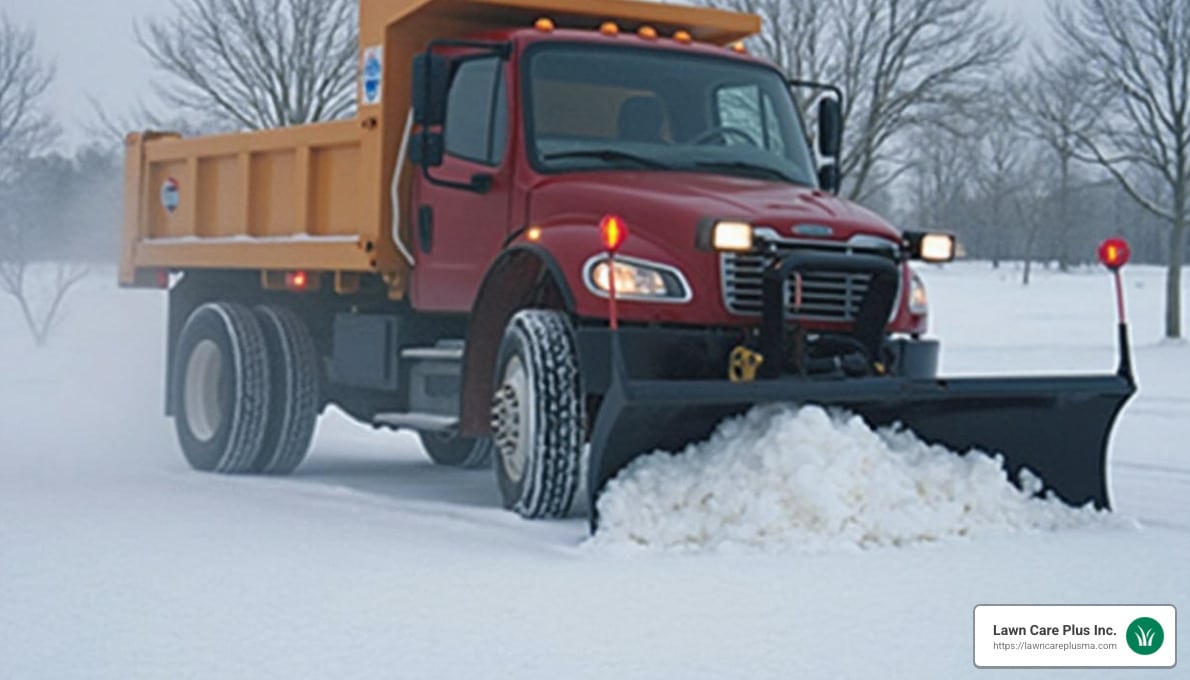
Why Winter Weather Shouldn’t Stop Your Business

A commercial snow removal service is a professional solution that keeps your business parking lots, walkways, and driveways clear and safe during winter weather. These services include snow plowing, de-icing, ice control, and snow relocation to ensure safe access for employees and customers while reducing liability risks and maintaining business operations throughout the season.
What commercial snow removal services typically include:
- Snow plowing and clearing – Parking lots, driveways, loading docks, and access roads
- De-icing and salting – Pre-treatment before storms and post-treatment to prevent ice formation
- Ice management – Application of salt, sand, or environmentally-friendly products to maintain safe surfaces
- Snow relocation – Hauling away excess snow when space becomes limited
- 24/7 monitoring – Around-the-clock service during active snow events
- Documentation – Detailed records of service times and treatments for liability protection
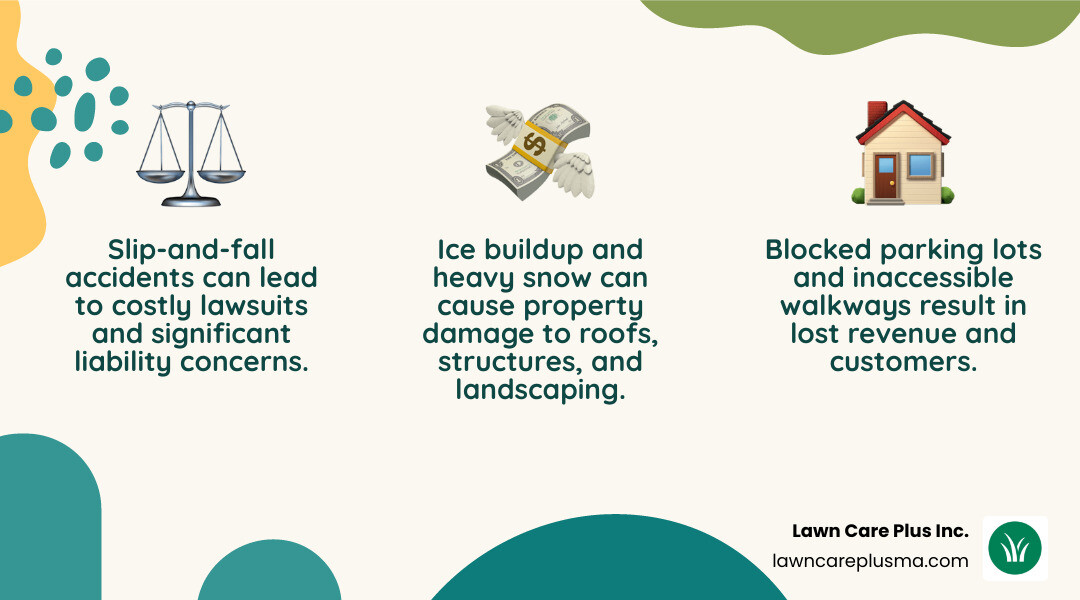
Every winter, businesses across New England face a critical challenge. When snow and ice accumulate on your property, the risks multiply quickly. Slip-and-fall accidents can lead to costly lawsuits. Blocked parking lots mean lost revenue. Inaccessible walkways keep customers and employees away.
The research shows that businesses without proper snow management face significant liability concerns, with slip-and-fall accidents being a common cause of legal action. Industry data indicates that many commercial snow removal companies offer various service packages, from per-event pricing to seasonal contracts, with costs ranging widely based on property size and service needs.
Professional snow removal services solve three critical problems:
- Safety and liability – Clear, treated surfaces reduce injury risks and protect your business from lawsuits
- Business continuity – Ensure employees can arrive on time and customers can access your location
- Property protection – Prevent damage from ice buildup and proper snow management
Unlike residential services that might wait until after a storm, commercial snow removal operates on a proactive schedule. Crews begin working during active snowfall to maintain access. They use specialized equipment designed for large parking lots and high-traffic areas. They provide detailed documentation of every service visit for your records.
The difference between a cleared property and a snow-covered one often determines whether your doors stay open during winter weather.
As Tim DiAngelis, owner of Lawn Care Plus Inc., I’ve spent over a decade managing commercial snow removal service for businesses throughout Greater Boston and Metro-West, ensuring properties remain safe, accessible, and operational through New England’s toughest winter conditions. Our team understands that effective snow management requires the right equipment, trained professionals, and a commitment to 24/7 service when weather strikes.
Essential commercial snow removal service terms:
- how much does commercial snow removal cost
- commercial snow removal contract
- commercial snow removal equipment
The Core Benefits of a Professional Commercial Snow Removal Service
When winter releases its fury, a reliable commercial snow removal service is more than a convenience; it is a strategic investment in your business’s safety, accessibility, and bottom line. As a business owner or property manager, you need operations to run smoothly, no matter what New England weather brings. Professional snow and ice management is designed to make that happen.
Ensuring Safety and Accessibility
The most critical benefit of a professional commercial snow removal service is the safety it provides for everyone on your property. Snow that is not managed quickly can compact and refreeze, creating slick, hazardous surfaces that lead to slip-and-fall accidents and vehicle incidents.
Our teams focus on clearing pathways, sidewalks, entryways, and parking lots so they remain free from dangerous accumulations. This is essential for the safety of employees, customers, delivery drivers, and visitors. For facilities like medical offices or urgent care centers, clear and safe access is a necessity to maintain emergency access and patient appointments.
In areas like Boston, MA, snow removal is not optional. Winters can be severe and unpredictable, so having a dedicated partner to manage snow and ice helps create an environment where people can move confidently and safely around your property.
Maintaining Business Continuity
Winter weather should not dictate whether you can open your doors. Professional snow removal services are structured to minimize disruptions so your business remains accessible and reliable.
When your parking lots, walkways, and delivery areas are clear, customers can reach you, deliveries stay on schedule, and employees can arrive and work safely. Without a plan, heavy snowfall can quickly lead to:
- Customers skipping your location because parking is unsafe or unavailable
- Delayed or missed deliveries and pickups
- Employees arriving late or staying home due to unsafe conditions
All of these issues translate into lost revenue and reduced efficiency. By partnering with a dedicated snow removal provider, you support consistent customer traffic and day-to-day operations, even during storms. Snow and ice management is a key part of overall commercial property maintenance, helping protect the appearance and functionality of your site.
Mitigating Costly Liability Risks
Another major reason to invest in a professional commercial snow removal service is to reduce your exposure to liability. As a property owner or manager, you have a legal obligation to provide reasonably safe conditions. Failing to address snow and ice can lead to premises liability claims, often stemming from slip-and-fall incidents in parking lots or on walkways.
These claims may result in lawsuits, higher insurance premiums, and reputational damage. Reputable snow removal companies understand these risks and carry substantial insurance coverage, such as high-limit Commercial General Liability (CGL) policies, to help protect themselves and their clients.
In Massachusetts, property owners have a duty of reasonable care when it comes to managing snow and ice. Professional providers help you meet this obligation by:
- Responding promptly to winter weather events
- Applying appropriate de-icing products
- Keeping detailed records of service visits and conditions
This combination of diligent service and thorough documentation supports compliance with the Massachusetts snow removal law and offers peace of mind that you are actively working to prevent accidents and reduce liability exposure.
What’s Included in Commercial Snow and Ice Management?
A comprehensive commercial snow removal service is much more than a quick plow after a storm. It combines proactive planning with responsive service to keep your property safe and functional all winter long. Providers typically tailor their offerings to the unique requirements of commercial sites and can offer 24/7 monitoring during active weather.
Snow Plowing and Clearing
Snow plowing is the foundation of any commercial snow removal operation. Professional teams rely on specialized equipment to clear large areas efficiently and keep essential access points open.

- Parking Lot Plowing: Large parking areas require powerful equipment and a planned approach to ensure all lanes and sections are cleared. Drivers are trained to work systematically, maximizing parking availability and maintaining safe traffic flow. For more details on this service, see our parking lot plowing guide.
- Driveway and Access Road Clearing: Main entrances, internal roads, and delivery access routes are prioritized to keep vehicles moving. Clear access roads are essential for customers, staff, and suppliers.
- Sidewalk and Walkway Clearing: Pedestrian safety is critical. Crews use smaller machines and shovels to clear sidewalks, building entrances, and emergency exits so people can walk safely on your property.
- Loading Dock Access: Shipping and receiving areas must stay open for deliveries and pickups. Dedicated clearing around loading docks helps prevent costly delays and keeps supply chains running.
Plowing operations are planned in advance and adjusted during storms, often following best practices like those described in our ultimate snow plow service guide.
De-Icing and Ice Control
Plowing removes most of the snow, but ice control is what makes surfaces truly safe. Ice can refreeze overnight or form from meltwater, and black ice can be especially hazardous because it is difficult to see.
- Pre-treatment: Before a storm, anti-icing products can be applied to pavement and walkways. These treatments help prevent snow and ice from bonding to surfaces, making plowing more effective and reducing the chance of ice formation.
- Post-treatment: After plowing, de-icing materials such as rock salt or liquid de-icers are applied to melt remaining snow and ice and help prevent refreezing.
- Black Ice Prevention: Areas that tend to refreeze, such as shaded spots or places with poor drainage, are closely monitored. Extra treatments help manage these trouble zones and reduce hidden slip hazards.
Our approach to commercial ice management focuses on addressing ice before it becomes a problem. When it comes to de-icing products, we also consider the environment, using concepts similar to “Smart About Salt” certification where appropriate. For more information about de-icing options, review our guide on salting near me.
Advanced Services and Considerations
Beyond standard plowing and de-icing, a professional commercial snow removal service can provide specialized solutions for more complex properties and conditions:
- Snow Relocation (Hauling): In dense, urban areas like Boston, on-site snow storage can quickly become a challenge. When piles grow too large or begin to interfere with visibility and parking, snow hauling services move excess snow off-site to approved locations.
- Snow Stacking: Where space allows, snow is stacked carefully in designated areas that do not block traffic patterns, signage, or drainage systems.
- Rooftop Snow Removal: Heavy snow on commercial roofs can create structural and safety concerns, contributing to leaks, ice dams, or potential damage. Trained crews can remove snow from rooftops following strict safety protocols. For best practices, consult our resource on commercial roof snow removal best practices.
- Environmentally-Friendly Products: Many commercial clients are interested in eco-conscious options. When appropriate, providers can use de-icing products that are less harsh on pavement, vehicles, and landscaping, and that align with sustainable snow management principles.
By combining these services, comprehensive commercial snow removal services help ensure that your property stays accessible, presentable, and as safe as possible throughout the winter season.
Choosing the Right Snow Removal Partner for Your Business
Selecting a qualified commercial snow removal service provider is one of the most important winter decisions you will make for your business. You are not just hiring a plow; you are choosing a partner that must understand the demands of commercial properties in Massachusetts and respond reliably when storms hit.
Experience, Reliability, and Reputation
Experience plays a major role in effective snow management. A company with a long track record demonstrates that it can handle different types of storms, coordinate crews, and deliver consistent service.
- Years in Business: Look for providers that have been operating for several seasons or more. Multi-year experience in your region is a positive sign.
- Client Retention Rates: High renewal rates indicate that existing clients are satisfied with responsiveness and results.
- Local Expertise: A local company understands regional weather patterns and municipal rules in communities such as Snow Management Newton MA and Snow Management Brookline MA. This knowledge helps them plan routes and meet local expectations.
- References and Reviews: Ask for references from current commercial clients and read online reviews. When speaking with references, you might ask:
- How quickly does the company respond to storms?
- Do they communicate proactively before and during weather events?
- Are services completed as outlined in the contract?
- How have they handled heavier-than-expected snow or ice?
- Would you choose to work with them again?
For more guidance on evaluating providers, you can review our resource on snow removal companies.
Equipment, Technology, and Manpower
The capacity of a commercial snow removal service is defined by its equipment, technology, and staff.
- Fleet Size and Modern Equipment: A strong fleet that may include plow trucks, loaders, skid steers, and salt spreaders helps ensure that properties of different sizes can be serviced efficiently. Well-maintained, modern equipment is less likely to fail during critical weather events.
- GPS Tracking: Many professional providers use GPS tracking on their vehicles. This allows for real-time monitoring of crew locations, more efficient routing, and accurate verification of service times for clients.
- Trained Operators: Trained and experienced operators know how to clear snow efficiently while protecting curbs, landscaping, and structures. Certifications and ongoing training reflect a commitment to best practices.
- In-house Mechanics: Having dedicated mechanics or maintenance staff helps keep equipment ready and reduces downtime if repairs are needed during a storm.
Insurance, Contracts, and Communication
These elements define how a commercial snow removal service manages risk, sets expectations, and interacts with your business.
- Proof of Insurance: Confirm that your provider carries adequate Commercial General Liability (CGL) insurance and any other coverage appropriate for snow operations. Higher coverage limits can offer additional reassurance.
- Comprehensive Contracts: A clear commercial snow removal contract should outline service triggers (for example, plowing at 1 or 2 inches), the exact areas to be serviced, pricing structure, response times, and the term of the agreement.
- 24/7 Communication Plan: Winter weather is unpredictable, so your provider should have a way to reach you at any time and keep you updated. This may include direct contacts, email alerts, or online portals for service updates.
- Detailed Record-Keeping: Professional companies maintain thorough logs of each service event, including dates, times, conditions, and materials applied. This documentation supports transparency and can be helpful in the event of a claim or dispute.
Understanding the Key Differences: Commercial vs. Residential Service
Both residential and commercial properties need snow cleared, but the expectations and scale for a commercial snow removal service are very different. Recognizing these differences helps businesses choose a provider that can meet their specific needs.
Why a Commercial Snow Removal Service is Different
Clearing a single driveway is not the same as managing a shopping center, office complex, or medical facility during a storm. Commercial sites face higher traffic volumes, tighter timelines, and greater liability.
- Larger Equipment: Commercial work often requires heavy-duty plow trucks, front-end loaders, and skid steers with specialized attachments to handle large lots and long access roads efficiently.
- Zero-Tolerance Policies: Many commercial contracts focus on keeping pavement as clear as reasonably possible throughout a storm, sometimes with low accumulation thresholds. The goal is to maintain safe conditions while the business is operating.
- Higher Liability: With more vehicles and foot traffic, the potential for accidents is greater on commercial properties. This drives the need for a more structured and documented snow and ice management plan.
- 24/7 Operations: Many businesses operate outside standard hours or need lots and walkways clear before opening. Commercial snow removal often begins during active snowfall and continues until conditions improve, with crews available overnight or early in the morning.
- Detailed Documentation: Providers typically keep detailed logs of weather conditions, service times, and materials used. This level of documentation is an important part of risk management for commercial clients.
For more on operational expectations, see our overview of commercial plowing service.
What to Expect from a Commercial Snow Removal Service
When you engage a professional commercial snow removal service, you should expect a planned, property-specific approach rather than a one-size-fits-all solution.
- Site-Specific Plans: Before winter, providers typically perform a detailed walk-through to map parking areas, walkways, emergency exits, loading docks, and high-priority zones. This helps ensure nothing important is overlooked during a storm.
- Pre-Season Site Mapping: Obstructions such as curbs, speed bumps, fire hydrants, and storm drains are noted before they are buried in snow. Clearly marking these features helps prevent property damage and equipment issues.
- Dedicated Equipment: Larger properties may receive dedicated trucks or machines assigned to their site during storms, leading to faster response and better familiarity with the layout.
- Priority Service Levels: Commercial clients often receive priority in route planning, so their properties are serviced early and checked periodically during extended storms.
- Post-Storm Reporting: After events, you can expect a summary of services provided, which may include time logs and notes about conditions. These reports support transparency and internal record-keeping.
For a broader explanation of these expectations, visit our commercial snow removal complete guide.
| Feature | Commercial Snow Removal | Residential Snow Removal |
|---|---|---|
| Equipment Used | Heavy-duty trucks, loaders, skid steers, large salt spreaders | Pick-up trucks with smaller plows, snow blowers, shovels |
| Property Type | Shopping centers, office parks, hospitals, industrial sites | Single-family homes, duplexes |
| Service Triggers | Often 1″ or 2″ snowfall; Proactive, 24/7 response | Often 2″ to 4″ snowfall; Reactive, after storm ends |
| Contract Type | Seasonal, per-event, per-push, all-inclusive, hourly | Per-event, seasonal (less common for hourly) |
| Liability/Insurance | High liability, significant insurance coverage required | Lower liability, basic insurance typically sufficient |
| Service Scope | Parking lots, multiple entrances, loading docks, vast sidewalks | Driveways, front walkways |
Budgeting for Your Snow Management Needs
Understanding the financial side of a commercial snow removal service helps you plan ahead and avoid surprises. While we cannot provide specific quotes here, we can outline common pricing models and the main factors that affect cost.
Please note: any pricing ranges mentioned below are average costs based on internet data and are not actual prices for Lawn Care Plus Inc. For an accurate quote, contact us directly with details about your property.
Common Pricing Models
Commercial snow removal companies use several contract types so businesses can choose the structure that best matches their risk tolerance and budget.
- Per-Event Pricing: You pay each time snow removal services are performed. This can work well in areas with less frequent or unpredictable snowfall. Based on internet data, the average cost for commercial snow removal per event can range widely, often from about $150 to $1,500+ depending on property size, snowfall depth, and services included.
- Seasonal Contracts: Common in regions like Massachusetts with regular winter weather, seasonal contracts charge a flat fee for the entire winter, regardless of how many storms occur. This improves budgeting and helps avoid large spikes in costs. Internet sources suggest that seasonal commercial snow removal services can range roughly from $3,000 to $30,000+ per season, influenced heavily by property size, complexity, and service level.
- Per-Push Rates: Under this structure, you are billed each time the plow clears your lot once accumulation reaches an agreed threshold (for example, every time 2 inches of snow falls). This offers a balance between per-event and hourly pricing.
- Hourly Rates: Some tasks, such as snow hauling or work with specialized equipment, may be billed by the hour. Rates vary depending on the type and number of machines and crew required.
- All-Inclusive Contracts: These comprehensive seasonal agreements may bundle plowing, de-icing, sidewalk clearing, and sometimes snow relocation into a single set seasonal price. This model offers maximum predictability and is popular for high-priority, higher-traffic properties.
To explore these structures in more detail, see our guide on how much does commercial snow removal cost.
Factors That Influence the Cost of a Commercial Snow Removal Service
Several variables influence the cost of a commercial snow management plan. Understanding them will help you make better comparisons between proposals.
- Property Size and Layout Complexity: Larger lots and multi-building campuses require more time, equipment, and personnel. Narrow drive lanes, multiple entrances, and many sidewalks or stairs add to complexity.
- Snowfall Triggers: Contracts specify the depth at which service begins (for example, 1-inch, 2-inch, or 3-inch triggers). Lower triggers and more frequent service requests generally increase overall cost.
- Scope of Services: Contracts that include only plowing will typically be less expensive than agreements that also include sidewalk shoveling, de-icing, snow hauling, or rooftop snow removal.
- Service Level Expectations: Properties that must be clear before opening hours, or that require continuous monitoring and rapid response during storms, will pay more for the higher level of readiness.
- Geographic Location: Local snowfall patterns, labor rates, fuel costs, and accessibility all affect pricing. A property in a snow-heavy area such as Boston, MA will typically have different cost expectations than a property in a milder climate.
By aligning your needs and expectations with these factors, you can work with a provider to design a commercial snow removal service plan that offers reliable protection and good value for your business.
Conclusion: Secure Your Business This Winter
Winter in Massachusetts brings its own unique charm, but for businesses, it also presents a formidable challenge. From the first snowflake to the last icy patch, maintaining a safe, accessible, and operational commercial property is paramount. A professional commercial snow removal service isn’t just about clearing snow; it’s about safeguarding your business, protecting your assets, and ensuring uninterrupted service for your employees and customers.
By proactively planning and partnering with experienced snow management experts, you can eliminate the stress and risks associated with winter weather. We’ve explored the myriad benefits, from enhancing safety and ensuring business continuity to mitigating costly liability risks. We’ve also digd into the comprehensive range of services offered, the critical factors in choosing the right provider, and the distinct advantages of commercial-grade solutions.
For businesses in the Boston Metro-West area, a comprehensive provider like Lawn Care Plus Inc. offers integrated Commercial Lawn Care and Snow Removal services, ensuring your property is expertly maintained year-round. Our dedication, state-of-the-art equipment, and commitment to client satisfaction mean you can trust us to handle winter’s worst, so you can focus on what you do best: running your business.
Don’t let winter weather catch you off guard. Ensure your property is safe and operational all season long by securing your Snow Management plan today. Reach out to us for a personalized consultation and let us help you prepare for a worry-free winter.