
Why Retaining Wall Steps Are Essential for Sloped Properties
Retaining wall steps transform steep slopes into functional outdoor spaces, prevent soil erosion, and improve curb appeal. For hillside yards in the Boston Metro-West area, integrated steps provide safe access between elevations, manage water runoff, and stabilize the terrain.
Here’s what you need to know about building retaining wall steps:
- Purpose: Control erosion, create usable terraces, and provide safe access on sloped terrain
- Key Dimensions: 6-7 inch riser height, 12-inch minimum tread depth for comfort and safety
- Materials: Segmental concrete blocks, natural stone, timber, or poured concrete
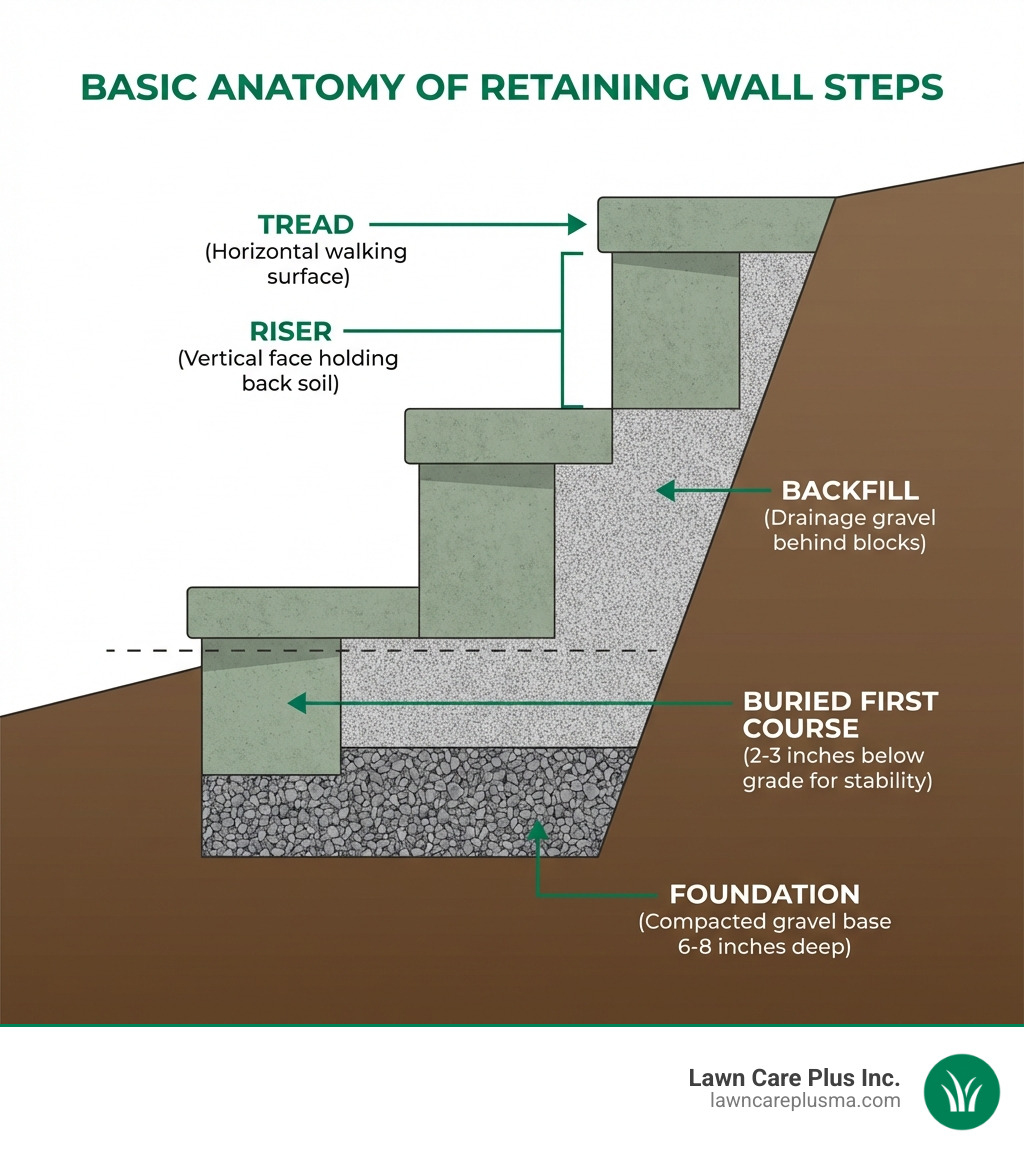
- Foundation: 6-8 inch deep trench with compacted gravel base and buried first course
- Drainage: Critical for preventing failure—use gravel backfill and perforated drain pipe
- Permits: Required in Massachusetts for walls over 4 feet high; architect oversight needed
Whether you’re creating garden access or designing tiered landscaping, well-constructed retaining wall steps blend structural integrity with visual appeal, turning challenging slopes into opportunities for outdoor living.
As Tim DiAngelis, owner of Lawn Care Plus, Inc., I’ve spent over a decade designing and installing retaining wall steps in Greater Boston, turning steep yards into beautiful, functional outdoor spaces. Our team creates custom hardscape solutions that withstand New England’s climate while enhancing your property’s value and accessibility.
Explore more about retaining wall steps:
1. Planning and Designing Your Retaining Wall Steps
Proper planning and design are crucial for building beautiful, functional, and safe retaining wall steps that last. For properties across Belmont, Newton, Canton, and the wider Boston Metro-West area, addressing the unique challenges of sloped terrain is key.
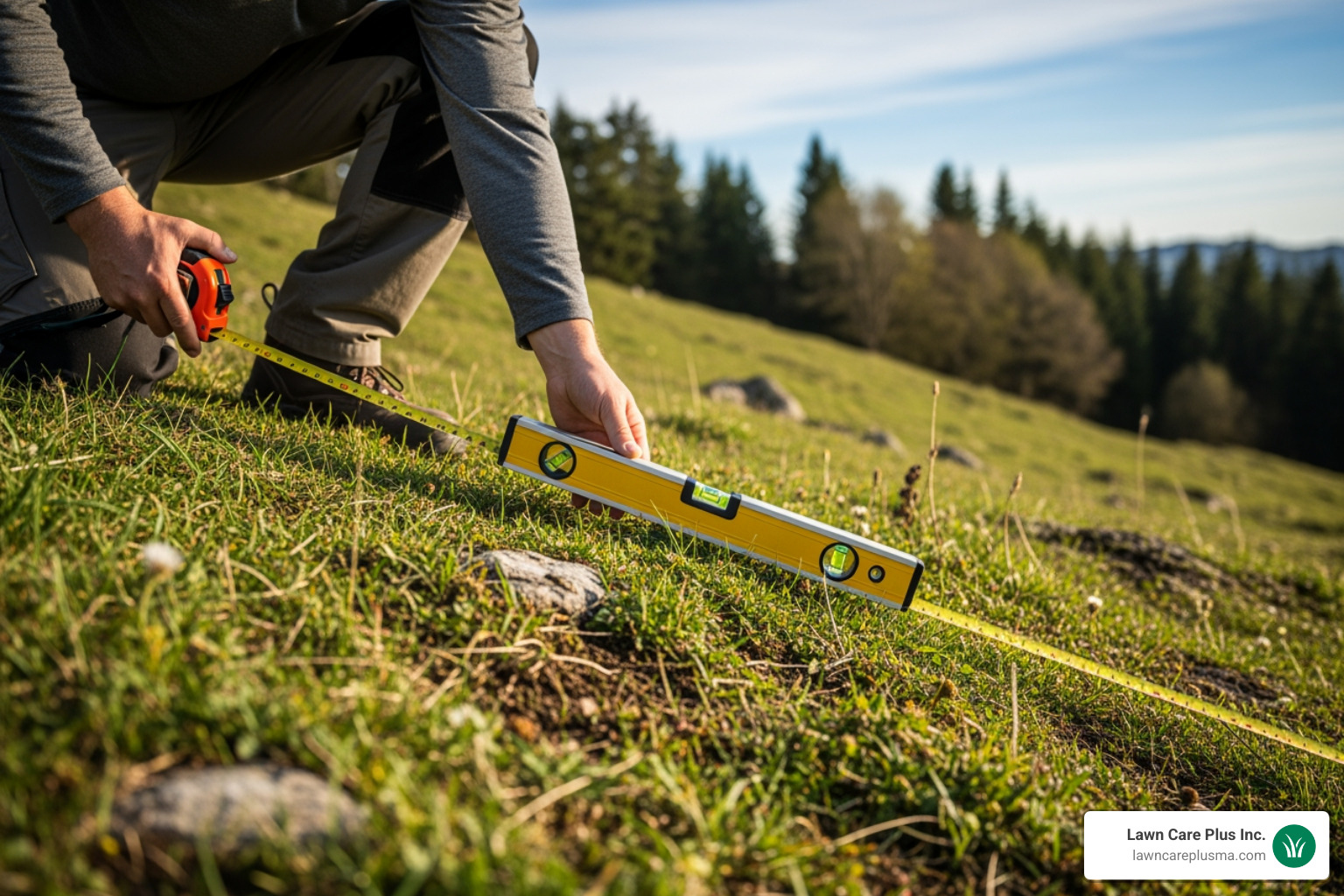
A thorough site assessment is our first step. We analyze the slope, check for drainage issues, and map out the best path for the stairs to ensure they integrate seamlessly into your landscape. For more comprehensive guidance on managing sloped terrain, explore our article on how to Build a Retaining Wall on a Slope.
Understanding Key Design Dimensions
The comfort and safety of your retaining wall steps depend on getting the dimensions right. We focus on two primary measurements:
- Riser Height (Rise): This is the vertical height of each step. For comfortable outdoor steps, we aim for a rise between 6 and 7 inches. The first riser should not exceed 8 inches after final grading.
- Tread Depth (Run): This is the horizontal depth of the step. A minimum of 12 inches is standard for safety and comfort, meeting most residential building codes.
- Step Width: The width should be proportionate to the landscape and allow for comfortable passage. A wider step can feel more grand and accessible.
Consistency in these dimensions is paramount, as uneven steps are a tripping hazard and detract from the aesthetic appeal.
Calculating the Number of Steps
Calculating the number of steps is simple once you know the slope’s total vertical rise.
- Measure the Total Rise: Find the total elevation change from the bottom to the top of the planned steps. Let’s say the total rise is 48 inches.
- Choose an Ideal Riser Height: Aim for a comfortable height, such as 7.5 inches.
- Calculate Number of Risers: Divide the total rise by your ideal riser height.
48 inches (Total Rise) ÷ 7.5 inches (Ideal Riser Height) = 6.4 risers - Adjust to a Whole Number: Round to the nearest whole number, which is 6 risers.
- Recalculate Actual Riser Height: Divide the total rise by the adjusted number of risers to find the precise height for each step.
48 inches ÷ 6 risers = 8 inches per riser
This calculation ensures all steps are uniform, which is essential for safety and visual harmony.
Layout and Style Considerations
The layout and style of your steps should complement your landscape’s aesthetic, including natural contours and existing hardscapes.
- Straight Stairs: Offer a crisp, formal look suitable for modern or structured garden designs.
- Curved Stairs: Create a softer, more natural flow that blends with informal landscapes but are more complex to build.
- Flared Steps: Widen as they descend for a grand, welcoming entrance.
- Integrating Landings: Break up long stairways, provide resting spots, and act as transition points in the landscape.
We also explore creative concepts, such as mixing materials or integrating planters and lighting. For more inspiration, check out our Retaining Wall Ideas.
2. Choosing the Best Materials for Durability and Style
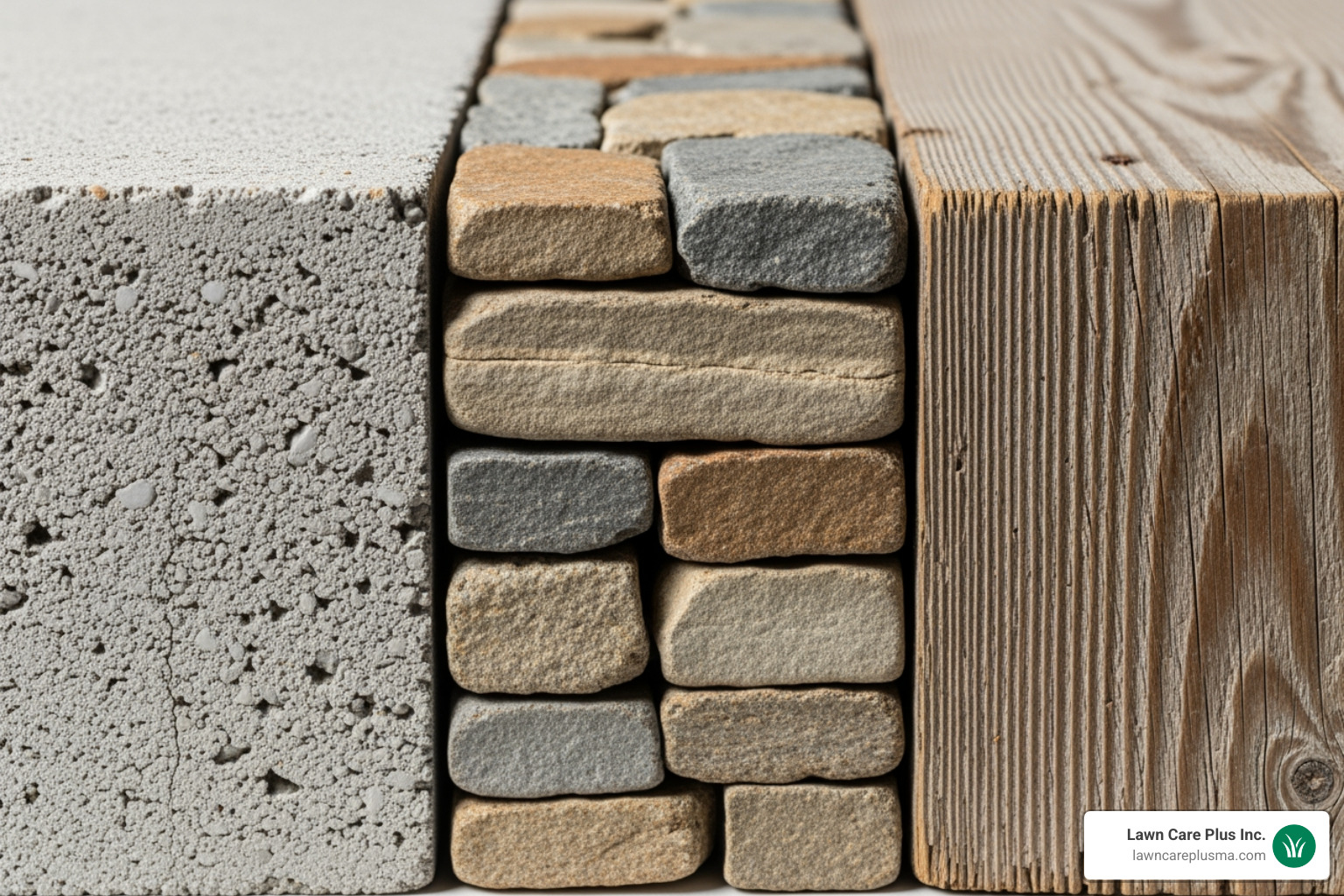
Choosing the right material for your retaining wall steps is critical for aesthetics, longevity, and cost. In the Boston Metro-West area, materials must withstand our freeze-thaw cycles while complementing your home and landscape.
Segmental Concrete Blocks
Segmental retaining wall (SRW) blocks are a popular choice for retaining wall steps due to their versatility and durability.
- Interlocking Systems: Many SRW blocks feature interlocking systems that provide a secure connection between units and simplify installation, contributing to the structure’s stability.
- Variety: These blocks come in a wide array of colors, textures, and sizes, allowing for looks ranging from rustic stone to modern concrete.
- DIY-Friendly (with caution): While more accessible for DIY projects, proper installation still requires precision.
- Cost-Effective: Generally, SRW blocks are a more budget-friendly option than natural stone.
- Climate Suitability: High-quality concrete blocks are engineered to resist the freeze-thaw cycles common in Massachusetts.
We use various Blocks for Retaining Wall and can help you choose the right Concrete Block Retaining Wall for your project.
Natural Stone
Natural stone offers unparalleled timeless beauty and an organic feel to retaining wall steps.
- Types: Options range from large boulders for a rugged look to cut flagstone or bluestone for a more refined stairway.
- Timeless Look: Each piece is unique, creating a distinctive aesthetic that improves property value.
- High Durability: Stone is incredibly robust and can last for centuries if properly installed, handling the New England climate exceptionally well.
- Higher Cost: Natural stone is typically a higher investment due to sourcing, transportation, and specialized labor.
- Professional Installation: Working with natural stone requires skilled masons to ensure proper fit and stability.
Natural stone steps are often part of the Best Retaining Walls we build.
Wood and Timber
Wood and timber can offer a rustic aesthetic for retaining wall steps.
- Rustic Aesthetic: They blend well with natural, informal landscapes.
- Cost-Effective: Timber is often a more affordable material upfront.
- Shorter Lifespan: Compared to stone or concrete, wood is susceptible to rot, decay, and insect damage, especially in our humid climate. Its lifespan is significantly shorter.
- Treatment Required: Timbers must be properly treated, but even treated wood will eventually deteriorate. We generally advise against wood for structural steps due to its limitations.
Poured Concrete
Poured concrete is a sleek, modern, and highly durable option for retaining wall steps.
- Modern Look: It provides a clean, contemporary aesthetic and can be customized in finish and color.
- Highly Durable: Reinforced concrete is incredibly strong and long-lasting, withstanding heavy loads and harsh weather.
- Customizable Shapes: Poured concrete allows for unique, custom shapes and curves.
- Requires Formwork: The process involves building forms, which adds to the complexity and labor.
- Professional Expertise: Poured concrete projects require professional expertise to ensure structural integrity and a high-quality result.
3. How to Build Retaining Wall Steps: A Step-by-Step Guide
Building retaining wall steps is a meticulous process requiring careful planning and precise execution to ensure longevity and safety. We treat each installation in areas like Wellesley or Hyde Park with the same care used in all our retaining wall design and construction projects.
Before starting, gather your tools and safety gear: shovels, a level, a rubber mallet, a plate compactor, a measuring tape, string line, concrete adhesive, and safety glasses and gloves. For a complete overview, refer to our Building Retaining Walls Complete Guide.
Step 1: Excavation and Base Preparation
A solid foundation is the most critical step for the stability of your retaining wall steps.
- Marking the Layout: Clearly mark the steps’ layout with spray paint or a string line, following the design plan.
- Digging the Trench: Excavate a trench for the base course that is wider than your blocks and 6-8 inches deeper than the bottom of the first block to allow for base material.
- Compacted Subgrade: Thoroughly compact the subgrade (the soil at the bottom of the trench) with a plate compactor to create a stable, unyielding surface.
- Integrating Geotextile Fabric: Lay down heavy-duty geotextile fabric for added stability and to prevent the base material from mixing with the soil.
A robust Retaining Wall Foundation is non-negotiable for lasting results.
Step 2: Installing the Gravel and Sand Foundation
With the subgrade prepared, build the foundation for your steps.
- 6-inch Gravel Base: Fill the trench with at least 6 inches of clean, crushed stone or gravel.
- Compaction in Layers: Add and compact the gravel in 2-4 inch lifts using a plate compactor to prevent settlement.
- 1-inch Sand Layer: On top of the compacted gravel, add a 1-1.5 inch layer of bedding sand to help with leveling.
- Leveling with a Screed: Carefully level the sand layer to create a perfectly flat surface for the first course of blocks.
Step 3: Laying the First Course and Building Risers
This is where your retaining wall steps start to take shape.
- Burying the First Block: Place the first course of blocks on the sand base, ensuring at least 2-3 inches of the block is buried to prevent shifting.
- Leveling Blocks: Level each block side-to-side and front-to-back with a torpedo level and rubber mallet.
- Staggering Joints: As you lay subsequent courses, stagger the vertical joints for structural integrity.
- Backfilling with Gravel: Behind each course and within any hollow cores, backfill with crushed gravel and compact it. This aids drainage and adds stability.
This process is repeated for each riser, carefully building stairs into your retaining wall one course at a time.
Step 4: Adding Treads and Finishing
The treads are the walking surface of your steps.
- Placing Capstones: Use capstones as treads, placing them on top of the riser blocks. Ensure they overhang the step units by about 1.5 inches.
- Securing with Adhesive: Secure the capstones with high-strength concrete adhesive applied to clean, dry surfaces.
- Curing Time: Allow the adhesive to cure before applying significant weight.
- Final Backfilling and Grading: Backfill the areas around the steps with soil and grade it to ensure proper water runoff. Proper Retaining Wall Drainage is essential to prevent water from undermining the structure.
4. Ensuring Stability and Aesthetic Appeal
Well-built retaining wall steps are defined by their long-term stability and seamless integration with your landscape. Our goal at Lawn Care Plus Inc. is to create safe, visually stunning structures that improve properties from Dedham to Watertown.
Longevity and aesthetic integration are the result of careful planning and adherence to best practices. We prioritize structural integrity and visual harmony to ensure your investment becomes a beloved feature of your outdoor space. Find more about how we integrate hardscaping with nature in Retaining Walls and Landscaping.
Common Mistakes to Avoid When Building Retaining Wall Steps
Avoiding common pitfalls is key to ensuring your retaining wall steps remain robust and attractive.
- Improper Foundation: The #1 cause of failure. Failing to excavate deeply enough, use proper base material, or compact thoroughly leads to settlement and collapse. The first course of blocks must be partially buried.
- Poor Drainage: Without proper drainage like gravel backfill and drain pipes, water pressure (hydrostatic pressure) builds up, causing shifting and frost heave damage in Massachusetts winters.
- Inconsistent Rise and Run: Uneven steps are a serious tripping hazard. Maintaining consistent dimensions is crucial for safety.
- Forgetting Backfill and Compaction: The space behind and within blocks must be filled with gravel and compacted in lifts to ensure stability and drainage.
- Skipping Adhesion: Using high-strength concrete adhesive for capstones is essential to prevent movement.
- Ignoring Local Codes: Failing to check local building codes can lead to costly rework. This is especially important in Massachusetts for walls over 4 feet.
If you notice signs of damage in existing structures, consider Retaining Wall Repair Near Me before issues worsen.
Integrating Steps with Your Landscape
Steps should be an integral part of your landscape design, blending seamlessly to improve your property’s natural beauty.
- Planting in Tiers: Use the retaining wall to create tiered garden beds alongside the steps. Soften hard lines with low-growing ground covers.
- Low-Voltage Lighting: Integrate recessed lighting into the risers or sidewalls to improve safety and create a warm ambiance.
- Matching Materials: Coordinate the step materials with other hardscape elements like patios and walkways for a cohesive look. For more inspiration, explore our Retaining Wall Design Ideas for Every Style of Home.
- Creating Flow: Design the steps to follow the natural contours of your landscape, using curves and landings to create a gentle flow.
- Handrails: For safety, consider adding handrails if the total rise exceeds 30 inches. Handrails must meet specific building code requirements for height (34-38 inches), strength (resist a 200-pound load), and placement.
5. Budgeting, Building Codes, and When to Call a Pro
Understanding the budget and local regulations for building retaining wall steps is as important as the construction itself. For homeowners in Massachusetts, these factors can significantly impact a project’s success.
Estimating the Cost of Your Project
The cost of retaining wall steps varies based on materials, design complexity, and site conditions.
- Material Costs: Natural stone is typically more expensive than segmental concrete blocks.
- Labor Estimates: Professional installation reflects the skill, time, and equipment required.
- Tool Rental: For DIY projects, factor in renting equipment like a plate compactor.
- Permit Fees: Account for potential fees for necessary building permits.
Based on general internet data, costs can range widely from $30 to over $300 per square foot. Please note these are not quotes from Lawn Care Plus, but general industry averages. We recommend a 10-15% contingency budget. For a general guide, see our article on Retaining Wall Cost.
Navigating Building Codes and Permits for Retaining Wall Steps
Navigating local building codes and permit requirements is a critical step. We always advise homeowners to contact their local building department in areas like Needham or Norwood before starting. You can find state-level information from the Massachusetts Board of Building Regulations and Standards.
- Wall Height Limits: In Massachusetts, a permit is often required for retaining walls over 4 feet high. If your steps are part of a taller wall, a permit is almost certain.
- Architect Oversight: State regulations stipulate that a retaining wall design over four feet requires an architect to be on site for oversight.
- Handrail Regulations: If a stairway’s total rise exceeds 30 inches, handrails are typically required, with specific rules for height (34-38 inches), clearance, and load resistance.
- Property Lines: Ensure your project complies with setback requirements from property lines.
Why Hire a Professional?
While some smaller projects may seem DIY-friendly, there are compelling reasons to hire a professional for most retaining wall steps.
- Expertise with Complex Sites: Professionals can handle significant grade changes, unstable soils, and complex drainage.
- Structural Integrity: We understand soil mechanics and proper construction techniques to build a durable structure that withstands New England’s climate.
- Drainage Expertise: Proper drainage design is crucial for preventing failure. Our team has extensive experience with Retaining Wall Drainage systems.
- Time and Efficiency: A professional team completes the project efficiently, saving you time and potential headaches.
- Code Compliance: We are familiar with local building codes, ensuring your project meets all regulatory requirements.
For expert design and installation, trust our experienced team. We’re a leading Retaining Wall Contractor and reliable Retaining Wall Installers in the Boston Metro-West area.
6. Frequently Asked Questions about Retaining Wall Steps
Here are some common questions we hear about retaining wall steps, drawing on our expertise serving communities like Canton, Brighton, and Milton.
What is the most comfortable height for outdoor steps?
A comfortable riser height for outdoor steps is typically between 6 and 7 inches. This range feels natural underfoot and minimizes strain. While some block systems are designed for an 8-inch rise, we generally aim for the lower end of this spectrum for optimal comfort and safety. Consistency is crucial; all steps should have the same riser height and tread depth to prevent tripping.
How deep should the foundation for retaining wall steps be?
The foundation for retaining wall steps needs to be substantial. The trench for the base course should be excavated about 6-8 inches deeper than the bottom of your first block. This depth allows for a minimum 6-inch layer of compacted, drainage-friendly gravel (like ¾-inch crushed stone) beneath your first course of blocks. Additionally, at least 2-3 inches of the bottom of that first block should be buried below grade for improved stability and to prevent forward shifting.
Do I need drainage behind my retaining wall steps?
Absolutely, proper drainage is critical for the longevity and stability of any retaining structure, including retaining wall steps. Without it, hydrostatic pressure can build up from water accumulating behind the steps and wall. This pressure, especially when combined with our Massachusetts freeze-thaw cycles, can lead to shifting, cracking, and eventual failure. We typically install a layer of gravel backfill behind the steps, and often a perforated drain pipe at the lowest point, to effectively channel water away.
7. Transform Your Slope with Expertly Built Retaining Wall Steps
Retaining wall steps are a fantastic investment, turning challenging slopes into accessible, functional, and beautiful spaces. They provide safe passage, prevent erosion, and add significant curb appeal. A successful project depends on careful planning, from design and material selection to meticulous installation and ensuring long-term stability.
At Lawn Care Plus Inc., we are passionate about creating outdoor spaces that are aesthetically pleasing, structurally sound, and suited to the Boston Metro-West climate. Our experienced team ensures your retaining wall steps are built to last, providing safety and beauty for years to come.
For professional design and installation in the Boston Metro-West area, trust our experienced team to build a structure that is both beautiful and built to last. Contact us for your landscape retaining wall project.
