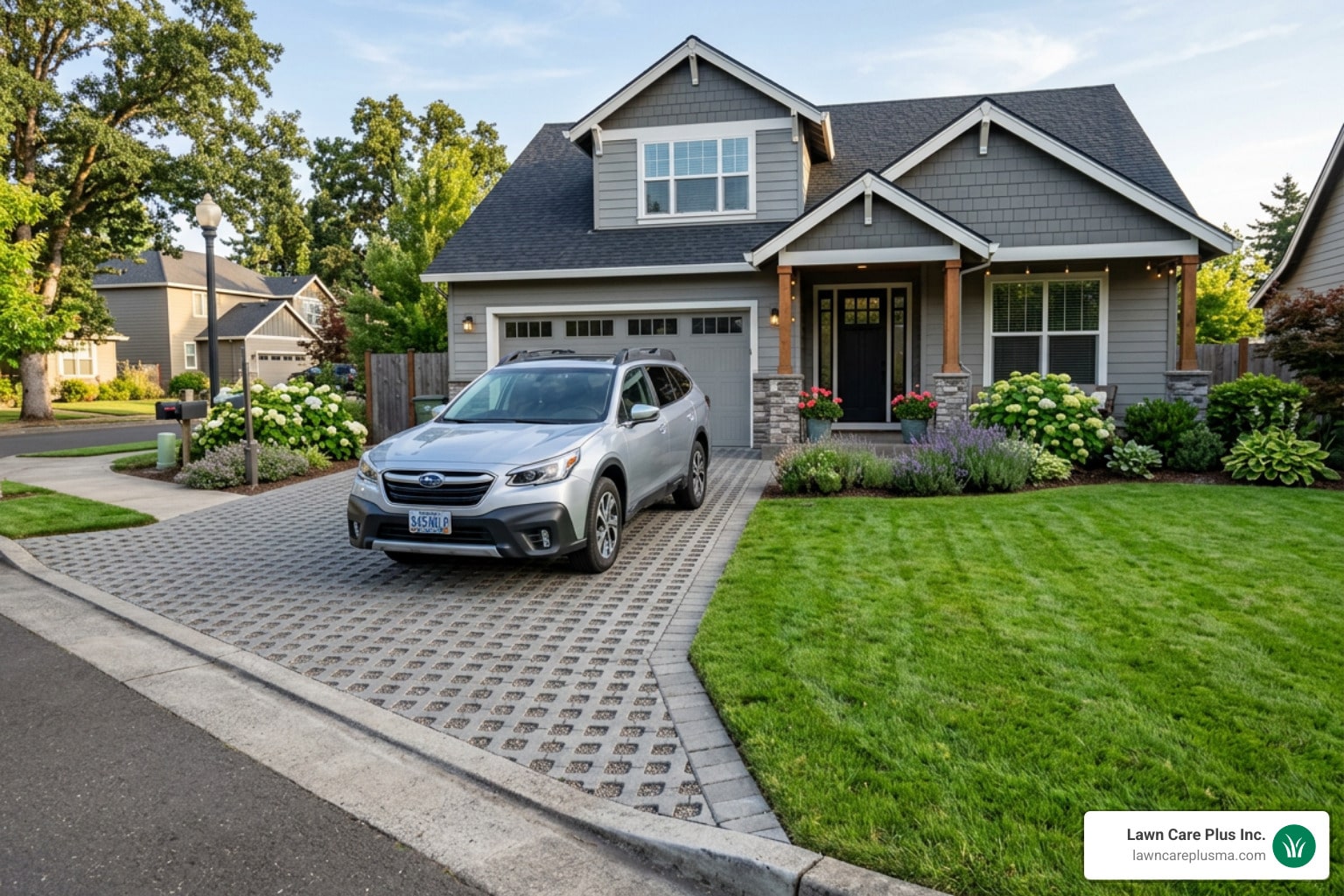
Why Permeable Driveway Solutions Are Worth Considering
Permeable driveway solutions are surfaces that allow rainwater to pass through them and soak into the ground below — instead of running off into storm drains.
Here’s a quick look at the most common options:
| Solution | How It Works | Best For |
|---|---|---|
| Permeable pavers | Wider joints let water drain through | Curb appeal + drainage |
| Gravel grid systems | Plastic grids hold gravel in place | High permeability + durability |
| Grass pavers | Open cells allow turf to grow through | Green, low-visibility driveways |
| Pervious concrete | Porous mix lets water filter through | Traditional look, better drainage |
Traditional asphalt and concrete send nearly all rainwater straight into the storm drain system. That puts stress on local infrastructure — and in many Massachusetts towns, it can trigger stormwater fees or zoning restrictions on how much of your property can be paved over.
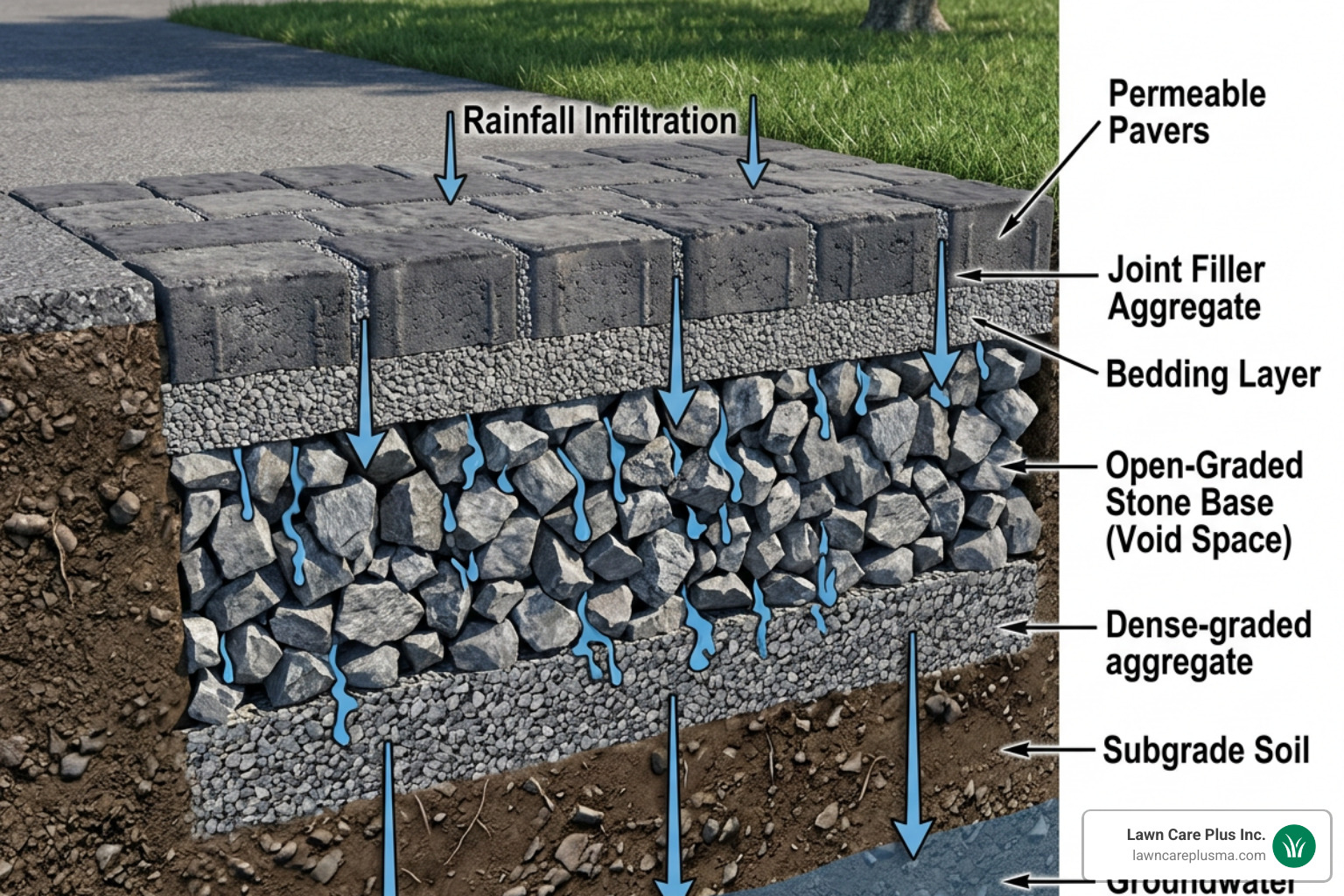
Permeable driveways solve that problem by mimicking the way natural ground absorbs rain. Water filters down through the surface, through layers of aggregate, and eventually recharges the groundwater below.
It’s a smarter approach for your property — and for the environment.
I’m Tim DiAngelis, owner of Lawn Care Plus, Inc., a full-service landscaping and hardscaping company serving Greater Boston and Metro-West, where I’ve helped homeowners and commercial property managers evaluate and install permeable driveway solutions that hold up through New England winters. In this guide, I’ll walk you through everything you need to know to choose the right option for your property.
Permeable driveway solutions word roundup:
Understanding Permeable Driveway Solutions and How They Work
When we talk about Permeable driveway solutions, we are looking at a system rather than just a top layer. Unlike traditional concrete driveway removal and replacement where the goal is to shed water as fast as possible, these systems are designed for infiltration.
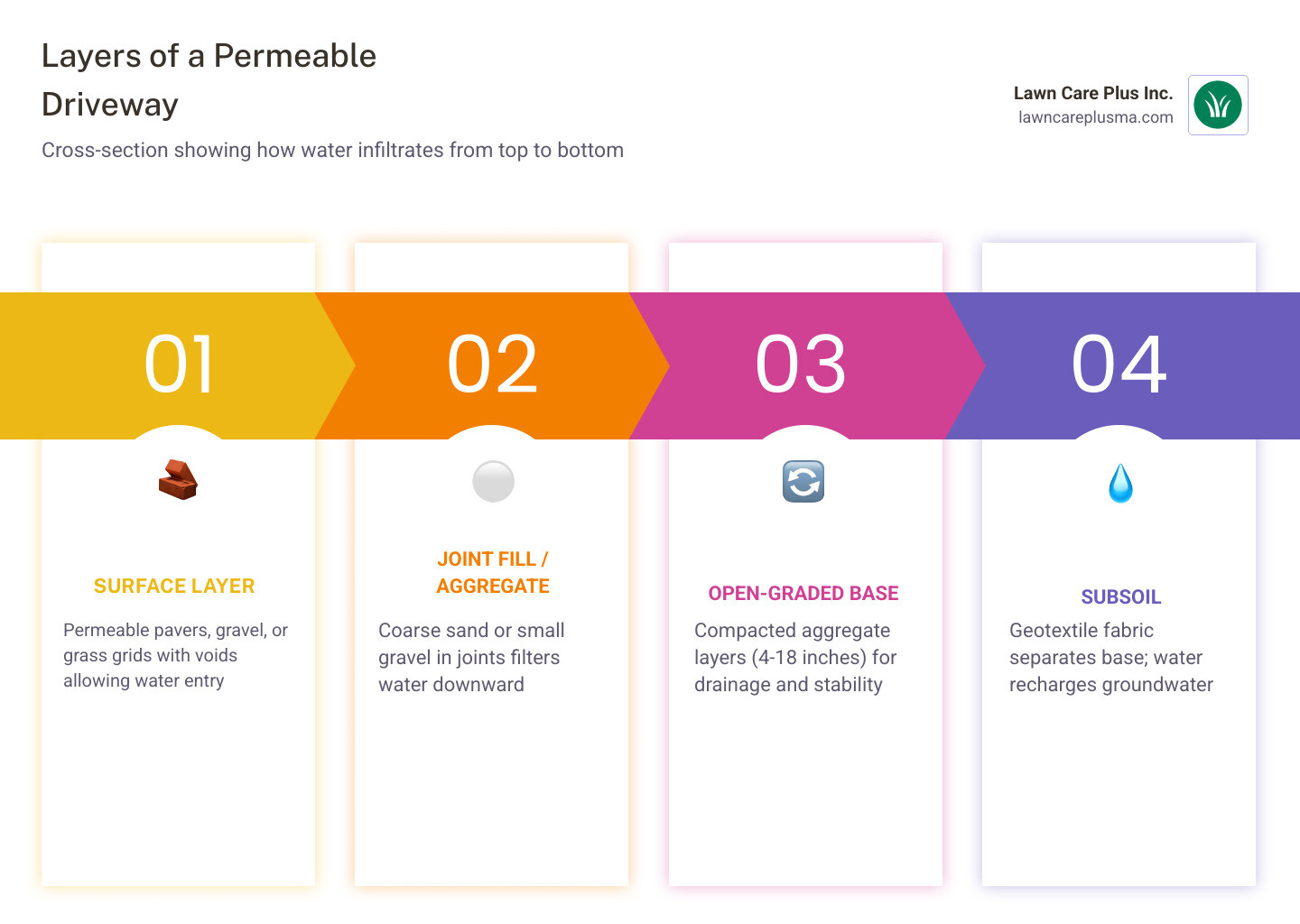
The magic happens beneath the surface. A typical installation involves several layers of open-graded aggregate. “Open-graded” simply means the stones are roughly the same size, leaving plenty of “void space” between them for water to sit and slowly drain. This structure acts as an underground reservoir, significantly providing runoff reduction during heavy Massachusetts rainstorms.
Environmental Benefits of Permeable Driveway Solutions
Choosing a permeable surface isn’t just about avoiding puddles; it’s a major win for sustainability. A 2024 third-party study found that 73 percent of Gen Zs and 77 percent of Millennials actively take steps to reduce their impact on the environment. Installing a permeable driveway is one of the most impactful ways a homeowner can contribute.
One of the coolest features of these systems is bio-remediation. As water trickles through the stone layers, pollutants like oil or gasoline from vehicles are naturally filtered and broken down by microbes in the soil before they reach the water table. Furthermore, these surfaces help mitigate the “heat island effect.” Traditional blacktop absorbs massive amounts of heat, but permeable systems—especially those with grass or light-colored stone—stay much cooler. For our clients managing larger properties, we often discuss these benefits as part of our commercial landscaping services.
Compliance and Local Regulations
In many of the areas we serve, such as Newton, Brookline, and Wellesley, local building departments have strict “impermeable surface limits.” If you pave over too much of your lot with traditional asphalt, you might be in violation of zoning codes.
Using Permeable driveway solutions often allows you to bypass these limits because the town counts them as “pervious cover.” This can be a lifesaver if you are planning a driveway expansion but are already at your limit. Additionally, some municipalities are moving toward stormwater taxes based on the amount of runoff your property generates. By installing a system that recharges groundwater, you may even qualify for LEED credits or tax incentives. Before you start, it’s always wise to ask, “do I need a permit to replace an existing driveway?“
Types of Materials for Your Permeable Driveway
Selecting the right material depends on your aesthetic goals and how you plan to use the space. Whether you need to support a heavy SUV or want a driveway that looks like a lush lawn, there is a solution available.
| Feature | Permeable Pavers | Gravel Grids | Grass Pavers |
|---|---|---|---|
| Durability | High | Very High | Moderate |
| Aesthetics | Classic/Elegant | Natural/Rustic | Green/Lush |
| Maintenance | Low | Low (Occasional raking) | High (Mowing/Watering) |
| Permeability | 10-20% | Up to 98% | Up to 92% |
Permeable Pavers for Driveways
These are often called Permeable Interlocking Concrete Pavements (PICP). They look like high-end traditional pavers, but they feature specially designed spacer bars that create wider joints. Instead of being filled with sand, these joints are filled with small, clear crushed stone that allows water to disappear instantly.
If you are curious about the driveway pavers cost, they are generally a premium option, but the longevity and “curb appeal” are unmatched. Brands like Belgard offer a variety of styles that fit perfectly with the historic architecture found in places like Dedham and Milton.
Gravel Grid Systems
If you love the look of a gravel driveway but hate the ruts and the way stones end up in your garage, gravel grids are the answer. These are heavy-duty plastic grids that lock together. You lay them down and fill them with stone.
The grid keeps the gravel “stabilized,” meaning it won’t shift under the weight of a car. These systems are incredibly efficient, often boasting a 98% permeability rate. They are a fantastic, cost-effective way to get a durable surface that handles heavy rain without the messy erosion typical of loose stone.
Grass Pavers and Turf Grids
For those who want to maximize green space, grass pavers (or turf grids) allow you to drive on your lawn without killing it. These grids protect the roots of the grass from being crushed by tires.
Products like Drivable Grass® are designed to maintain their load-supporting characteristics even when the ground is completely saturated. This is a popular choice for “invisible driveways” or overflow parking areas in residential neighborhoods like Jamaica Plain. Some systems offer up to 92 percent void space, meaning your driveway looks like a healthy yard while providing a solid foundation for your vehicle.
Installation and Maintenance of Permeable Driveway Solutions
Installing a permeable system is a specialized job. It starts with deep excavation—much deeper than a standard driveway—to make room for the reservoir of stone. We then lay down a geotextile fabric to keep the native soil from mixing with our clean stone base.
Compaction is key. Each layer of stone must be packed down firmly to ensure the driveway doesn’t settle over time. If you’re looking for driveway replacement contractors, make sure they have experience with “open-graded” bases, as the technique is quite different from traditional paving.
Managing Freeze-Thaw Cycles in Cold Climates
A common concern in Massachusetts is how these systems handle our brutal winters. Actually, Permeable driveway solutions often perform better than asphalt in the cold. Because water drains through the surface instead of sitting on top, there is significantly less ice buildup.
However, you have to be careful with snow removal. We recommend using a plow with a rubber edge or keeping the blower height slightly raised to avoid catching the edges of pavers or grids. For our clients in snowy areas like Needham and Canton, we provide comprehensive snow management services tailored to these specialty surfaces. One high-end tip: you can even install heating elements beneath permeable pavers to melt snow on contact, eliminating the need for salt or shoveling entirely!
Preventing Clogging and Long-Term Care
The biggest enemy of a permeable driveway is “clogging.” Over time, fine dust, leaves, and organic debris can fill up the gaps between stones. If this happens, the water won’t drain.
To prevent this, we suggest a simple maintenance routine:
- Sweeping: Regularly sweep off leaves and grass clippings.
- Vacuuming: Every few years, a professional “vacuum sweep” can pull out the top layer of debris-filled stone in the joints.
- Refilling: If you lose some of the joint stone during cleaning, simply sweep in fresh aggregate.
If you notice water pooling where it used to drain, it’s time for a quick driveway repair to refresh the infiltration layers.
Cost Comparison: Permeable vs. Traditional Driveways
When homeowners look at the initial quote for a permeable system, they often notice it is higher than standard asphalt. This is because the excavation is deeper, the stone is more specialized, and the labor is more intensive.
However, you have to look at the long-term savings. You won’t need to pay for separate drainage systems, drywells, or expensive repairs caused by standing water near your foundation. You can use an asphalt driveway replacement cost calculator to find a baseline, but keep in mind that permeable systems are an investment in both your property value and the environment. Similarly, while a concrete driveway cost might seem lower upfront, it lacks the stormwater benefits that can save you money on municipal fees.
Average Pricing and Investment Factors
Note: The following figures are average costs based on internet data and are not actual costs for Lawn Care Plus Inc. Actual project costs vary based on site conditions, material choice, and local labor rates.
When researching the cost of replacing a driveway, you will find a wide range of pricing for permeable solutions. Typically, homeowners can expect to spend anywhere from $10 to $45 per square foot.
- Gravel Grid Systems: Generally the most affordable, often ranging from $10 to $20 per square foot.
- Permeable Pavers: A premium architectural choice, often ranging from $25 to $75+ per square foot depending on the complexity of the design and the specific paver selected.
The high end of the range usually accounts for complex drainage requirements, steep slopes, or high-end imported stone materials.
Frequently Asked Questions about Permeable Driveways
Can permeable driveways handle heavy vehicles like RVs or trucks?
Yes! Most high-quality Permeable driveway solutions are engineered for heavy loads. For example, Drivable Grass® maintains its load supporting characteristics even when saturated, making it perfect for RV parking. Many plastic grid systems are H20 or HS20 rated, meaning they can support the weight of a fully loaded fire truck.
How do I prevent weeds from growing in my permeable driveway?
Weeds usually don’t grow up through the driveway because of the geotextile fabric we install. Instead, seeds blow into the joints from the top. The best defense is a regular maintenance routine. If you do see a stray weed, a quick pull or a spray of vinegar usually does the trick. Keeping the joints clean via driveway crack repair prevents the organic “soil” from building up where weeds like to take root.
Are there alternatives to permeable driveways for rainwater management?
If a fully permeable driveway isn’t in your budget, you can still manage rainwater using other hardscaping services. We often design rain gardens—depressed areas with water-loving plants—to catch runoff from a traditional driveway. Another option is a drywell, which is an underground tank that collects water and slowly releases it into the soil.
Conclusion
At Lawn Care Plus Inc., we believe that Permeable driveway solutions are the future of residential and commercial design in the Boston Metro-West area. From the historic streets of Belmont to the modern homes in Newton, these systems provide a beautiful, durable, and eco-friendly way to enhance your property.
Whether you are interested in the elegant look of permeable pavers or the high-efficiency of a gravel grid, our team has the experience to ensure your project is installed to last for decades. We understand the unique challenges of our local climate and the specific regulations of our surrounding towns.
Ready to upgrade your home with a sustainable, puddle-free entrance? Contact us for a permeable driveway consultation today, and let’s build something that looks great and helps the planet.